Low-level hepatitis B surface antigen by ECLIA stratifies early relapse risk in patients with interferon-based HBV functional cure - Report - MDSpire

Low-level hepatitis B surface antigen by ECLIA stratifies early relapse risk in patients with interferon-based HBV functional cure

  • By

  • Xiangyong Li

  • Baoer Wu

  • Huaping Xie

  • Hao Hu

  • Ting Liu

  • Xu You

  • Yanhua Bi

  • Yurong Gu

  • July 8, 2026

  • 0 min

Share

Detection of Low-Level Hepatitis B Surface Antigen via ECLIA Enhances Early Relapse Risk Assessment

Overview

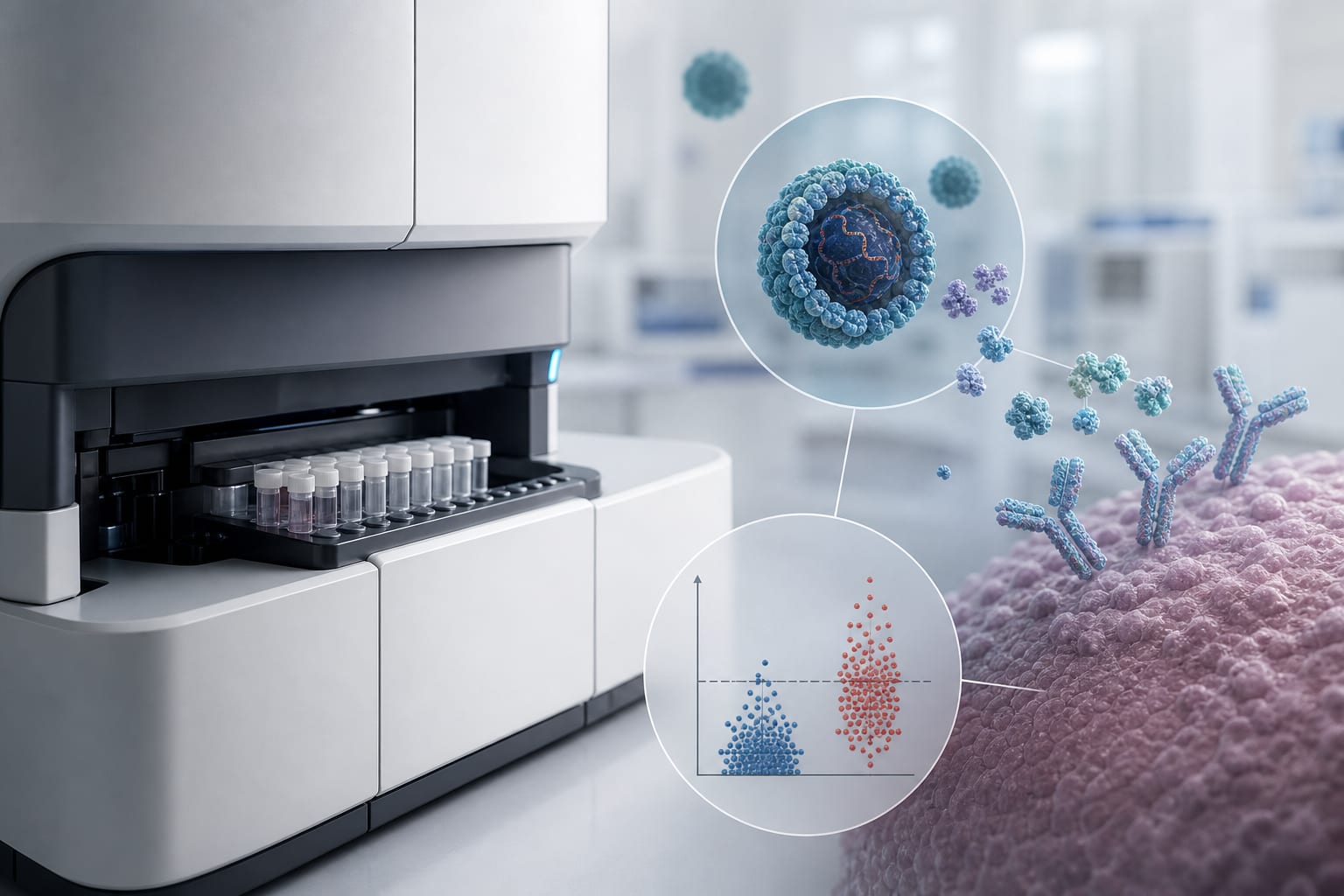
This study demonstrates that high-sensitivity electrochemiluminescence immunoassay (ECLIA) for HBsAg can significantly improve the assessment of relapse risk in chronic hepatitis B patients who have achieved interferon-induced functional cure.

Background

Chronic hepatitis B (CHB) is a significant global health issue, affecting millions and leading to severe liver complications. Current definitions of functional cure rely on standard assays that may misclassify patients, resulting in unexpected relapses after treatment cessation. Improved sensitivity in HBsAg testing is crucial for accurately identifying patients at risk of relapse.

Data Highlights

Time Point (Weeks)Cumulative Relapse Rate (%)
121.4
243.8
366.2
488.2

Key Findings

  • 24 out of 292 patients (8.2%) relapsed during the 48-week follow-up.
  • ECLIA-HBsAg was identified as the sole independent predictor of relapse (HR: 9.32, p<0.001).
  • Patients with ECLIA-HBsAg levels >0.38 COI had a significantly higher risk of relapse (p=0.0029).
  • The model demonstrated strong discrimination with a C-index of 0.805.
  • The mean lead-time gain of ECLIA-HBsAg over ELISA-HBsAg was 28 weeks in functional relapsers (p < 0.001).

Clinical Implications

The use of ECLIA for HBsAg testing may enhance the accuracy of relapse risk assessment in patients with chronic hepatitis B.

Conclusion

The findings support the incorporation of ECLIA into clinical practice for defining deep functional cure in chronic hepatitis B.

Related Resources & Content

  1. Frontiers in Immunology, 2026 -- Early On-Treatment Dynamics Predicting Hepatitis B e Antigen Seroconversion in Chronic Hepatitis B
  2. The Journal of Infectious Diseases, 2023 -- Anti-HBs Immune Complex Levels: A Novel Marker of Hepatitis Flare Following Nucleos(t)ide Analog Withdrawal in HBeAg-negative Chronic Hepatitis B
  3. Journal of Gastroenterology, 2020 -- Outstanding Challenges in Immune Tolerance Related to Chronic Hepatitis B Infection
  4. The Journal of Infectious Diseases — Patterns of Serum Hepatitis B Surface Antigen (HBsAg) During Treatment and Their Link to HBsAg Loss in Children With Chronic Hepatitis B e Antigen–Positive: A Latent Class Trajectory Study
  5. AASLD/IDSA Practice Guidelines on Treatment of Hepatitis B
  6. EASL Clinical Practice Guidance on Hepatitis B
  7. Stopping Nucleos(t)ide Analogues in Chronic Hepatitis B Using HBsAg Thresholds: A Meta-Analysis and Meta-Regression - ScienceDirect
  8. Early HBcrAg and Anti‐HBc Levels Identify Patients at High Risk for Severe Flares After Nucleos(t)ide Analogue Cessation—A Pooled Analysis of Two Clinical Trials - PMC
  9. Clinical usefulness of an ultra-high-sensitivity hepatitis B surface antigen assay to determine the cessation of treatment for HBV reactivation - ScienceDirect
  10. Elecsys HBsAg II and Elecsys HBsAg II Auto Confirm | FDA
  11. Accuracy Validation of the Elecsys HBsAg II Quant Assay and Its Utility in Resolving Equivocal Qualitative HBsAg Results - PMC
  12. TYPE Original Research
  13. Frontiers | Low-Level Hepatitis B Surface Antigen by ECLIA Stratifies Early Relapse Risk in Patients with Interferon-based HBV functional cure

Original Source(s)

Related Content