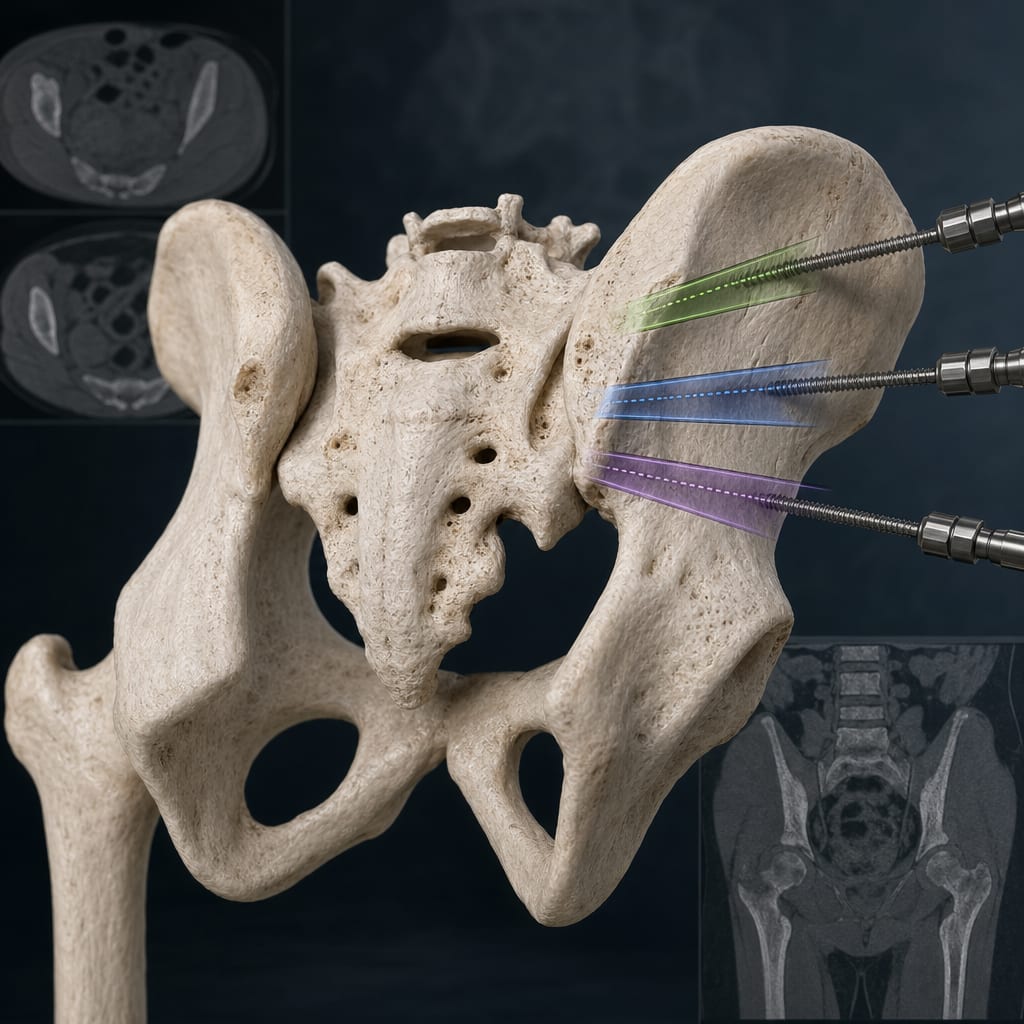
Risk Factors for Fixation Failure in Adult Femoral Neck Fractures
Overview
This single-center retrospective study of 217 adults with femoral neck fractures identified displaced fracture patterns, poor reduction quality, and excessive alcohol consumption as significant risk factors for fixation failure and avascular necrosis (AVN). Early surgery and use of cannulated screw fixation were associated with reduced odds of nonunion.
Background
Femoral neck fractures in adults pose significant challenges due to risks of fixation failure, avascular necrosis, and nonunion. Identifying modifiable and non-modifiable risk factors is critical to improving surgical outcomes. Internal fixation remains a common treatment, but outcomes vary based on fracture characteristics, patient factors, and surgical timing and technique. This study aimed to clarify these associations to guide clinical management.
Cannulated screw fixation (0.255, 0.014), Surgery ≤1 day (0.100, 0.006), Surgery 1–3 days (0.307, 0.028)
Key Findings
Fixation failure occurred in 24% of patients and was independently associated with displaced (Garden III/IV) fractures, poor reduction quality, and excessive alcohol consumption.
Avascular necrosis was observed in 14.3% and linked to excessive alcohol use, displaced fractures, and poor reduction quality.
Nonunion occurred in 9.7% and was less likely with cannulated screw fixation and earlier surgical intervention (within 3 days of injury).
Earlier surgery (≤1 day) significantly reduced the odds of nonunion compared to delayed surgery.
Cannulated screw fixation demonstrated a protective effect against nonunion compared to other fixation methods, though residual confounding cannot be excluded.
Clinical Implications
Optimizing reduction quality during internal fixation is crucial to minimize fixation failure and avascular necrosis. Addressing modifiable risk factors such as excessive alcohol consumption may improve outcomes. Prompt surgical intervention, ideally within one day of injury, and consideration of cannulated screw fixation can reduce the risk of nonunion in adult femoral neck fractures.
Conclusion
Displaced fractures, poor reduction, and excessive alcohol consumption are key risk factors for fixation failure and AVN in femoral neck fractures. Early surgery and appropriate fixation techniques are important to reduce nonunion rates and improve patient outcomes.
References
Sundkvist et al. 2021 -- Epidemiology, classification, treatment, and mortality of adult femoral neck and basicervical fractures
Yoo et al. 2020 -- Review on basicervical femoral neck fracture: Definition, treatments, and failures
Lee et al. 2018 -- Risk factors of fixation failure in basicervical femoral neck fracture
Dekhne et al. 2021 -- Treatment and outcomes of basicervical femoral neck fractures: A systematic review
Scattergood et al. 2024 -- Low avascular necrosis rates in femoral neck fractures: efficacy of cannulated screw fixation