Plastics as disruptors of feeding, digestive physiology, metabolism, and growth in fish and other aquatic ectothermic vertebrates - Report - MDSpire

Plastics as disruptors of feeding, digestive physiology, metabolism, and growth in fish and other aquatic ectothermic vertebrates

  • By

  • Thanushanthahi Loganathan

  • Helene Volkoff

  • June 26, 2026

  • 0 min

Share

Clinical Report: The Impact of Plastics on Aquatic Ectothermic Vertebrates

Background

Plastics are pervasive contaminants in aquatic ecosystems, affecting various physiological processes in aquatic ectotherms. Understanding the impact of plastic exposure is crucial as it relates to energy balance, growth performance, and overall fitness in these species.

Data Highlights

No specific numerical data or trial results were provided in the source material.

Key Findings

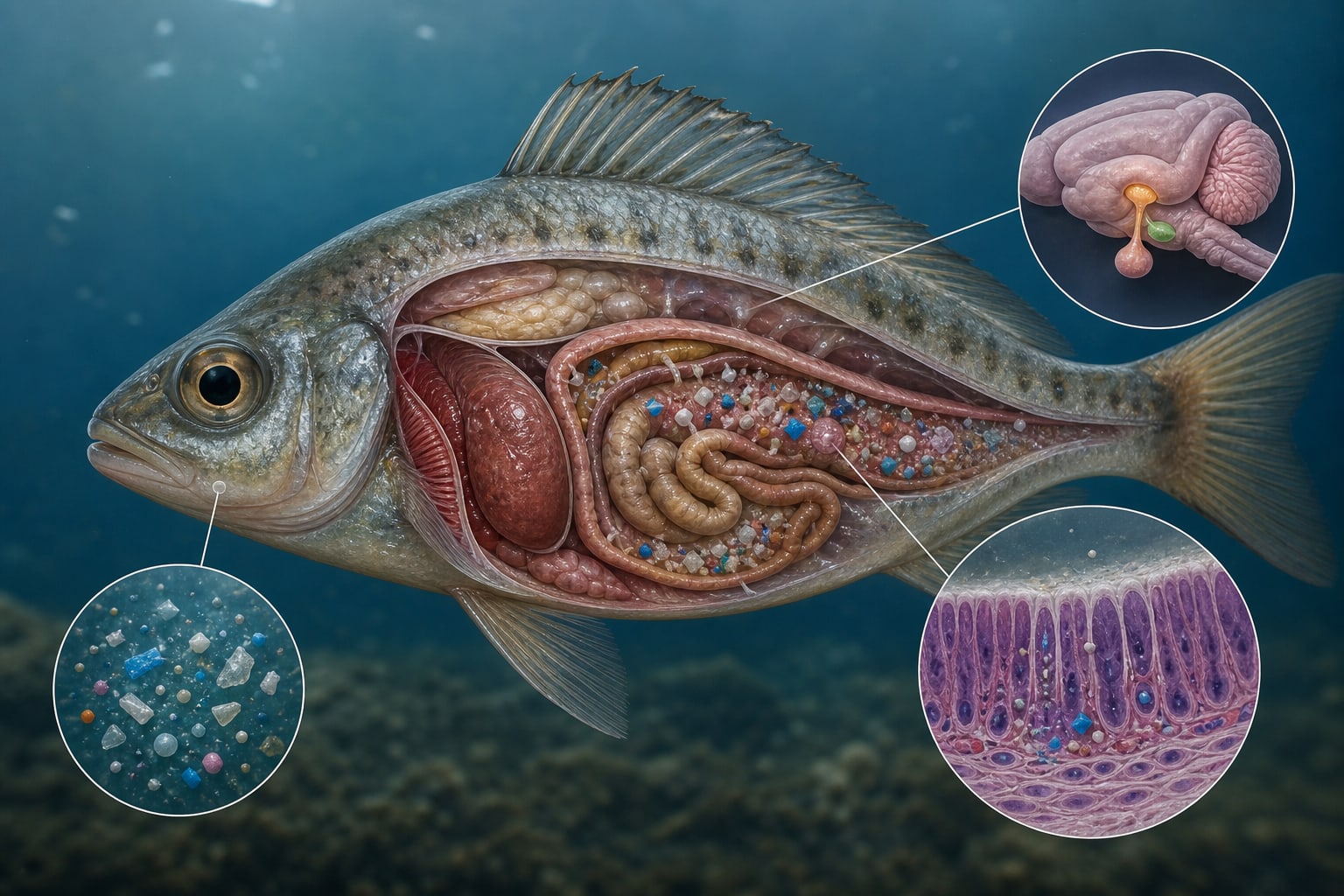
  • Plastic exposure reduces food intake through mechanisms such as false satiety and gastrointestinal obstruction.
  • Microplastics and nanoplastics impair digestive efficiency and nutrient absorption.
  • Endocrine signaling pathways related to appetite regulation are disrupted by plastic exposure.
  • Oxidative stress and impaired hepatic function are common consequences of plastic contamination.
  • Environmental factors, including temperature and salinity, modulate the effects of plastics on aquatic ectotherms.

Clinical Implications

Understanding the physiological impacts of plastics can inform strategies to mitigate their effects on aquatic ecosystems.

Conclusion

The review highlights the significant risks posed by plastic contamination to aquatic ectothermic vertebrates, particularly fish.
Related Resources & Content

  1. Frontiers in Endocrinology, 2026 -- Immunoendocrine response to individual or combined exposure of polystyrene nanoplastics and elevated salinity on gilthead seabream
  2. Archives of Toxicology, 2026 -- Real-life nanoplastics induce endothelial dysfunction in primary human endothelial cells
  3. the analytical scientist, 2026 -- The Lasting Effects of Early-Life Pollutant Exposure
  4. Microplastics Research | US EPA, 2026 -- Microplastics Research
  5. Beyond Concentration: Particle Traits Shape the Toxicity of Microplastics in Fish - A Global Meta-Analysis, PubMed, 2026
  6. the analytical scientist — A Greener Way to Monitor Microplastics
  7. Microplastics Research | US EPA
  8. Beyond Concentration: Particle Traits Shape the Toxicity of Microplastics in Fish - A Global Meta-Analysis - PubMed

Original Source(s)

Related Content