Activation of the NLRP3 Inflammasome by Particulate Matter and Fibers
Overview
This report discusses the role of the NLRP3 inflammasome in the immune response to particulate matter and fibers, highlighting its activation mechanisms.
Background
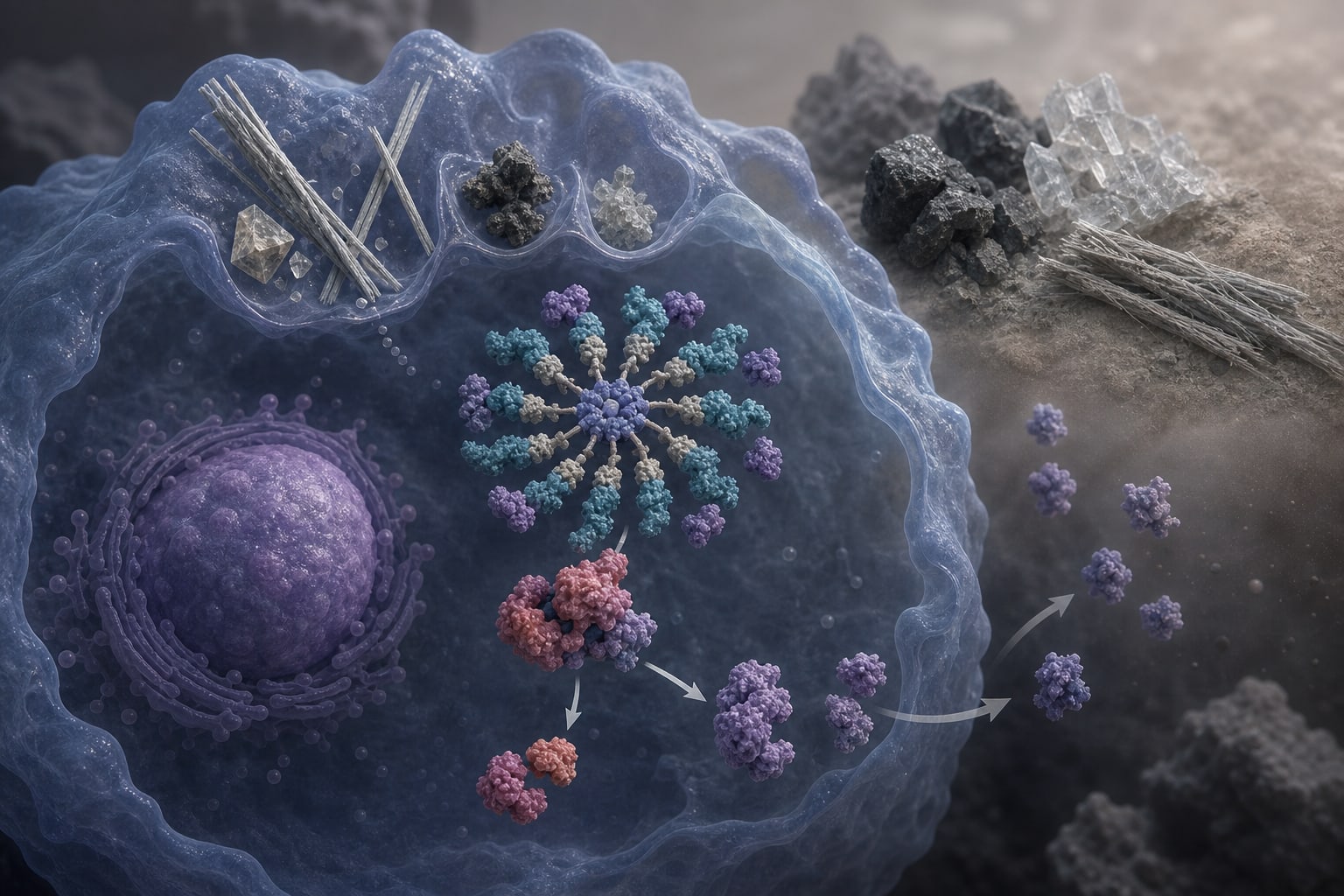
The NLRP3 inflammasome is a crucial component of the innate immune system, primarily found in immune cells. Its activation is linked to the toxicological effects of mineral dusts and fibers.
Data Highlights
No numerical or trial data provided in the source material.
Key Findings
NLRP3 inflammasome activation involves two steps: priming and activation.
Priming is facilitated by NF-κB activation through various stimuli, including DAMPs and PAMPs.
Activation of NLRP3 can be triggered by stimuli such as crystalline silica, asbestos, and nanoparticles.
Active caspase-1 cleaves pro-IL-1β and pro-IL-18, leading to their release and promoting inflammation.
Pyroptosis, a form of cell death, is mediated by caspase-1 and contributes to the inflammatory response.
Clinical Implications
Healthcare professionals should be aware of the potential health risks associated with exposure to particulate matter and fibers, particularly in occupational settings. Monitoring and managing exposure to these agents may be crucial in preventing diseases linked to NLRP3 inflammasome activation.
Conclusion
The activation of the NLRP3 inflammasome by particulate matter and fibers is a significant factor in the development of inflammatory diseases. Continued research is necessary to fully understand its implications for human health.