Quercetagetin-rich flavonoids from marigold induce apoptosis inhibit metastasis of non-small cell lung cancer via the p53/p21 signaling pathway - Report - MDSpire
Advertisement
Quercetagetin-rich flavonoids from marigold induce apoptosis inhibit metastasis of non-small cell lung cancer via the p53/p21 signaling pathway
Clinical Report: Flavonoids in Quercetagetin from Marigold and NSCLC
Overview
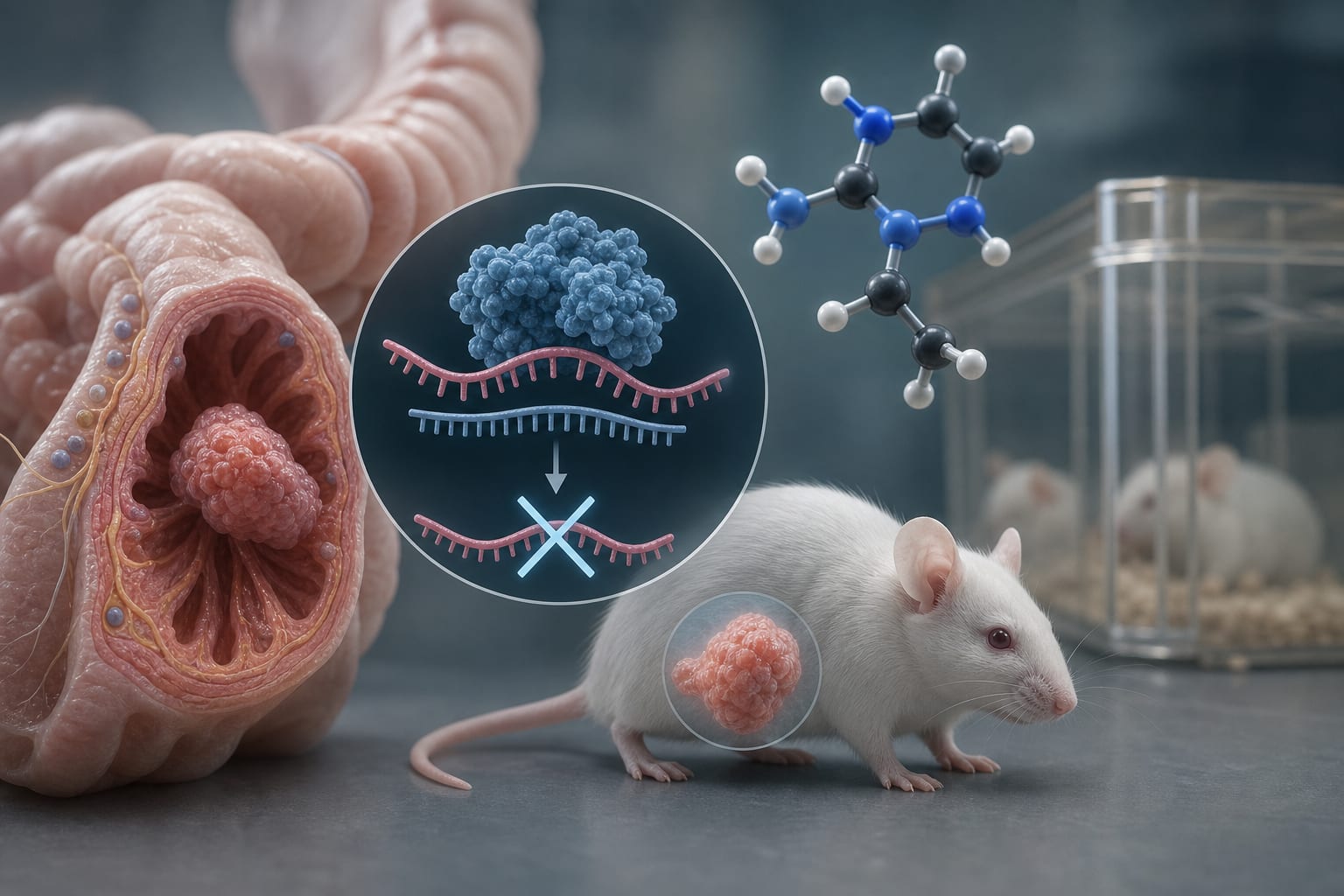
Quercetagetin-rich marigold flavonoids (QG-MF) were investigated for their effects on non-small cell lung cancer (NSCLC) through promoting apoptosis and inhibiting tumor growth via the p53/p21 signaling pathway. In both in vitro and in vivo studies, QG-MF demonstrated concentration-dependent efficacy in suppressing NSCLC cell proliferation, migration, and invasion.
Background
Non-small cell lung cancer (NSCLC) is a major contributor to cancer-related mortality, with limited treatment options and significant side effects from conventional therapies. Flavonoids, such as those derived from marigold, have been studied for their potential anti-tumor properties against NSCLC.
Data Highlights
Experiment
Findings
In vitro (A549 and H661 cells)
QG-MF suppressed proliferation, migration, and invasion; induced apoptosis and cell cycle arrest.
Mechanistic Analysis
Upregulation of p53, p21, Bax, and caspase-3; downregulation of Bcl-2.
In vivo (A549 xenograft model)
QG-MF significantly inhibited tumor growth without systemic toxicity.
Key Findings
QG-MF significantly suppressed NSCLC cell proliferation, migration, and invasion.
Induction of apoptosis and cell cycle arrest was observed in a concentration-dependent manner.
QG-MF upregulated p53, p21, Bax, and caspase-3 while downregulating Bcl-2.
Silencing p53 abrogated the anti-proliferative and pro-apoptotic effects of QG-MF.
In vivo studies showed marked inhibition of tumor growth in A549 xenograft models.
Clinical Implications
Further research is warranted to explore the clinical applicability and safety of QG-MF in human subjects.
Conclusion
QG-MF demonstrates anti-NSCLC activity through apoptosis induction and inhibition of tumor growth.