Meta-analysis of the effects of exercise intervention on glucose metabolism and body composition in patients with type 2 diabetes mellitus
-
By
-
Yuqing Liu
-
Mingyuan Zhao
-
Baoshan Qian
-
June 29, 2026
-
0 min
Clinical Report: Systematic Review of Exercise Interventions on Glucose Regulation
Overview
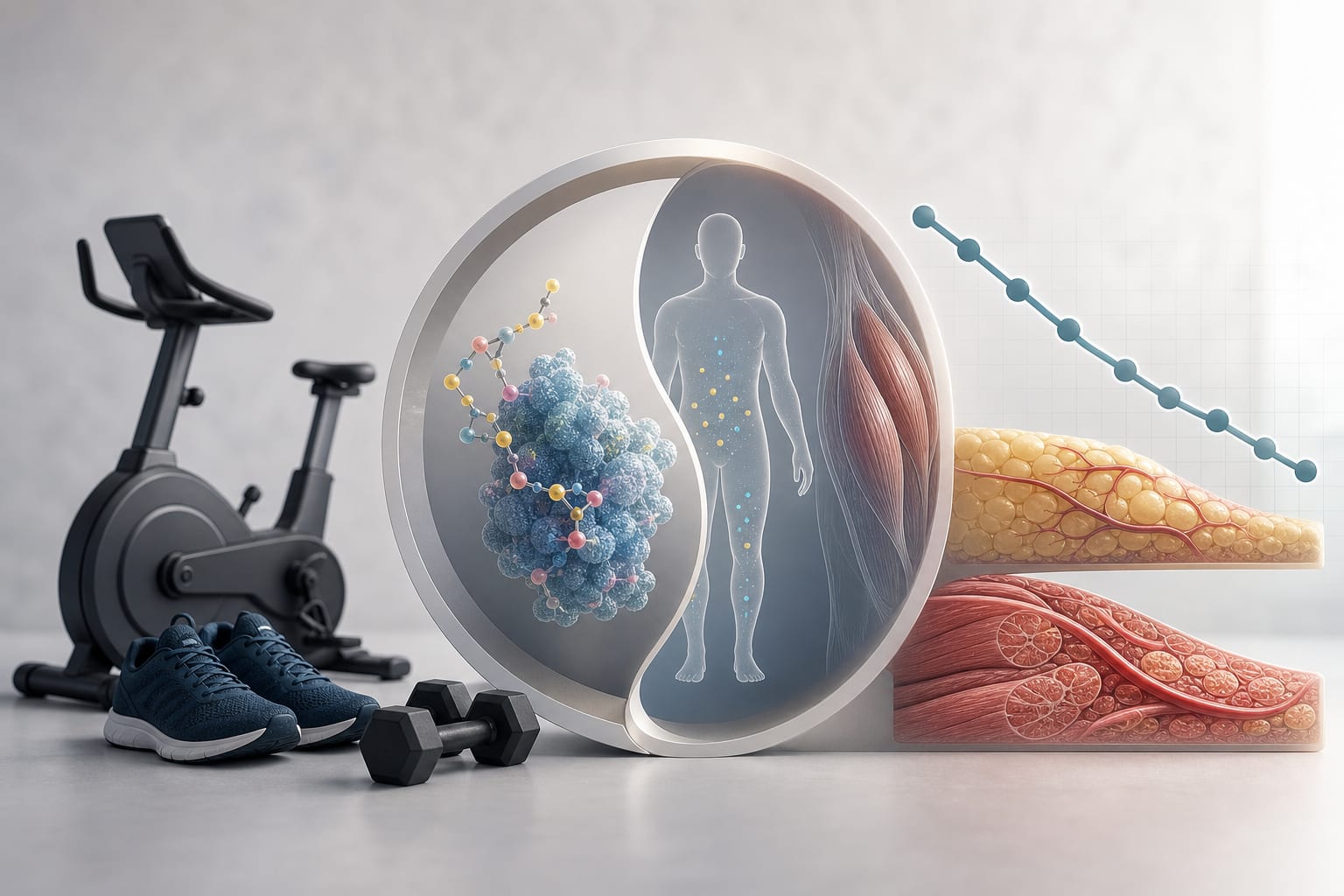
This systematic review evaluates the impact of exercise interventions on glucose metabolism and body composition in individuals with type 2 diabetes mellitus (T2DM). The findings indicate that exercise significantly reduces glycated hemoglobin and fasting blood glucose levels.
Background
Type 2 diabetes mellitus (T2DM) poses a significant global health challenge, with inadequate glycemic control prevalent despite advancements in pharmacological treatments. Effective management of T2DM is crucial as it is associated with increased cardiovascular disease risk. Exercise interventions are recognized as a vital non-pharmacological approach to improve glycemic control in this patient population.
Data Highlights
| Outcome | Effect Size (SMD) | 95% CI | P-value |
|---|---|---|---|
| Glycated Hemoglobin | -0.46 | -0.73 to -0.19 | 0.0007 |
| Fasting Blood Glucose | -0.52 | -0.70 to -0.35 | <0.00001 |
| BMI (after outlier exclusion) | -0.37 | -0.61 to -0.12 | 0.003 |
| Maximal Oxygen Uptake (VO2max) | 0.58 | 0.34 to 0.82 | <0.00001 |
Key Findings
- Exercise intervention significantly reduced glycated hemoglobin (SMD = -0.46).
- Combined exercise produced greater improvements in glycemic control compared to aerobic exercise alone (SMD = -0.71 vs. -0.32).
- Fasting blood glucose levels were significantly reduced (SMD = -0.52).
- No significant improvement was observed for the insulin resistance index (SMD = -0.18).
- Exercise intervention led to a significant reduction in BMI (SMD = -0.37).
- Maximal oxygen uptake (VO2max) significantly improved (SMD = 0.58).
Clinical Implications
The findings support the incorporation of exercise interventions as a component of T2DM management.
Conclusion
Exercise interventions are effective in improving glucose metabolism and body composition in individuals with T2DM.
Related Resources & Content
- The Journal of Clinical Endocrinology & Metabolism, 2026 -- Customizing Exercise Recommendations for Optimal Glycemic Control in Diabetes Management
- BMC Endocrine Disorders, 2026 -- Effects of digital and remote exercise interventions on HbA1c in type 2 diabetes: a systematic review and network meta-analysis
- Frontiers in Endocrinology, 2026 -- Comparative effectiveness of high-intensity interval training versus moderate-intensity continuous training in patients with type 2 diabetes mellitus: a systematic review and meta-analysis
- Diabetes Care, 2026 -- Facilitating Positive Health Behaviors and Well-being to Improve Health Outcomes: Standards of Care in Diabetes
- Diabetes Care, 2026 -- Summary of Revisions: Standards of Care in Diabetes
- The Journal of Clinical Endocrinology & Metabolism — Gender-Based Variations in Blood Sugar Levels and Exercise Management Approaches in Active Adults with Type 1 Diabetes
- 5. Facilitating Positive Health Behaviors and Well-being to Improve Health Outcomes: Standards of Care in Diabetes—2026 | Diabetes Care | American Diabetes Association
- Summary of Revisions: Standards of Care in Diabetes—2026 | Diabetes Care | American Diabetes Association
- The effect of exercise characteristics on HbA1c and other cardiovascular risk factors in adults with type 2 diabetes: a systematic review and meta-analysis of randomised controlled trials - PMC
- Effects of exercise training and physical activity advice on HbA1c in people with type 2 diabetes: A network meta-analysis of randomized controlled trials - ScienceDirect
- The effects of resistance training on glycemic control, cardiometabolic health, and body composition in middle-aged and older women with type 2 diabetes and overweight or obesity: A systematic review and meta-analysis
- Low-volume combined aerobic and resistance high-intensity interval training in type 2 diabetes: a randomised controlled trial - PMC
- Effect of low-volume combined aerobic and resistance high-intensity interval training on vascular health in people with type 2 diabetes: a randomised controlled trial - PMC
- Comparative effects of combined aerobic and resistance training versus high-intensity interval training on insulin resistance, glycaemic control, body composition and quality of life in type 2 diabetes: A 12-week randomised controlled trial
- Feasibility and preliminary effects of high-intensity interval training vs. moderate-intensity continuous training on inflammatory and metabolic biomarkers in type 2 diabetes: a pilot randomized controlled trial - PubMed
This content is an AI-generated, fully rewritten summary based on a published scholarly article. It does not reproduce the original text and is not a substitute for the original publication. Readers are encouraged to consult the source for full context, data, and methodology.