Myofilament-level effects of aficamten increase diastolic chamber volumes and maintain cardiac output through preserved length-dependent force generation in healthy rat and canine myocardium - Report - MDSpire

Myofilament-level effects of aficamten increase diastolic chamber volumes and maintain cardiac output through preserved length-dependent force generation in healthy rat and canine myocardium

  • By

  • Fruzsina Sárkány

  • Dániel Priksz

  • Béla Juhász

  • László Ádám Fazekas

  • Norbert Németh

  • Norbert Szentandrássy

  • Balázs Horváth

  • Zsigmond Máté Kovács

  • Attila Borbély

  • Arnold Péter Ráduly

  • Attila Tóth

  • Miklós Fagyas

  • Beáta Bódi

  • Zoltán Papp

  • June 26, 2026

  • 0 min

Share

Clinical Report: Aficamten's Myofilament-Level Impact on Cardiac Function

Overview

Aficamten, a cardiac myosin inhibitor, enhances diastolic chamber volumes and maintains cardiac output in healthy rat and canine hearts.

Background

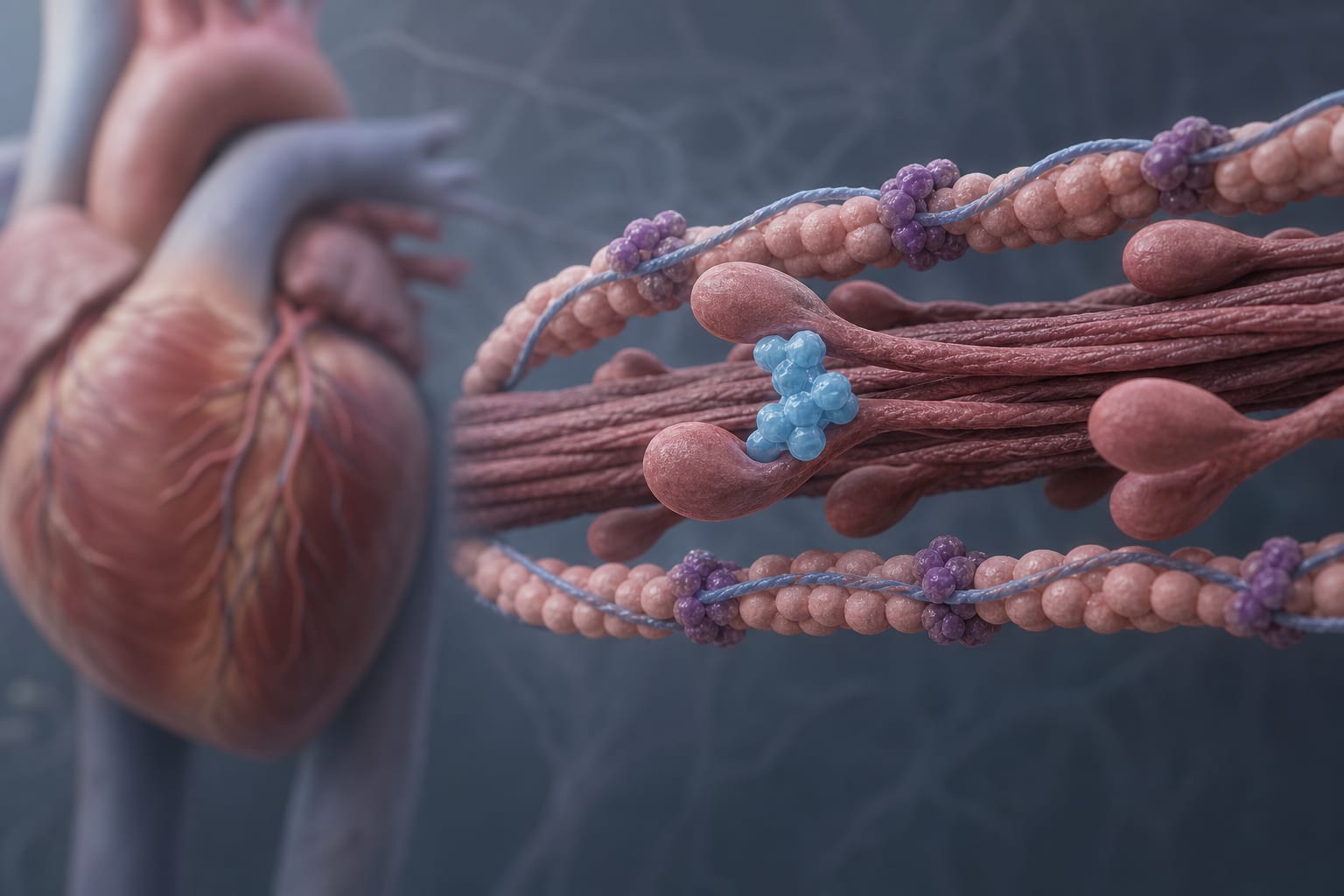
Cardiac myosin inhibitors (CMIs) like aficamten represent a novel therapeutic approach for conditions such as obstructive hypertrophic cardiomyopathy (oHCM) and heart failure with preserved ejection fraction (HFpEF). This study explores the interaction between aficamten and key regulators of myocardial contractility, addressing concerns about potential hemodynamic deterioration due to its inotropic actions.

Data Highlights

No numerical data or trial data provided in the source material.

Key Findings

  • Aficamten reduces hypercontractility and improves diastolic function in healthy hearts.
  • The study investigates the effects of aficamten on systolic and diastolic performance across different physiological models.
  • Aficamten preserves cardiac output through enhanced ventricular filling.
  • Myosin inhibition integrates with intrinsic regulatory pathways affecting cardiac performance.
  • Concerns regarding hemodynamic deterioration due to aficamten's inotropic effects are noted.

Clinical Implications

Understanding aficamten's effects on diastolic function and cardiac output is essential for optimizing treatment strategies.

Conclusion

Aficamten demonstrates the potential to enhance cardiac function while mitigating the risks associated with negative inotropy.

Related Resources & Content

  1. Aficamten for Symptomatic Obstructive Hypertrophic Cardiomyopathy | New England Journal of Medicine, 2024 -- Aficamten for Symptomatic Obstructive Hypertrophic Cardiomyopathy
  2. ACC/AHA Task Force on Clinical Practice Guidelines, 2024 -- 2024 Guideline for HCM
  3. Basic Research in Cardiology — Omecamtiv mecarbil induces diastolic dysfunction and triggers periodic electromechanical alternans
  4. Basic Research in Cardiology — Reversal of Diastolic Dysfunction and Arrhythmias Induced by CaMKIIδC Overexpression Through Late Na+ Current Inhibition
  5. Basic Research in Cardiology — A diet rich in fats enhances mitochondrial fatty acid oxidation and uncoupling, leading to reduced efficiency in the hearts of rats.
  6. Basic Research in Cardiology — K201 (JTV-519) Modifies the Timing and Distribution of Diastolic Ca2+ Release and Contraction in Rat Ventricular Cardiomyocytes Under β-Adrenergic Stimulation
  7. ACC/AHA Task Force on Clinical Practice Guidelines
  8. Aficamten for Symptomatic Obstructive Hypertrophic Cardiomyopathy | New England Journal of Medicine
  9. Efficacy of cardiac myosin inhibitors mavacamten and aficamten in hypertrophic cardiomyopathy: a systematic review and meta-analysis of randomised controlled trials | Open Heart

Original Source(s)

Related Content