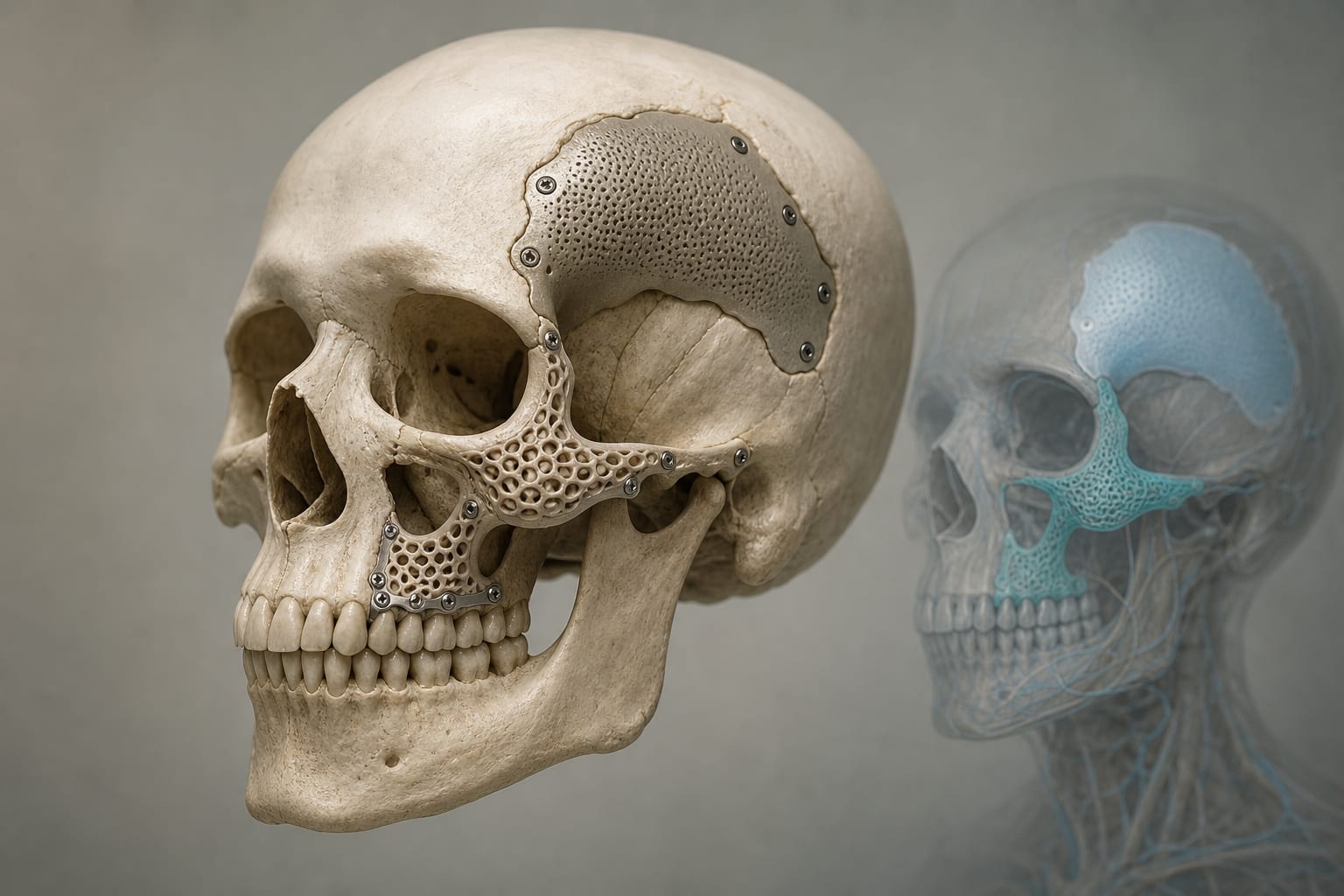
Clinical Report: Advances in Craniomaxillofacial Reconstruction and Regeneration Surgery
Overview
This editorial highlights the evolving landscape of craniomaxillofacial reconstructive and regenerative surgery, emphasizing the integration of anatomical knowledge and multidisciplinary approaches. Key contributions from recent studies illustrate advancements in surgical techniques, anatomical understanding, and the management of complex craniofacial defects.
Background
Craniomaxillofacial reconstructive and regenerative surgery is a dynamic field that addresses complex defects resulting from trauma, congenital issues, and oncologic resections. The integration of anatomy, imaging, and biomaterials is crucial for improving surgical outcomes, which are now measured by function, aesthetics, and long-term stability rather than just defect closure. Understanding these advancements is essential for healthcare professionals involved in craniofacial surgery.
Data Highlights
No numerical data provided in the source material.
Key Findings
Anatomical precision is critical for surgical planning, as emphasized by Okoń et al.'s morphological classification of the temporalis muscle.
Management of frontal sinus fractures requires a multidisciplinary approach, highlighting the complexity of craniofacial trauma care.
Soemmer et al. propose a decision-making algorithm for flap salvage strategies to minimize donor site morbidity.
Bravo et al. demonstrate the importance of anatomical knowledge in achieving safe and effective temple augmentations.
Ottaviano et al. provide clinical evidence on mandibular reconstruction using anterolateral thigh free flap and bridging plate in oncologic cases.
Clinical Implications
Surgeons must prioritize anatomical understanding and multidisciplinary collaboration to optimize outcomes in craniomaxillofacial surgery. The integration of advanced techniques and decision-making algorithms can enhance surgical precision and reduce complications, ultimately improving patient care.
Conclusion
The advancements in craniomaxillofacial reconstructive and regenerative surgery underscore the importance of anatomical knowledge and collaborative approaches in achieving optimal surgical outcomes. Continued research and innovation in this field are essential for addressing the complexities of craniofacial defects.
A VHA study across 11 vendors finds AI-generated primary care notes score lower than clinician-written notes, with the largest deficits in thoroughness, organization, and usefulness