A distinct gastrointestinal symptom profile characterizes clinically relevant fatigue in systemic sclerosis - Report - MDSpire
Coming Soon: Introducing MDSpire News. Learn more
Conexiant’s news site is now MDSpire News. Learn more

A Unique Gastrointestinal Symptom Profile Distinguishes Clinically Significant Fatigue in Systemic Sclerosis

  • By

  • Francesco Bonomi

  • Silvia Peretti

  • Giulia Bandini

  • Veronica De Silvestri

  • Cristiano Barbetta

  • Ilenia Mallia

  • Khadija El Aoufy

  • Ginevra Fiori

  • Serena Guiducci

  • Alberto Moggi Pignone

  • Zsuzsanna H. McMahan

  • Marco Matucci-Cerinic

  • Cosimo Bruni

  • Michael Hughes

  • Silvia Bellando Randone

  • September 8, 2026

Share

Clinical Report: A Unique Gastrointestinal Symptom Profile Distinguishes Clinically Significant Fatigue in Systemic Sclerosis

Overview

This study identifies specific gastrointestinal symptoms associated with clinically significant fatigue in systemic sclerosis (SSc) patients.

Background

Fatigue is a prevalent and debilitating symptom in systemic sclerosis, significantly impacting patients' quality of life and functional capacity. Despite its importance, fatigue is often inadequately assessed in clinical practice. Understanding the relationship between gastrointestinal symptoms and fatigue is crucial.

Data Highlights

No numerical data or trial data was provided in the source material.

Key Findings

  • Fatigue in SSc is multifactorial, influenced by organ involvement, psychosocial factors, and comorbidities.
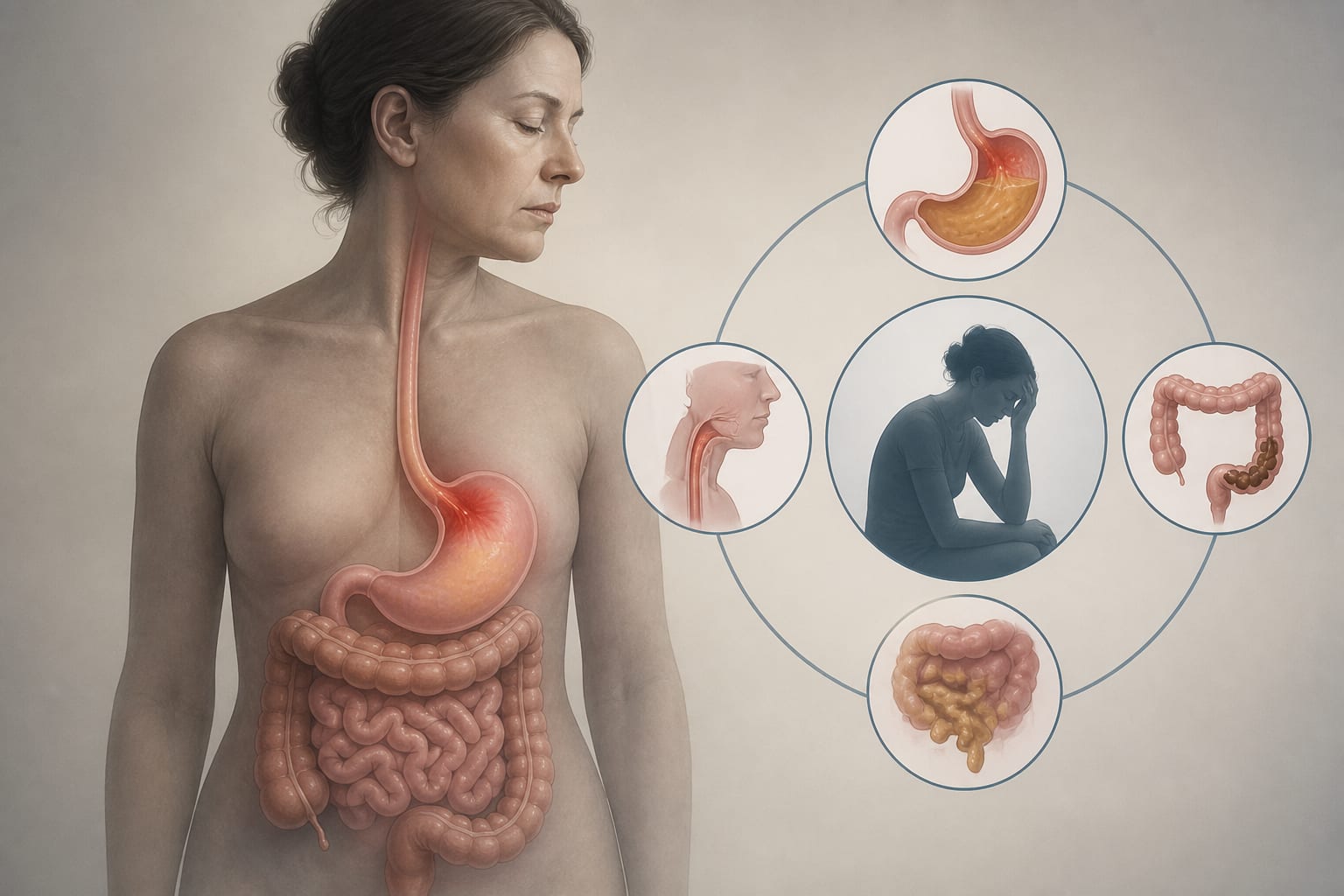
  • Gastrointestinal involvement is a prominent correlate of fatigue in SSc patients.
  • Individual GI manifestations, such as gastroesophageal reflux, dysphagia, bloating, diarrhea, and constipation, may have distinct associations with fatigue.
  • Previous studies have typically assessed GI involvement as a composite measure, limiting understanding of specific symptom contributions.
  • Understanding the GI symptom profile can inform clinical assessment in SSc.

Clinical Implications

Clinicians should consider individual gastrointestinal symptoms when assessing fatigue in SSc patients.

Conclusion

Identifying specific gastrointestinal symptoms associated with fatigue in SSc is essential. Further research is needed to explore the mechanisms linking GI symptoms and fatigue.

Related Resources & Content

  1. Frontiers in Immunology, 2026 -- Sex-related peripheral immune profile in ulcerative colitis: links to fatigue
  2. Journal of Crohn's and Colitis, 2026 -- The Substantial Role of Sleep, Stress, and Physical Activity in Persistent High Levels of Fatigue in Patients With Inflammatory Bowel Disease: A Longitudinal Trajectory Study
  3. Clinical Rheumatology, 2022 -- Gastrointestinal Symptoms and Reduced Muscle Mass in Patients with Systemic Sclerosis
  4. EULAR recommendations for the treatment of systemic sclerosis: 2023 update
  5. Performance of the UCLA Scleroderma Clinical Trials Consortium Gastrointestinal Tract 2.0 instrument as a clinical decision aid in the routine clinical care of patients with systemic sclerosis - PMC
  6. Fatigue levels and associated factors in systemic sclerosis: a cross-sectional study of 2385 SPIN Cohort participants | Rheumatology | Oxford Academic
  7. Journal of Crohn's and Colitis — Deconditioning in quiescent Crohn’s disease patients with heightened fatigue perception
  8. EULAR recommendations for the treatment of systemic sclerosis: 2023 update
  9. Performance of the UCLA Scleroderma Clinical Trials Consortium Gastrointestinal Tract 2.0 instrument as a clinical decision aid in the routine clinical care of patients with systemic sclerosis - PMC
  10. Fatigue levels and associated factors in systemic sclerosis: a cross-sectional study of 2385 SPIN Cohort participants | Rheumatology | Oxford Academic

Original Source(s)

Related Content