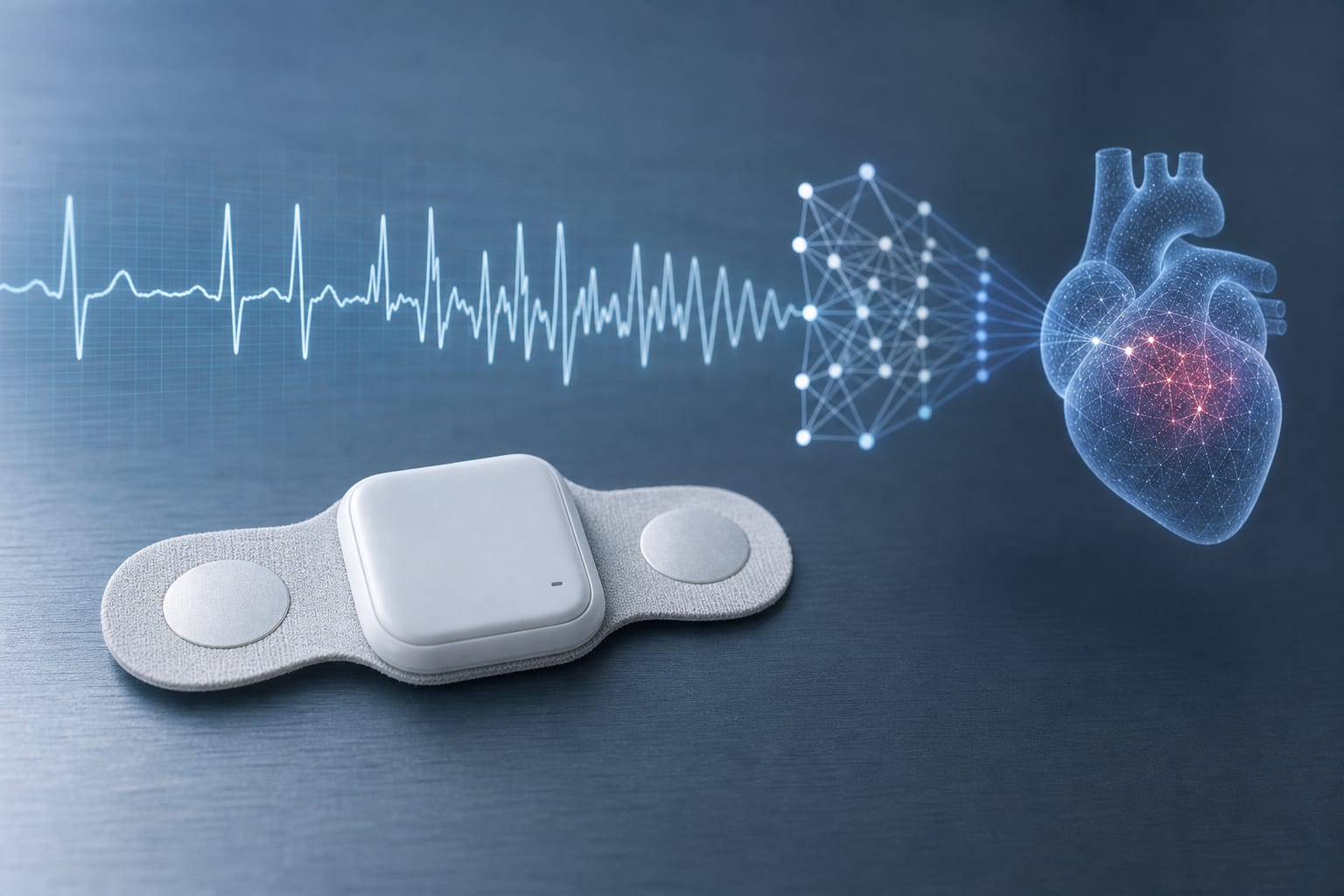
Development of a semi–real-time electrocardiogram monitoring system integrating artificial intelligence and wearable devices for atrial fibrillation screening - Report - MDSpire
Clinical Report: Creation of a Semi-Real-Time ECG Monitoring System Utilizing AI
Overview
This study developed a deep learning-based AI model for detecting atrial fibrillation (AF) using 24-hour Holter ECG data. It also assessed the feasibility of a semi-real-time monitoring framework integrating AI analysis with wearable ECG devices for high-risk populations.
Background
Atrial fibrillation is a common cardiac arrhythmia linked to a higher risk of thromboembolic events, particularly ischemic stroke. Timely detection and management of AF can significantly reduce stroke risk, making effective screening methods essential. Traditional ECG monitoring methods often miss paroxysmal AF episodes, highlighting the need for improved diagnostic technologies.
Data Highlights
Dataset
Recordings
Training Dataset
1,089
Evaluation Dataset
400
Key Findings
A total of 1,489 Holter ECG recordings were analyzed, with 135 excluded for incomplete demographic data.
The AI model demonstrated improved accuracy in detecting AF compared to traditional methods.
Inter-rater agreement for AF episode annotation was high (κ = 0.92) between two cardiologists.
The study implemented a semi-real-time monitoring framework integrating AI with wearable ECG devices.
AI analysis can enhance AF detection in high-risk populations.
Clinical Implications
The integration of AI in ECG monitoring may enhance the detection of atrial fibrillation, particularly in patients at high risk for stroke. Clinicians should consider utilizing AI-enabled tools for more effective screening and management of AF.
Conclusion
The study highlights the potential of AI-driven ECG monitoring systems to improve atrial fibrillation detection and management. Further research is needed to validate these findings in broader clinical settings.
National survey findings suggest many US adults report making health decisions based on social media despite widespread concerns about the accuracy of health information shared to the platforms.