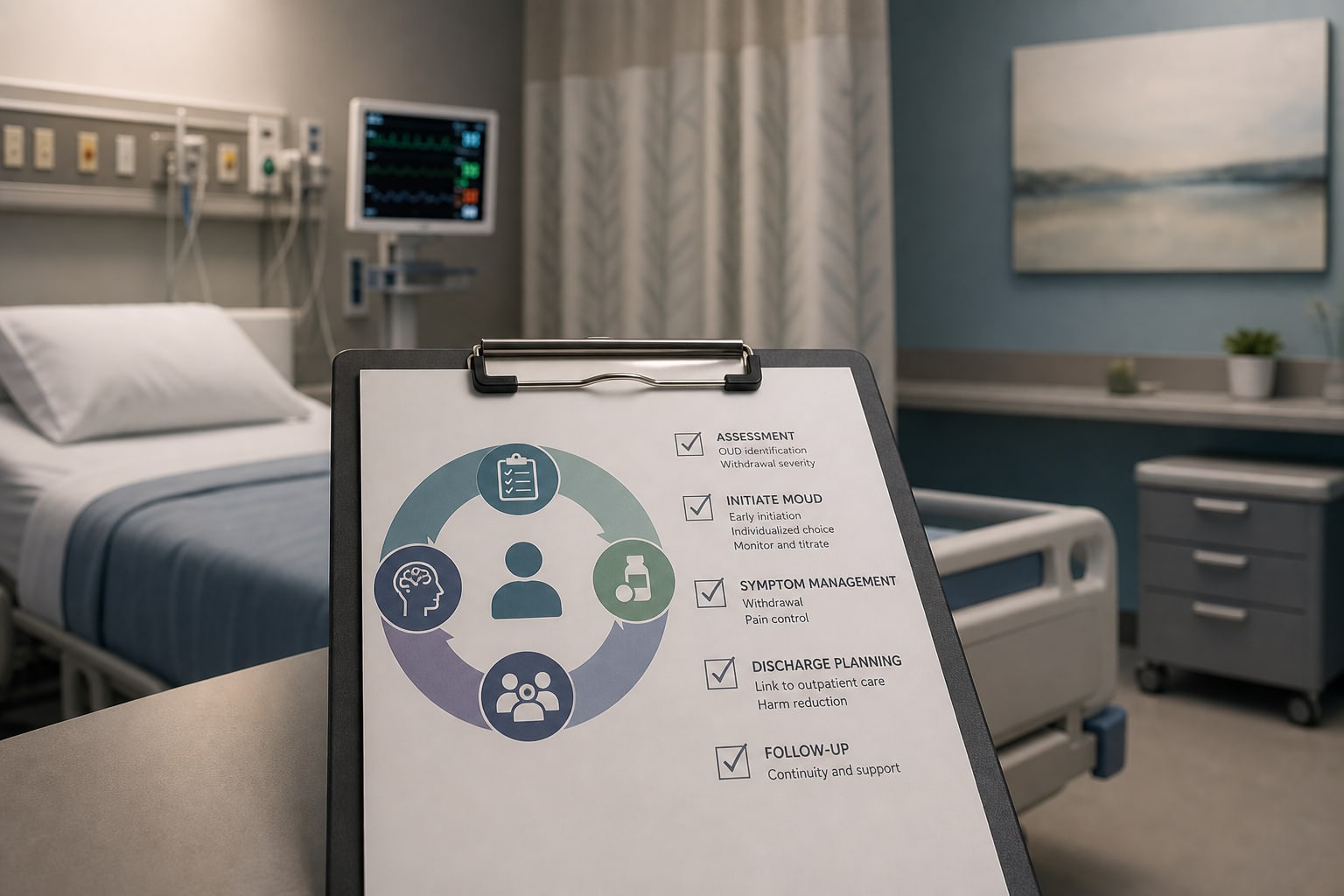
Clinical Report: Clarifying the Inpatient and Residential Benzodiazepine Tapering Guidelines from ASAM
Overview
The ASAM guidelines on benzodiazepine tapering provide clarifications necessary to prevent misinterpretation, particularly regarding inpatient care and withdrawal management.
Background
Benzodiazepine dependence and withdrawal present challenges in clinical practice, necessitating clear guidelines for safe deprescribing. The ASAM guidelines provide strategies based on clinical consensus due to limited empirical data.
Data Highlights
No numerical data or trial data presented in the source material.
Key Findings
['The ASAM guidelines recommend inpatient admission for patients at imminent risk of serious harm or when tapering is complex.', 'Inpatient care is not intended to fully discontinue benzodiazepines before discharge; outpatient treatment is often necessary to complete the taper.', 'Insurance barriers may complicate access to inpatient or residential care.', "The term 'severe or complicated withdrawal' is not defined in the guidelines.", 'Guidance on the use of phenobarbital for tapering is limited.']
Clinical Implications
Inpatient care may stabilize patients, but tapering often continues in outpatient settings.
Conclusion
Clarifications are necessary to enhance understanding and implementation of the ASAM guidelines.
A large audit of biomedical publications suggests fabricated references are increasingly appearing in peer-reviewed papers — often in ways that are difficult for reviewers and readers to detect.