Advanced magnetic resonance neurography for preoperative facial nerve assessment and surgical planning in parotid tumors: a review of current evidence and surgical translation - Report - MDSpire
Advertisement
Advanced magnetic resonance neurography for preoperative facial nerve assessment and surgical planning in parotid tumors: a review of current evidence and surgical translation
Clinical Report: Utilizing Advanced Magnetic Resonance Neurography for Preoperative Evaluation
Overview
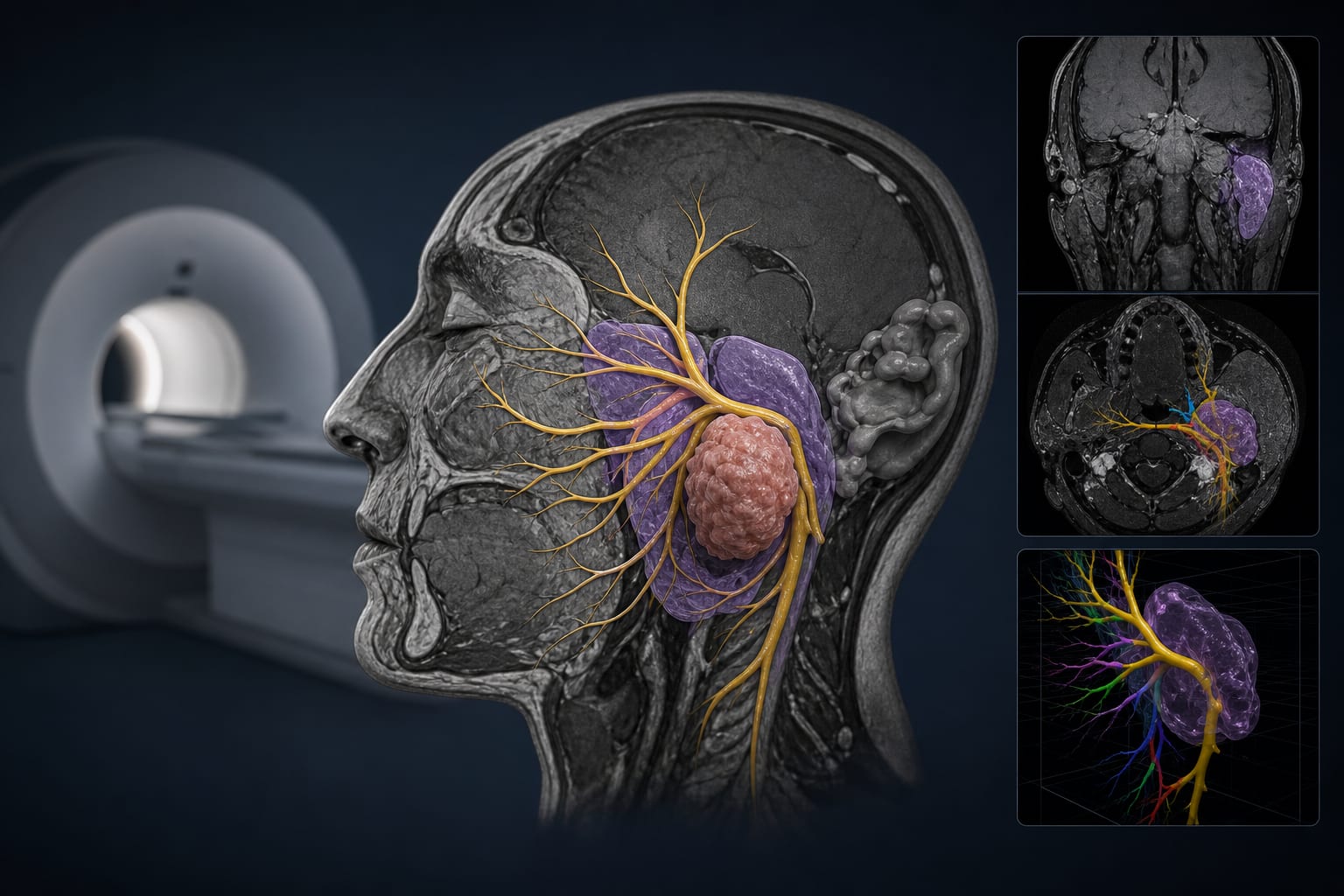
This review highlights the clinical utility of advanced magnetic resonance neurography (MRN) for preoperative assessment of the facial nerve in parotid tumor surgeries. It emphasizes the importance of integrating advanced imaging techniques with surgical planning to optimize patient outcomes.
Background
Facial nerve preservation during parotid surgery is critical to prevent complications such as facial palsy, which can significantly impact quality of life. Traditional surgical methods often rely on indirect anatomical landmarks, which may not be reliable in complex cases. Advanced imaging techniques like MRN are emerging as valuable tools to enhance preoperative planning and improve surgical outcomes.
Data Highlights
No numerical data or trial data was provided in the source material, indicating a need for further research to establish quantitative outcomes.
Key Findings
Advanced MRN provides reliable visualization of the facial nerve trunk and its primary bifurcation.
Quantitative imaging parameters and radiomic profiles may aid in peritumoral risk stratification.
3D modeling can assist in surgical decision-making, particularly in complex cases.
Advanced imaging techniques should complement, not replace, intraoperative judgment and neuromonitoring.
Clinical Implications
Surgeons should consider incorporating advanced MRN and 3D modeling into their preoperative planning to enhance the visualization of the facial nerve. This integration may lead to more informed surgical strategies, particularly in complex cases where traditional methods may fall short.
Conclusion
The integration of advanced MRN and 3D modeling into surgical planning represents a promising advancement in the management of parotid tumors. Continued research is needed to validate these techniques as standard practice.