Clinical Report: Exploiting the E2F6-TOP2A-DKK1 Pathway in HCC
Overview
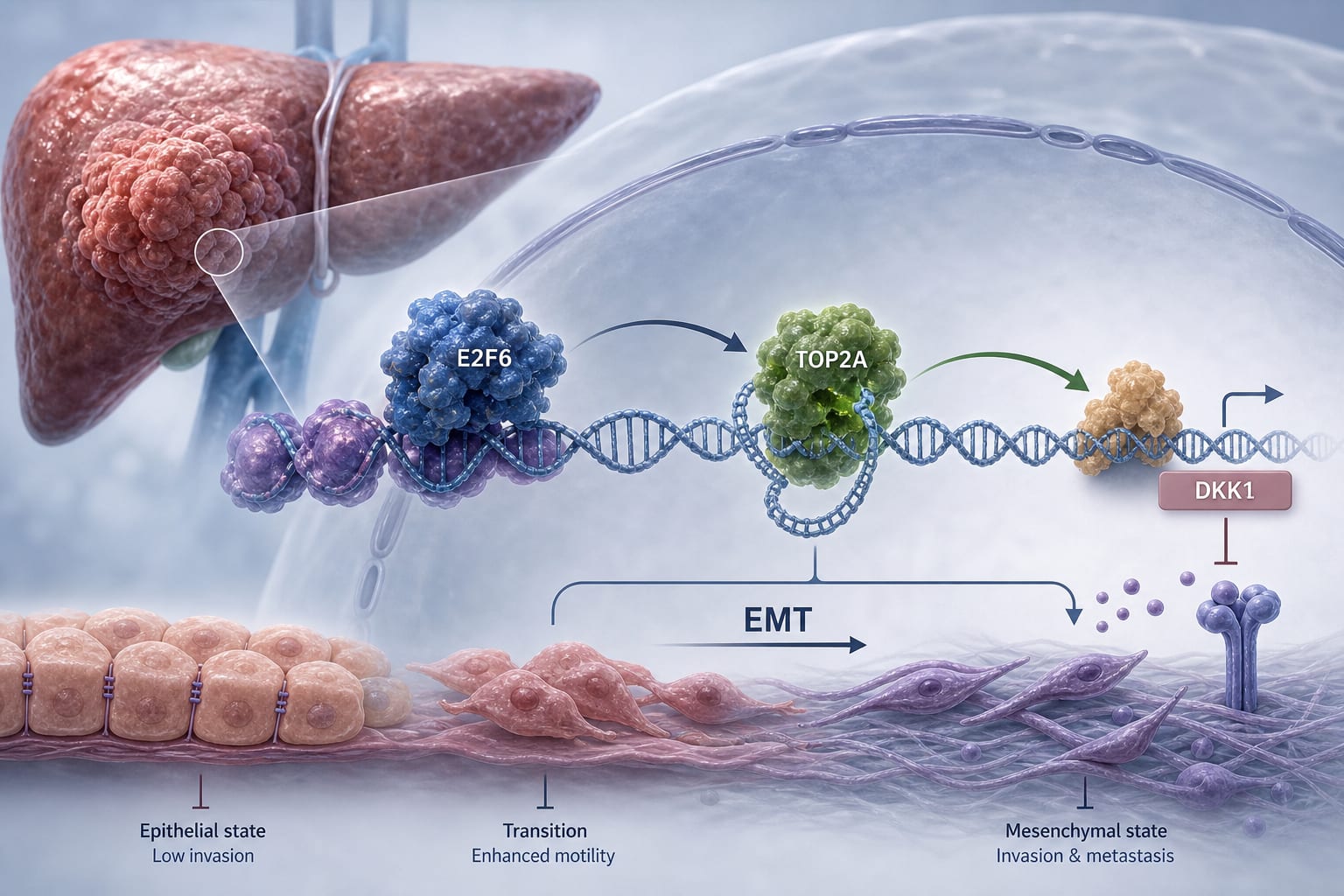
This study identifies the E2F6-TOP2A-DKK1 axis as a significant mechanism in hepatocellular carcinoma (HCC) progression. TOP2A is shown to be a promising diagnostic and prognostic biomarker.
Background
Hepatocellular carcinoma (HCC) is a leading cause of cancer-related mortality globally, with a five-year survival rate below 20%. Understanding the molecular mechanisms driving HCC is essential for developing effective diagnostic strategies. The dysregulation of TOP2A in HCC highlights its potential role in the disease.
Data Highlights
Parameter
Value
TOP2A AUC for diagnosis
0.935
1-year survival AUC
0.77
3-year survival AUC
0.85
5-year survival AUC
0.75
Key Findings
TOP2A expression is significantly upregulated in HCC tissues.
High TOP2A expression correlates with advanced disease stage and poor survival outcomes (p<0.05).
Knockdown of TOP2A inhibits proliferation, migration, and invasion of HCC cells.
E2F6 transcriptionally activates TOP2A, which in turn promotes EMT via DKK1 and β-catenin signaling.
TOP2A expression predicts poor response to therapies such as TACE, sorafenib, and immunotherapy.
The candidate agent A-443654 effectively suppresses tumor growth in vivo when used alone or in combination with anti-PD-L1.
Clinical Implications
TOP2A serves as a valuable biomarker for diagnosis and prognosis in HCC.
Conclusion
The findings highlight the E2F6-TOP2A-DKK1 axis as a critical driver of HCC progression, suggesting that targeting this pathway could improve patient outcomes.