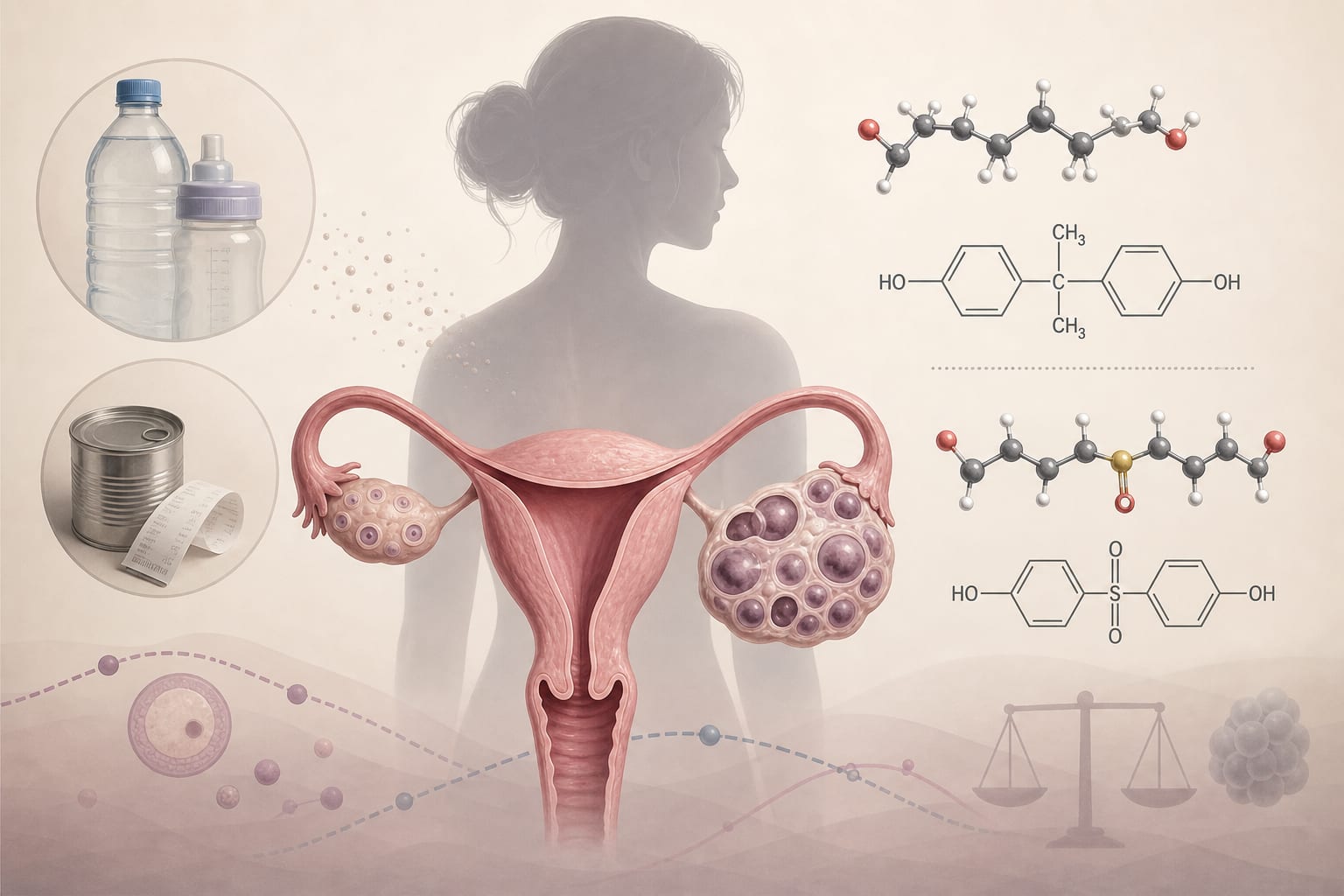
Editorial: Adolescent Polycystic Ovarian Syndrome
-
By
-
Rajni Sharma
-
May 11, 2026
Clinical Report: Adolescent Polycystic Ovarian Syndrome
Overview
Polycystic ovarian syndrome (PCOS) is a prevalent disorder affecting adolescents, with significant long-term health implications. The editorial discusses the challenges in diagnosing PCOS in this age group and highlights the importance of updated consensus guidelines for accurate identification and management.
Background
PCOS is a common endocrine disorder that can lead to various complications, including infertility and metabolic diseases. Early diagnosis and intervention are crucial, especially since symptoms often begin in adolescence. However, the overlap of normal pubertal changes with PCOS symptoms complicates accurate diagnosis, necessitating clear guidelines.
Data Highlights
No numerical data provided in the editorial.
Key Findings
- PCOS affects 5-18% of the adult female population and is increasingly recognized as a public health issue.
- Diagnosis during adolescence requires both menstrual irregularity and hyperandrogenism, with follow-up needed for those classified as 'at risk'.
- Emerging studies suggest that updated consensus guidelines help identify adolescents at higher risk for long-term complications related to obesity.
- Obesity plays a significant role in the pathophysiology of PCOS, with ongoing research into the impact of adipokines.
- Intermittent fasting has shown favorable responses in adolescent twins with PCOS, indicating potential dietary interventions.
Clinical Implications
Healthcare providers should be aware of the diagnostic criteria for PCOS in adolescents to avoid underdiagnosis or overdiagnosis. Emphasizing lifestyle modifications and monitoring metabolic health is essential for managing adolescents with PCOS.
Conclusion
The editorial underscores the need for improved diagnostic strategies and management approaches for adolescent PCOS to mitigate long-term health risks. Continued research is vital to enhance understanding and treatment of this complex condition.
Related Resources & Content
- Ozer et al., BMC Medicine, 2023 -- Role of Biochemical Hyperandrogenaemia in Adolescent PCOS
- Wang et al., BMC Medicine, 2023 -- Global Trends in PCOS Prevalence
- Orszulak et al., BMC Medicine, 2023 -- Adipokines in Adolescent PCOS
- Skrzyńska et al., BMC Medicine, 2023 -- Long-term Implications of PCOS
- Prosperi and Chiarelli, BMC Medicine, 2023 -- Insulin Resistance and PCOS
- Luo et al., BMC Medicine, 2023 -- Time Restricted Feeding in PCOS
- The Journal of Clinical Endocrinology & Metabolism — Evaluating Patients: Navigating Diagnostic Obstacles in Polycystic Ovary Syndrome Assessment
- European Journal of Preventive Cardiology — Nonobese young females with polycystic ovary syndrome are at high risk for long-term cardiovascular disease
- European Journal of Preventive Cardiology — Atherosclerosis risk in women with polycystic ovarian syndrome: it’s not just the comorbidities
- The Journal of Clinical Endocrinology & Metabolism — The Quest for Identifying Polycystic Ovary Syndrome
- International evidence-based recommendations for polycystic ovary syndrome in adolescents
- Comparative Efficacy of Metformin and Combined Oral Contraceptives in the Management of Adolescent Polycystic Ovary Syndrome
- Table 4 | International evidence-based recommendations for polycystic ovary syndrome in adolescents | BMC Medicine | Springer Nature Link
Based on findings from:
Editorial: Polycystic ovarian syndrome in adolescence
Rajni Sharma. Frontiers In Endocrinology, 2026.
https://www.frontiersin.org/journals/endocrinology/articles/10.3389/fendo.2026.1857004/full
This content is an AI-generated, fully rewritten summary based on a published scholarly article. It does not reproduce the original text and is not a substitute for the original publication. Readers are encouraged to consult the source for full context, data, and methodology.