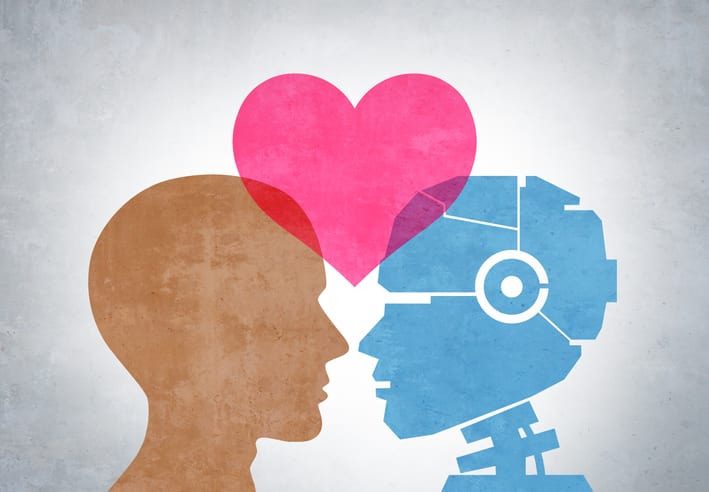
Clinical Report: Medical Oddities: Real AI Romance, Where Code Meets Crush
Overview
Cornell University researchers developed the Love Attitudes Scale toward AI, a validated tool measuring romantic love directed at AI companions. The study revealed significant interest in AI romance, with over one-third of participants reporting past or current relationships with AI.
Background
The intersection of artificial intelligence and human relationships is an emerging area of interest, particularly as AI becomes more integrated into daily life. Understanding how individuals form attachments to AI can inform both psychological research and the design of AI systems in healthcare. This topic is particularly relevant given the increasing use of AI in therapeutic settings and the potential implications for mental health.
Data Highlights
Finding
Details
Participants with AI relationships
Over one-third reported being in or having been in a romantic relationship with AI.
Love styles
AI relationship experience correlated with higher affectionate and selfless love styles.
Jealousy and game-playing
Newcomers to AI relationships leaned more toward jealousy and game-playing love styles.
Highest scores
Participants scored highest on aesthetic attraction, emotional companionship, and practical utility.
Lowest scores
Playful, noncommittal love ranked lowest among the love styles.
Key Findings
The Love Attitudes Scale toward AI is the first validated tool for measuring romantic love for AI companions.
The study included 899 adults across three independent samples.
Participants showed varied love styles, with significant differences based on their experience with AI relationships.
AI romance is perceived seriously, with emotional companionship being a key factor.
Self-reporting limitations and cultural scope were noted as constraints of the study.
Clinical Implications
Healthcare professionals should be aware of the potential for patients to form emotional attachments to AI, particularly in therapeutic contexts. Understanding these dynamics can help in designing AI systems that are both effective and ethically sound, ensuring they complement rather than replace human interactions.
Conclusion
The study highlights the complexity of human-AI relationships and suggests that emotional connections to AI are more prevalent and nuanced than previously thought. This has important implications for the future of AI in mental health and therapeutic settings.
Genetically predicted urinary metabolite levels were associated with schizophrenia, bipolar disorder, attention-deficit/hyperactivity disorder, and anorexia nervosa in a Mendelian randomization analysis.