Clinical Report: Utilizing Recombinant Adenoviruses in Cancer Vaccination
Overview
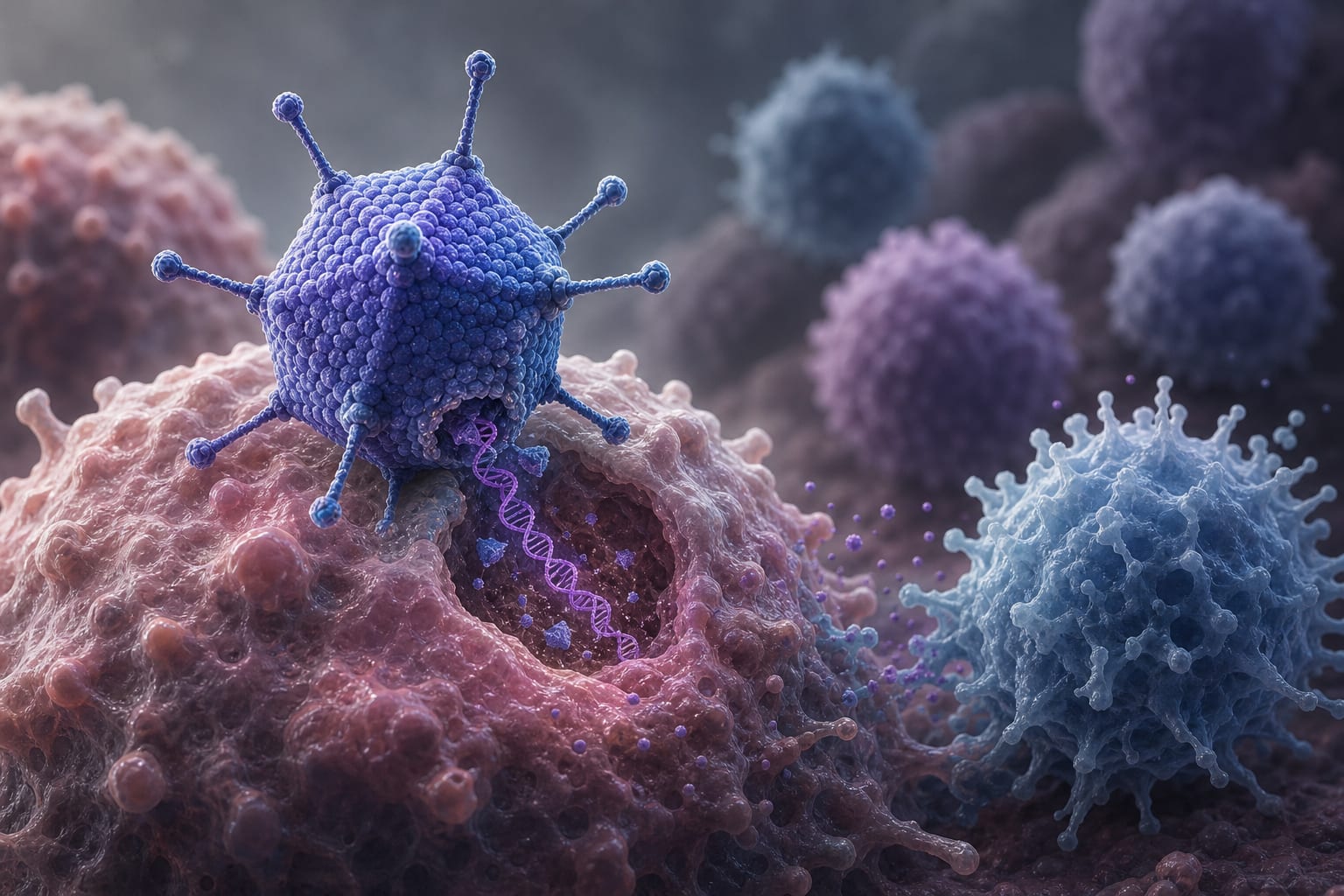
This review discusses recombinant adenoviruses as oncolytic virotherapy for cancer treatment, highlighting their mechanisms, genetic modifications, and key clinical trials demonstrating efficacy and safety.
Background
Cancer remains a leading cause of morbidity and mortality globally, with conventional therapies often limited by toxicity and insufficient efficacy. Oncolytic virotherapy, particularly using genetically engineered adenoviruses, offers a novel approach to selectively target and destroy cancer cells while stimulating anti-tumor immune responses.
Data Highlights
No specific numerical data provided in the source material.
Key Findings
Adenoviruses can be genetically modified to enhance tumor selectivity and immunogenicity.
Oncolytic adenoviruses (OAds) selectively replicate in and destroy cancer cells, releasing tumor-associated antigens.
OAds can convert immunologically 'cold' tumors into 'hot' tumors, enhancing immune-mediated clearance.
Clinical trials have shown promising efficacy and safety profiles for adenovirus-based therapies in various cancer types.
The FDA has approved nadofaragene firadenovec-vncg for specific bladder cancer indications.
Clinical Implications
Ongoing clinical trials will further elucidate the role of recombinant adenoviruses in cancer therapy.
Conclusion
Recombinant adenoviruses are being researched in cancer immunotherapy, with ongoing studies needed to explore their therapeutic potential.