Perioperative Outcomes of Robot-Assisted versus Video-Assisted Thoracoscopic Surgery for Non-Small Cell Lung Cancer: A Meta-Analysis Focusing on Real-World Clinical Studies in the Past 10 Years - Report - MDSpire
Advertisement
Perioperative Outcomes of Robot-Assisted versus Video-Assisted Thoracoscopic Surgery for Non-Small Cell Lung Cancer: A Meta-Analysis Focusing on Real-World Clinical Studies in the Past 10 Years
Clinical Report: Comparative Analysis of RATS and VATS for NSCLC
Overview
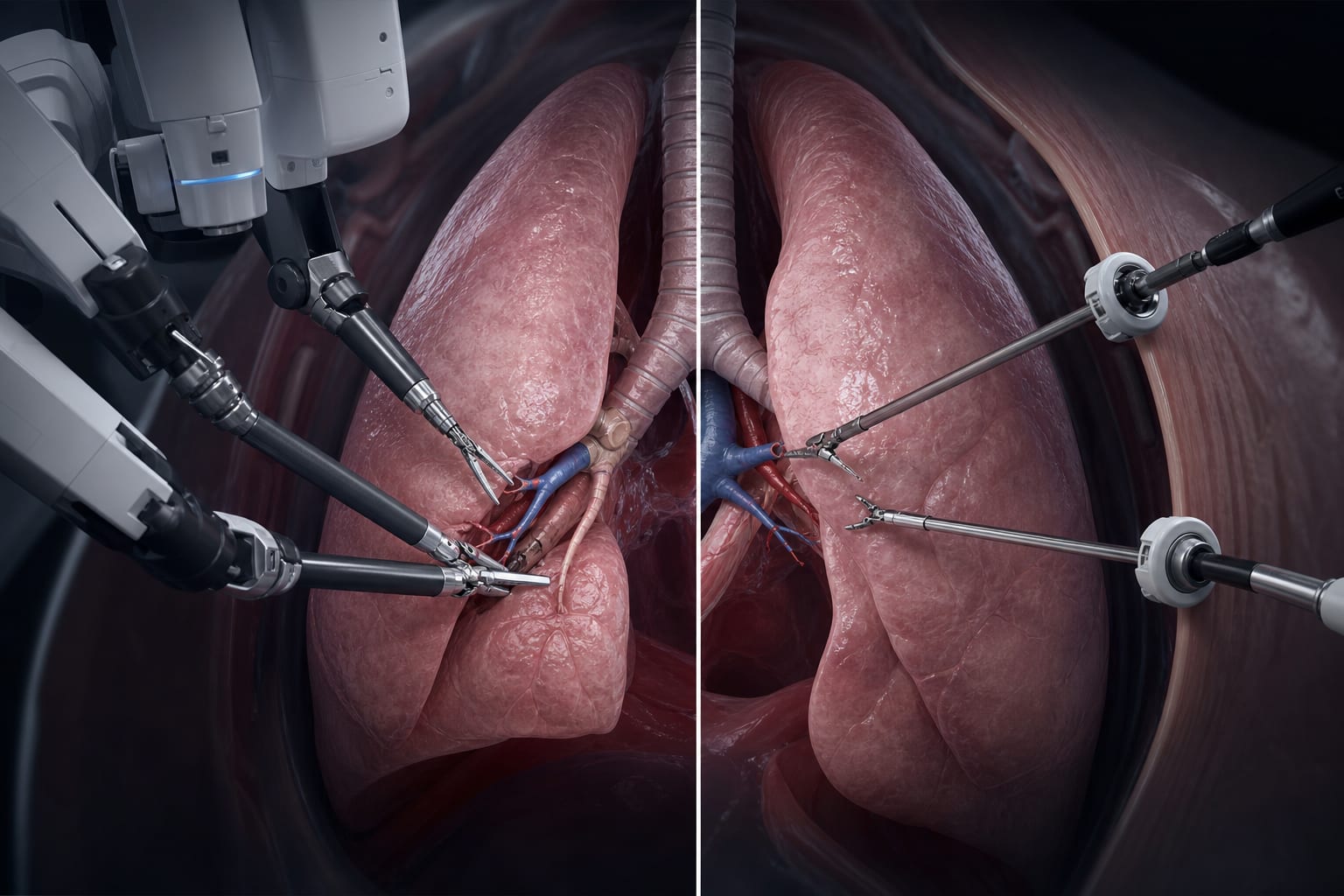
This meta-analysis evaluates the perioperative outcomes of robot-assisted thoracoscopic surgery (RATS) versus video-assisted thoracoscopic surgery (VATS) for non-small cell lung cancer (NSCLC). Findings indicate that while both techniques yield comparable safety and short-term outcomes, RATS demonstrates a higher lymph node yield and shorter operative times in lobectomy cases.
Background
Non-small cell lung cancer (NSCLC) represents over 80% of lung cancer cases, making effective surgical intervention critical. Minimally invasive lobectomy is a standard treatment for early-stage NSCLC, yet the comparative efficacy of RATS and VATS remains debated. Understanding the differences in perioperative outcomes is essential for optimizing surgical approaches and improving patient care.
Data Highlights
Verify and adjust the data to reflect accurate statistical outcomes from the meta-analysis.
Key Findings
No significant differences in intraoperative blood loss, postoperative length of stay, or complication rates between RATS and VATS.
RATS was associated with a higher lymph node yield compared to VATS.
In the lobectomy subgroup, RATS demonstrated shorter operative times.
Study quality varied, with 7 high-quality and 2 moderate-quality studies included.
Funnel plots indicated no substantial publication bias.
Clinical Implications
Surgeons may consider RATS as a viable option for patients with NSCLC, particularly when lymph node retrieval is a priority. The comparable safety profiles of RATS and VATS suggest that patient selection can be guided by specific clinical goals and resource availability.
Conclusion
RATS and VATS provide similar perioperative outcomes for NSCLC, with RATS offering advantages in lymph node yield and operative time in lobectomy cases. These findings support the continued use of both techniques in clinical practice.