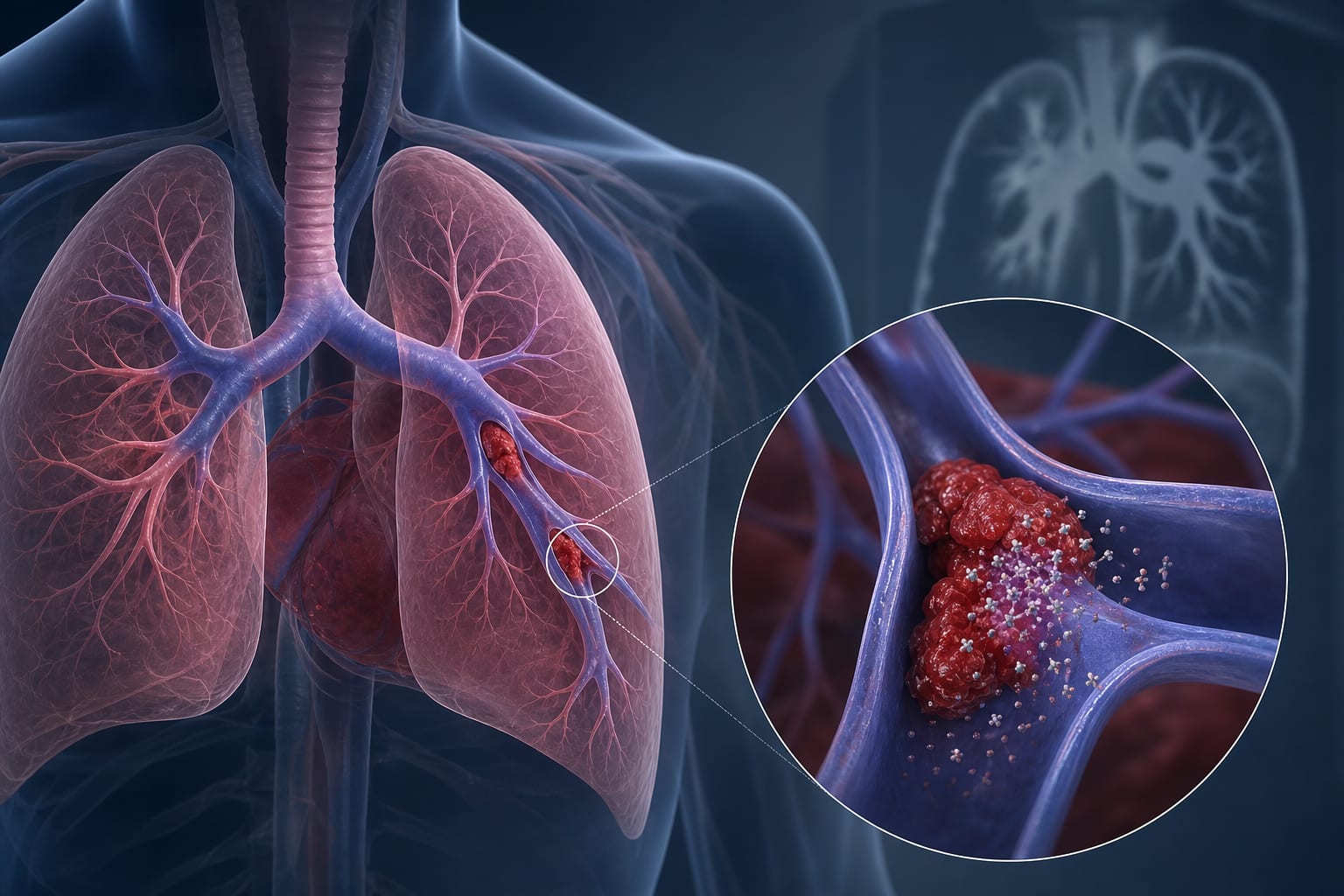
Clinical Report: Assessment of Low-Dose Thrombolysis Efficacy and Safety
Overview
This study evaluates the efficacy and safety of low-dose alteplase thrombolysis in patients with acute intermediate-high-risk pulmonary thromboembolism and a PaO2/FiO2 ratio < 300 mmHg. Results indicate early improvements in oxygenation and right ventricular function with low-dose thrombolysis.
Background
Acute pulmonary thromboembolism (PTE) is a significant global health issue with high mortality rates, particularly among patients classified as intermediate-high risk. Current guidelines do not provide definitive recommendations for thrombolysis in this patient group, highlighting the need for further research to optimize treatment strategies.
Data Highlights
Outcome
Low-Dose Thrombolysis
Conventional-Dose Thrombolysis
LMWH
PaO2/FiO2 Improvement at 24h
Yes
Yes
No
NT-proBNP Decrease at 24h
Yes
Yes
No
mPAP Reduction at 24h
Yes
Yes
No
Major Bleeding Events
0%
0%
N/A
Minor Bleeding Events
6.1%
20.5%
N/A
Key Findings
Both low-dose and conventional-dose thrombolysis improved PaO2/FiO2 ratios compared to LMWH (p < 0.05).
NT-proBNP levels decreased significantly in thrombolysis groups at 24 hours and 3 days (p < 0.05).
mPAP was significantly lower in thrombolysis groups at 24 hours and 7 days (p < 0.05).
No major bleeding occurred in any group, while minor bleeding was significantly lower in the low-dose group (6.1% vs. 20.5%, p < 0.05).
No significant differences in hospital stay, ICU stay, costs, or chronic thromboembolic pulmonary disease at 3 months (all p > 0.05).
Clinical Implications
The findings suggest that low-dose alteplase may be a safe and effective alternative to conventional dosing in patients with acute intermediate-high-risk PTE. Clinicians should consider the potential for reduced bleeding risk when selecting thrombolytic therapy for this patient population.
Conclusion
Low-dose thrombolysis shows early improvements in clinical outcomes for patients with acute intermediate-high-risk PTE. Further studies are needed to confirm these findings.