RKER-012, a modified ActRIIB-Fc ligand trap with BMP sparing properties, attenuates pathological features of experimental pulmonary arterial hypertension - Report - MDSpire
Advertisement
RKER-012, a modified ActRIIB-Fc ligand trap with BMP sparing properties, attenuates pathological features of experimental pulmonary arterial hypertension
Clinical Report: RKER-012: A Modified ActRIIB-Fc Ligand Trap in PAH
Overview
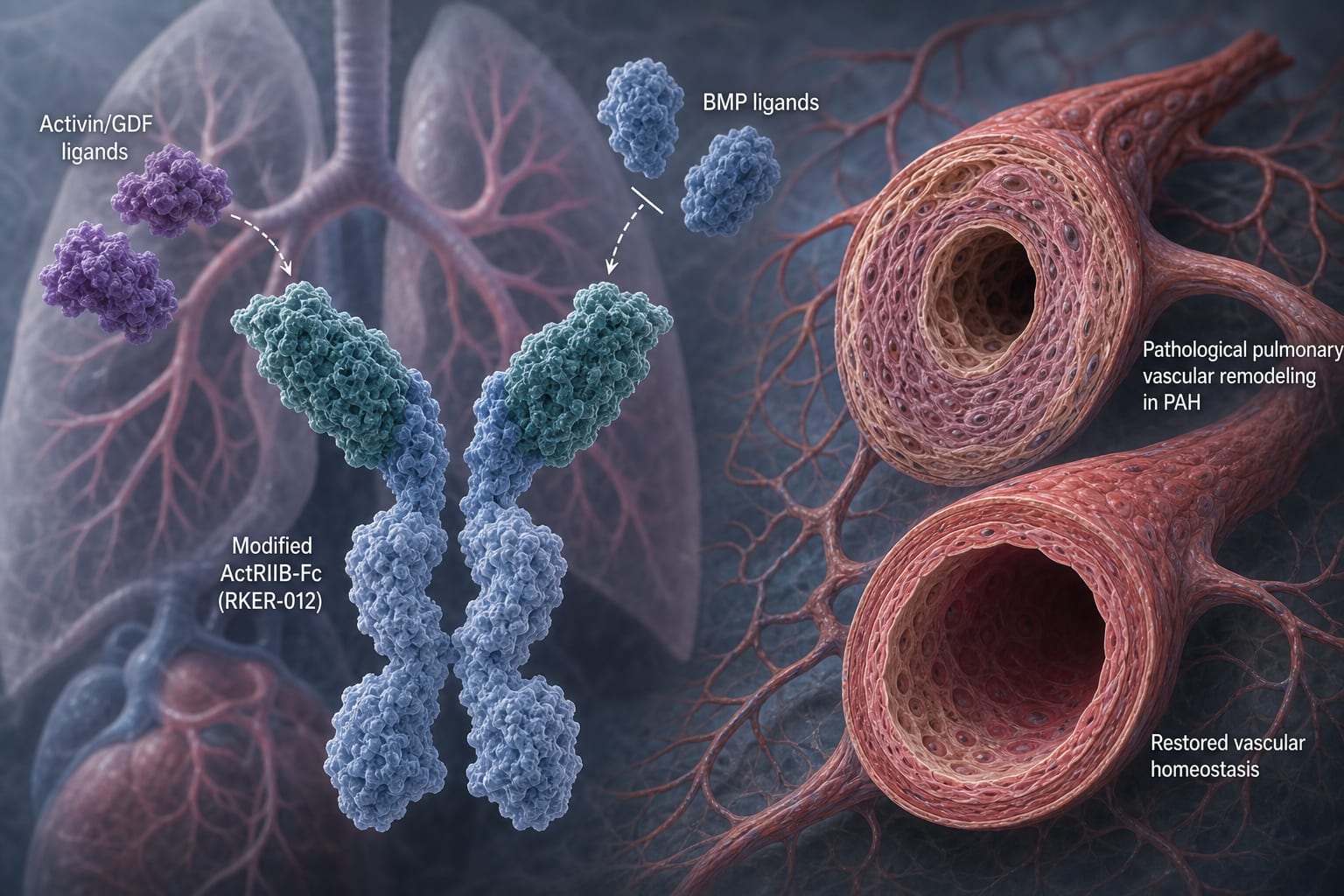
The modified ActRIIB-Fc ligand trap, RKER-012, preserves BMP function while effectively targeting activin/GDF signaling in pulmonary arterial hypertension (PAH). Unlike sotatercept, RKER-012 does not induce erythrocytosis or thrombocytopenia, potentially reducing the risk of hyperviscosity syndrome and associated bleeding.
Background
Pulmonary arterial hypertension (PAH) is characterized by elevated pulmonary artery pressure and right ventricular dysfunction, primarily driven by vascular remodeling. Current treatments, such as sotatercept, target activin/GDF signaling but have limitations, including severe side effects like thrombocytopenia. Understanding new therapeutic options that can mitigate these risks while maintaining vascular integrity is crucial for improving patient outcomes.
Data Highlights
No numerical data provided in the source material.
Key Findings
RKER-012 preserves BMP function while binding to activin/GDF ligands.
RKER-012 does not induce erythrocytosis or thrombocytopenia, unlike sotatercept.
Hypoxia increases susceptibility to hyperviscosity syndrome-related bleeding in Sugen rats.
RKER-012 attenuates experimental PAH by targeting multiple pathobiological components.
Overactive SMAD2/3 signaling is a key pathogenic contributor in PAH.
Clinical Implications
The development of RKER-012 offers a promising alternative to existing therapies for PAH, potentially minimizing severe side effects while effectively addressing the underlying pathophysiology. Clinicians should consider the implications of BMP-sparing therapies in managing PAH.
Conclusion
RKER-012 represents a significant advancement in the treatment of PAH, with the potential to improve patient safety and therapeutic efficacy by targeting overactive activin/GDF signaling without compromising BMP function.
by R. Keith Babbs, Jeanne Ishimwe, Chris Materna, ffolliott M. Fisher, Tandicka Nurse, Cynthia Pinkus, Pritesh Jain, Kevin Dagbay, Rosa Grenha, Tyler Daman, Claire C. Tseng, Emily A. Ledoux, Evan Lema, Alana Gudelsky, Francis Wolenski, Harveen D. Natarajan, Lorena Lerner, Jennifer L. Lachey, Jasbir Seehra, Sachindra R. Joshi