Radially adjustable Tigertriever demonstrates higher reperfusion compared to self-expanding stent-retrievers during mechanical thrombectomy of large vessel occlusions: a systematic review and meta-analysis - Report - MDSpire
Advertisement
Radially adjustable Tigertriever demonstrates higher reperfusion compared to self-expanding stent-retrievers during mechanical thrombectomy of large vessel occlusions: a systematic review and meta-analysis
Clinical Report: Comparison of Tigertriever and Self-Expanding Stent-Retrievers
Overview
This systematic review and meta-analysis evaluated the efficacy and safety of the Tigertriever compared to conventional self-expanding stent retrievers (SE-SRs) in mechanical thrombectomy for large vessel occlusions.
Background
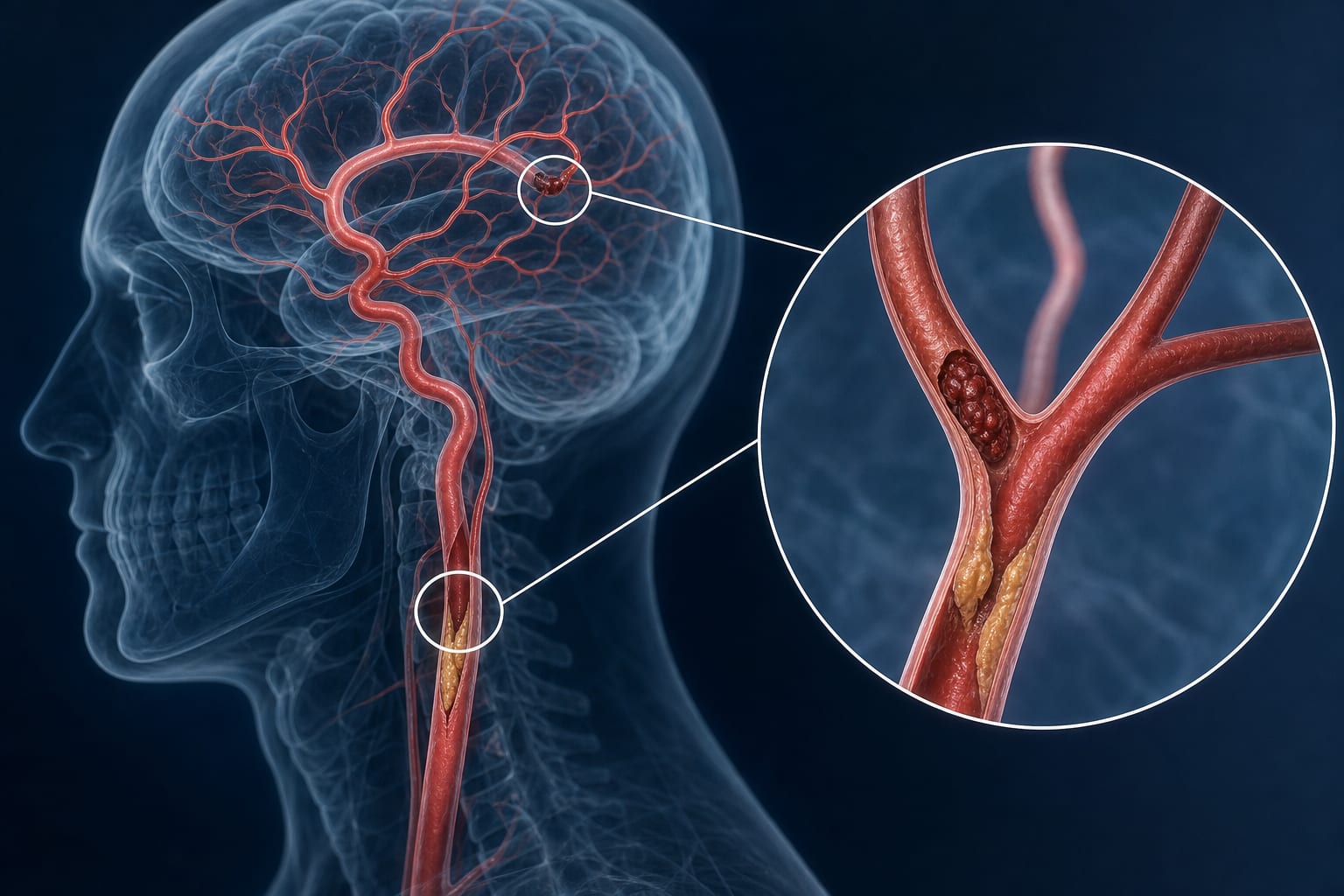
Mechanical thrombectomy is the standard treatment for acute ischemic stroke caused by large vessel occlusions. The introduction of radially adjustable devices like the Tigertriever aims to enhance clot engagement and reduce complications associated with fixed radial force devices.
Data Highlights
Outcome
Tigertriever
SE-SR
Odds Ratio (95% CI)
p-value
Successful Reperfusion (mTICI ≥ 2b)
82.8%
77.8%
1.74 (1.07–2.83)
0.03
Procedural Adverse Events (PAEs)
17.1%
27.4%
0.72 (0.44–1.16)
0.17
Symptomatic Intracranial Hemorrhage (sICH) within 24h
Similar
Similar
-
-
Functional Independence (mRS 0–2) at 90 days
Similar
Similar
-
-
Mortality at 90 days
Similar
Similar
-
-
Key Findings
Tigertriever achieved a successful reperfusion rate of 82.8% compared to 77.8% for SE-SRs.
The odds ratio for successful reperfusion with Tigertriever was 1.74 (95% CI: 1.07–2.83).
There was a trend towards fewer procedural adverse events with Tigertriever (17.1% vs. 27.4%), but this was not statistically significant.
Rates of symptomatic intracranial hemorrhage, functional independence, and mortality at 90 days were similar between the two devices.
The overall risk of bias in the included studies was assessed as low to moderate.
GRADE-assessed certainty for different outcomes was overall moderate.
Clinical Implications
The findings suggest that the Tigertriever may provide a higher rate of successful reperfusion in mechanical thrombectomy for large vessel occlusions. However, clinicians should consider the comparable safety and functional outcomes when selecting devices for thrombectomy procedures.
Conclusion
This meta-analysis indicates that the Tigertriever offers improved reperfusion rates, while the safety and functional outcomes remain comparable to those of conventional self-expanding stent retrievers.
by Zain Tariq, Faizan Shahzad, Noor E. Jannat, Tallal Mushtaq Hashmi, Sonesh Amin, Mohammad AlMajali, Qasim Bashir, Jeffrey L. Saver, Besher Shami, Amit Chaudhari