Manta-Shaped Fix for 'Dog Ear' Leaks?
Overview
A novel manta-shaped anastomosis technique demonstrated no anastomotic leakage in a cohort of 68 patients undergoing laparoscopic low anterior resection. The study reported favorable outcomes including a mean operative time of 176 minutes, mean estimated blood loss of 67 mL, and a mean postoperative hospital stay of 5 days.
Background
Anastomotic leakage is a significant complication following low anterior resection, with incidence rates ranging from 5% to 20%. Such leaks can lead to increased morbidity, reoperation, and prolonged recovery times, making effective prevention strategies crucial. The introduction of innovative surgical techniques, like the manta-shaped anastomosis, aims to mitigate these risks.
Data Highlights
| Outcome | Value |
|---|---|
| Mean Operative Time | 176 minutes |
| Mean Estimated Blood Loss | 67 mL |
| Mean Postoperative Hospital Stay | 5 days |
| Postoperative Complications | 2 patients (fever related to infections) |
Key Findings
- No anastomotic leakage, bleeding, or postoperative ileus reported in the cohort.
- All procedures were performed by the same surgical team to minimize variability.
- Negative intraoperative air leak tests in all patients.
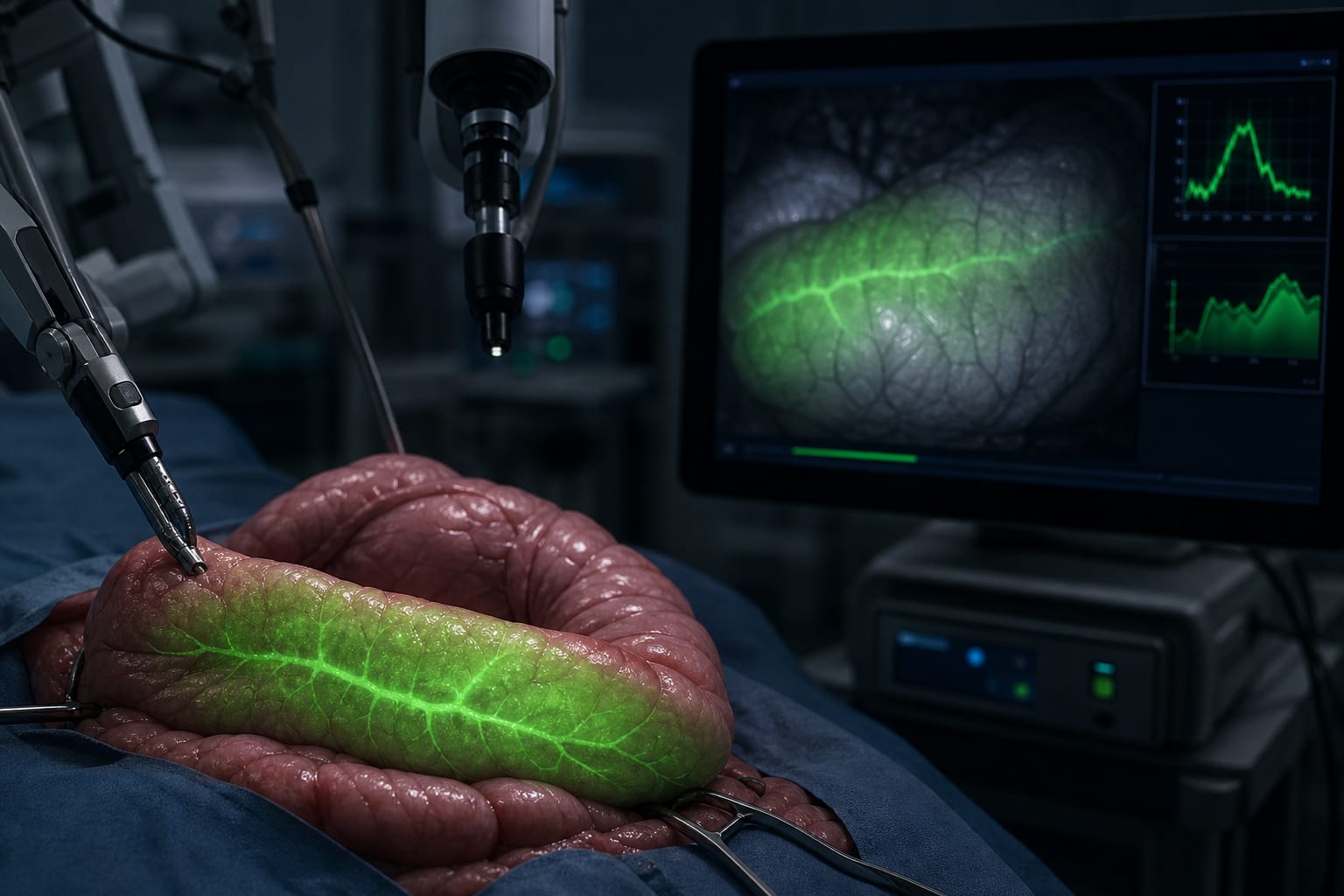
- Indocyanine green fluorescence imaging used for perfusion assessment.
- Postoperative oral intake resumed on day 1 for all patients.
- Two patients developed postoperative fever related to infections, not anastomotic complications.
Clinical Implications
The manta-shaped anastomosis technique may offer a promising alternative to traditional methods, potentially reducing the risk of anastomotic leaks. Clinicians should consider the implications of this technique in their surgical practice, especially for patients at high risk for complications. Further investigation in larger, controlled studies is warranted.
Conclusion
The findings suggest that the manta-shaped anastomosis could be a viable option for preventing anastomotic leaks in laparoscopic low anterior resection, but the limitations of the study, including sample size and lack of a control group, warrant caution and further investigation.
Related Resources & Content
- Peng Sun, MD, BMC Surgery, 2024 -- Manta-Shaped Fix for 'Dog Ear' Leaks?
- International Consensus on Reporting Anastomotic Leaks After Colorectal Cancer Surgery: The CoReAL Reporting Framework, PMC, 2025
- Blood Perfusion Assessment by Indocyanine Green Fluorescence Imaging for Minimally Invasive Rectal Cancer Surgery (EssentiAL trial): A Randomized Clinical Trial, PMC, 2025
- Contact Lens Spectrum — Treatment Plan
- Contact Lens Spectrum — Contact Lens Care & Supplemental Procedures
- Ophthalmology Management — A Better Way to Repair Large, Leaking Blebs
- Optometric Management — MGD: Get Your Ducts in a Row
- International Consensus on Reporting Anastomotic Leaks After Colorectal Cancer Surgery: The CoReAL Reporting Framework - PMC
- Blood Perfusion Assessment by Indocyanine Green Fluorescence Imaging for Minimally Invasive Rectal Cancer Surgery (EssentiAL trial): A Randomized Clinical Trial - PMC
- Removal of the “dog-ear” during laparoscopic anterior resection with double stapling technique reduces the anastomotic leakage: a prospective cohort study | Techniques in Coloproctology | Springer Nature Link
Based on findings from:
Manta-Shaped Fix for 'Dog Ear' Leaks?
Kathryn Wighton. Conexiant, 2026.
https://conexiant.com/surgery/articles/mantashaped-fix-for-dog-ear-leaks/
This content is an AI-generated, fully rewritten summary based on a published scholarly article. It does not reproduce the original text and is not a substitute for the original publication. Readers are encouraged to consult the source for full context, data, and methodology.