Prognostic impact of lymphocyte kinetics and immune composition during bispecific antibody therapy in relapsed/refractory multiple myeloma - Report - MDSpire
Clinical Report: Influence of Lymphocyte Dynamics on Bispecific Antibody Outcomes
Overview
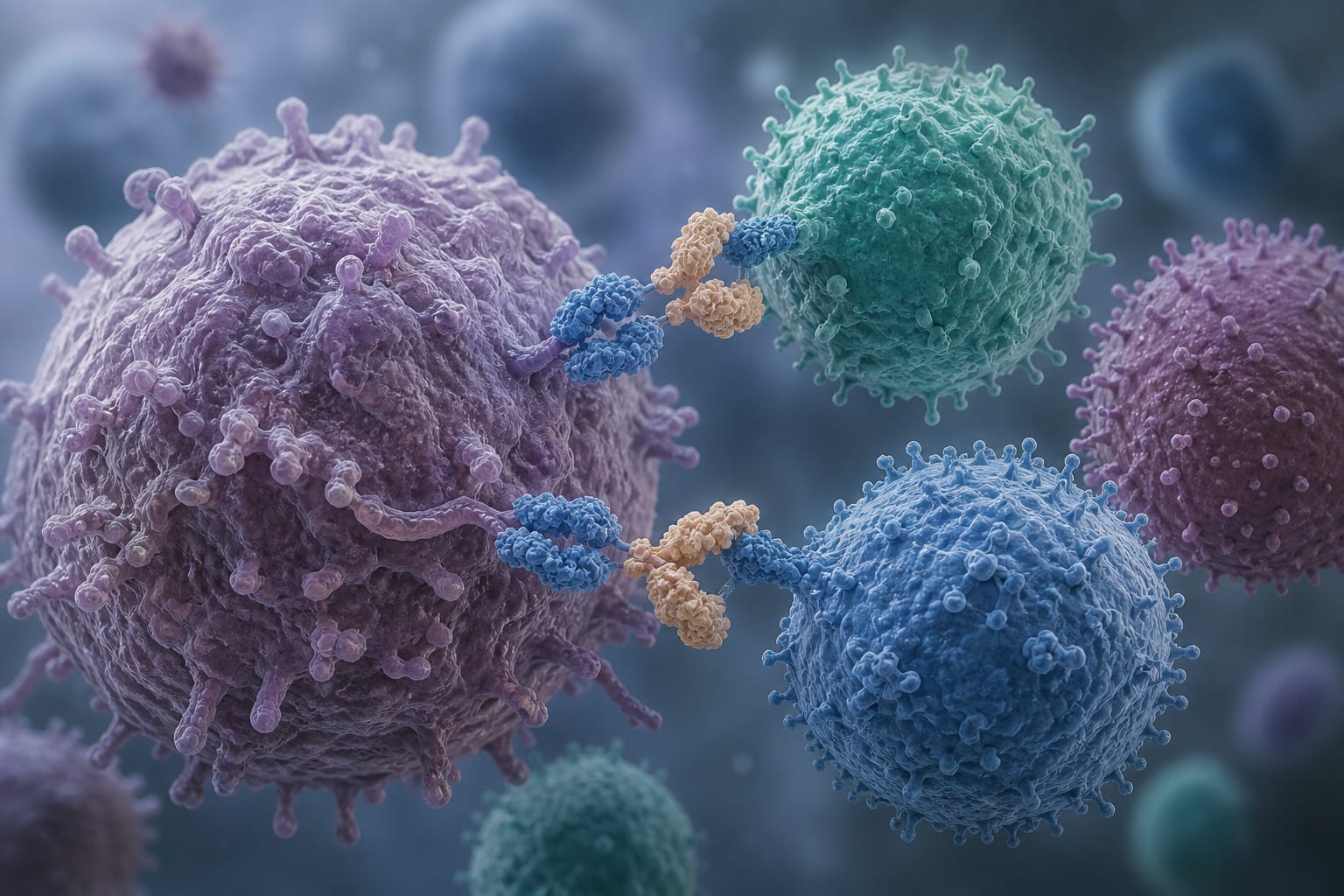
This study investigates the impact of lymphocyte dynamics and immune profiles on the efficacy of bispecific antibodies in relapsed/refractory multiple myeloma. Key findings indicate that while baseline lymphopenia did not correlate with treatment response, significant changes in lymphocyte counts occurred during treatment, particularly among responders.
Background
Bispecific antibodies targeting BCMA and GPRC5D represent significant advancements in the treatment of relapsed/refractory multiple myeloma, achieving overall response rates of up to 70%. Understanding the factors influencing treatment outcomes, such as immune competence reflected by lymphocyte dynamics, is crucial for optimizing therapeutic strategies. This study aims to clarify the prognostic significance of lymphocyte kinetics during bispecific antibody treatment.
Data Highlights
Parameter
Value
Median Age
70 years
Male Patients
52%
Median Baseline ALC
0.91 × 10³/µL
Patients with Lymphopenia
52%
2-Year PFS Rate (No Lymphopenia)
28%
2-Year OS Rate (No Lymphopenia)
55%
Key Findings
Overall response rates to bispecific antibodies in RRMM reached 70%.
Baseline lymphopenia was present in 52% of patients but did not correlate with treatment response.
Responders exhibited significantly higher ALC values on Day 14 compared to non-responders.
CD4 T-cell counts decreased significantly by Day 30, particularly in non-responders.
CD19 B-cell counts declined persistently throughout treatment without differences between responders and non-responders.
Clinical Implications
Clinicians should consider the dynamics of lymphocyte subsets when evaluating treatment responses to bispecific antibodies in RRMM. Monitoring ALC and lymphocyte subset changes may provide insights into patient immune competence and treatment efficacy.
Conclusion
The study highlights the importance of lymphocyte dynamics in understanding treatment outcomes with bispecific antibodies in relapsed/refractory multiple myeloma, suggesting that immune profile assessments may aid in patient management.