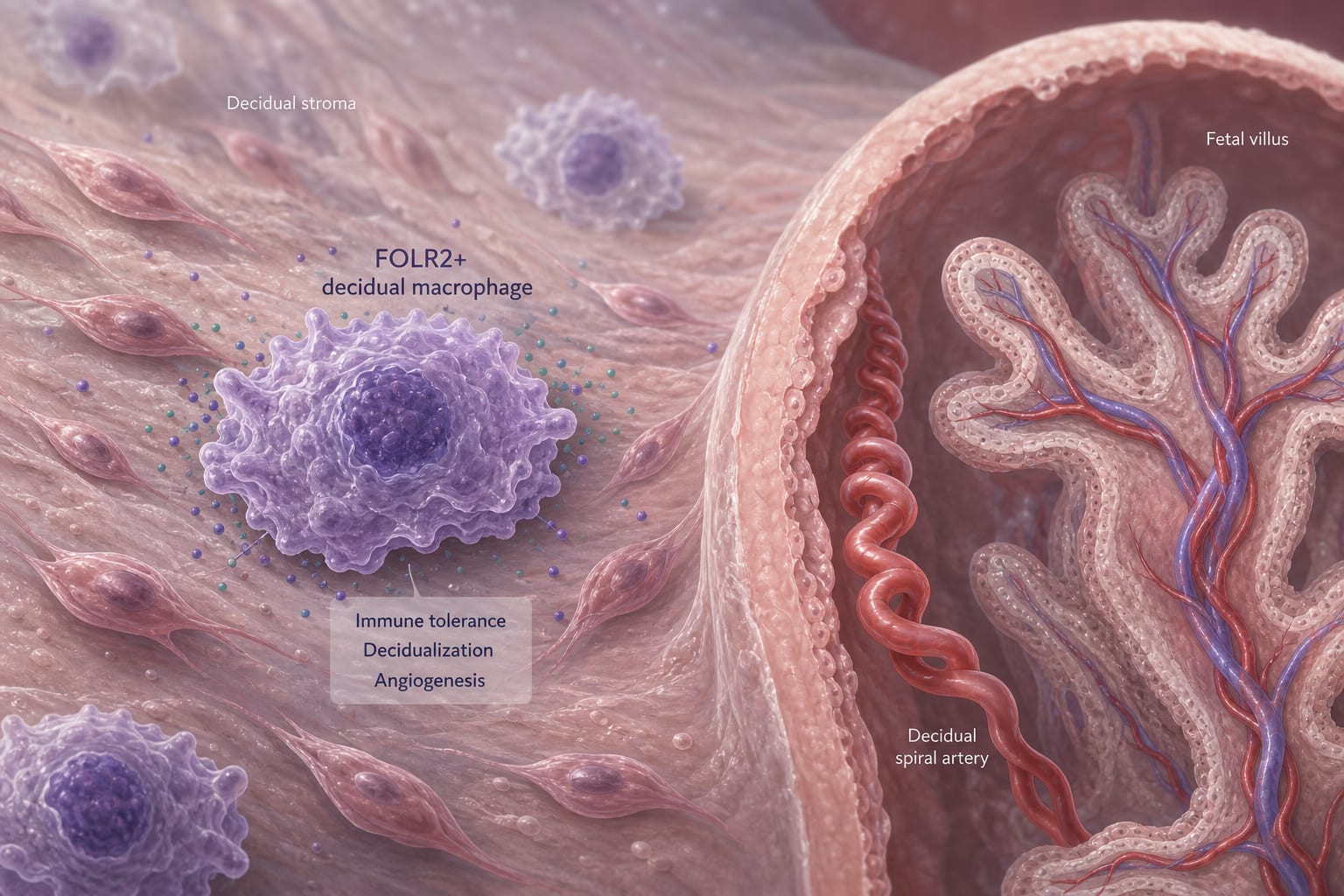
Deficiency of FOLR2+ Decidual Macrophages Disrupts Immune Activation
Overview
This study identifies a significant reduction in FOLR2+ macrophages in the decidua of women experiencing recurrent spontaneous abortion (RSA), which correlates with increased inflammatory signaling and impaired angiogenesis.
Background
Recurrent spontaneous abortion (RSA) affects a notable percentage of women. Understanding the immune mechanisms at the maternal-fetal interface is essential for addressing RSA, as dysregulation in this area can lead to pregnancy failure. Decidual macrophages, particularly the FOLR2+ subset, are critical for maintaining immune tolerance and facilitating successful pregnancy.
Data Highlights
No numerical data available in the source material.
Key Findings
FOLR2+ macrophages exhibit an M2-like immunoregulatory phenotype in the decidua.
In RSA cases, both FOLR2 expression and the proportion of FOLR2+ macrophages are significantly reduced.
Reduced FOLR2+ macrophages are associated with increased inflammatory signaling and impaired angiogenesis.
FOLR2 overexpression enhances immunoregulatory and pro-angiogenic properties in macrophages.
FOLR2 silencing leads to increased inflammatory responses and impaired angiogenesis.
Reciprocal interactions between decidual stromal cells and FOLR2+ macrophages promote decidualization and pregnancy maintenance.
Clinical Implications
The findings highlight the importance of FOLR2+ macrophages in RSA.
Conclusion
The study emphasizes the role of FOLR2+ macrophages in immune regulation at the maternal-fetal interface.