Clinical Report: Understanding Endocrine Cell Growth Mechanisms in the Pancreas
Overview
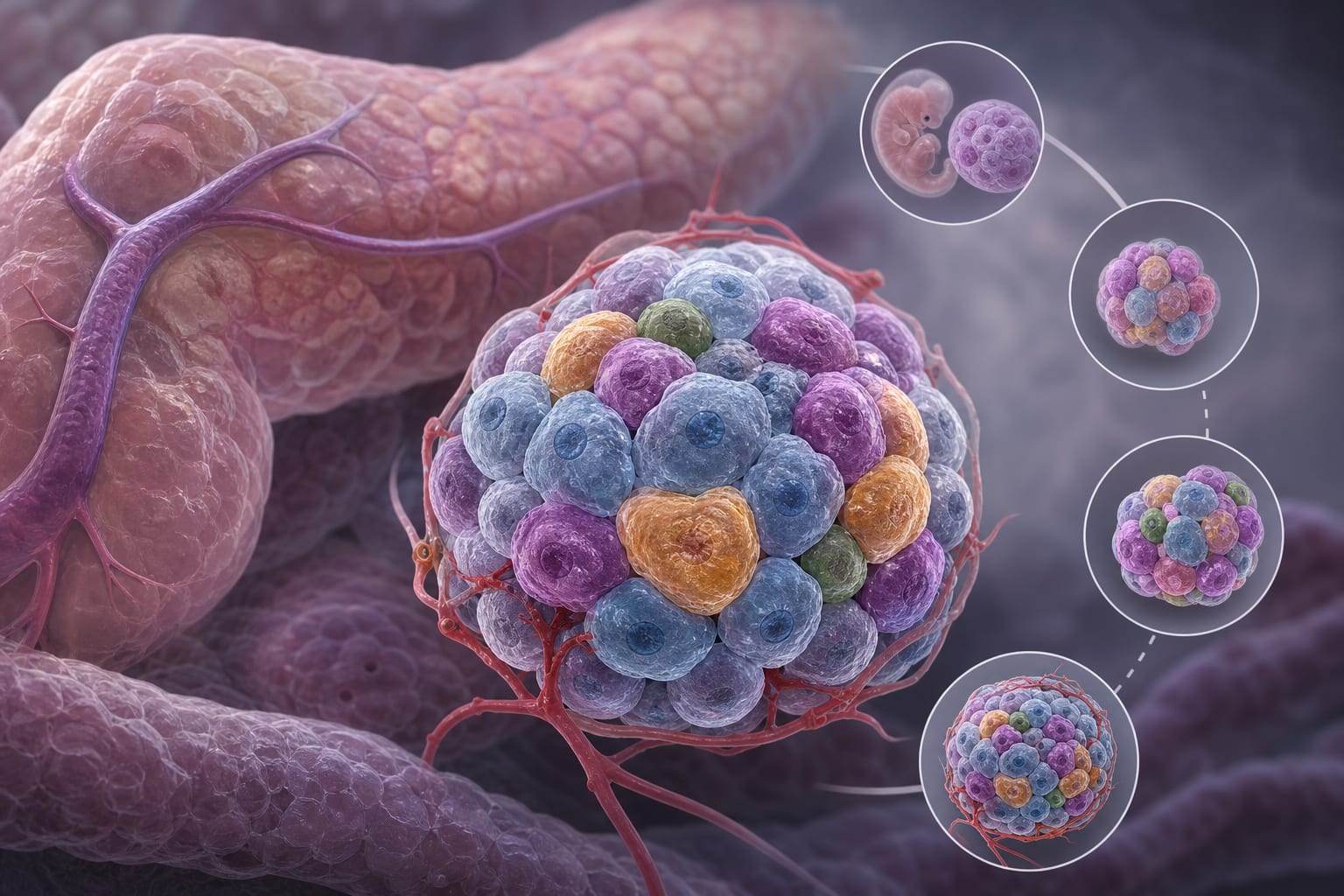
This editorial discusses the mechanisms of endocrine cell proliferation in the pancreas across different developmental stages, emphasizing the importance of maintaining β-cell mass for glucose homeostasis.
Background
The population of hormone-producing endocrine cells, particularly insulin-secreting β-cells, is crucial for glucose homeostasis. Loss of β-cell mass is a key feature of type 1 and type 2 diabetes, making the restoration of these cells a significant focus in regenerative medicine. Understanding the regulation of endocrine cell growth throughout life is essential for developing effective diabetes therapies.
Data Highlights
No numerical data or trial data presented in the source material.
Key Findings
Endocrine cell proliferation varies significantly across the lifespan, with extensive expansion during embryonic and neonatal development.
Adult endocrine cells are generally quiescent but can reactivate proliferation in response to metabolic stress or injury.
PDGFRα signaling is essential for maintaining β-cell proliferative competence, as shown by reduced Ki67+ β-cells in mutant islets.
PFKFB3 expression supports endocrine cell expansion during metabolic stress, indicating a role in adaptive growth mechanisms.
Epigenetic factors, such as KDM4A, are critical for β-cell differentiation and function, impacting insulin secretion.
Residual C-peptide secretion in children with type 1 diabetes correlates with elevated betatrophin levels.
Clinical Implications
Understanding the mechanisms of endocrine cell proliferation can inform strategies for regenerative therapies in diabetes. Insights into metabolic adaptation and epigenetic regulation may lead to novel approaches for preserving or restoring β-cell function.
Conclusion
The regulation of endocrine cell growth is complex and varies across developmental stages, with significant implications for diabetes treatment strategies. Further research is needed to elucidate these mechanisms and their potential therapeutic applications.