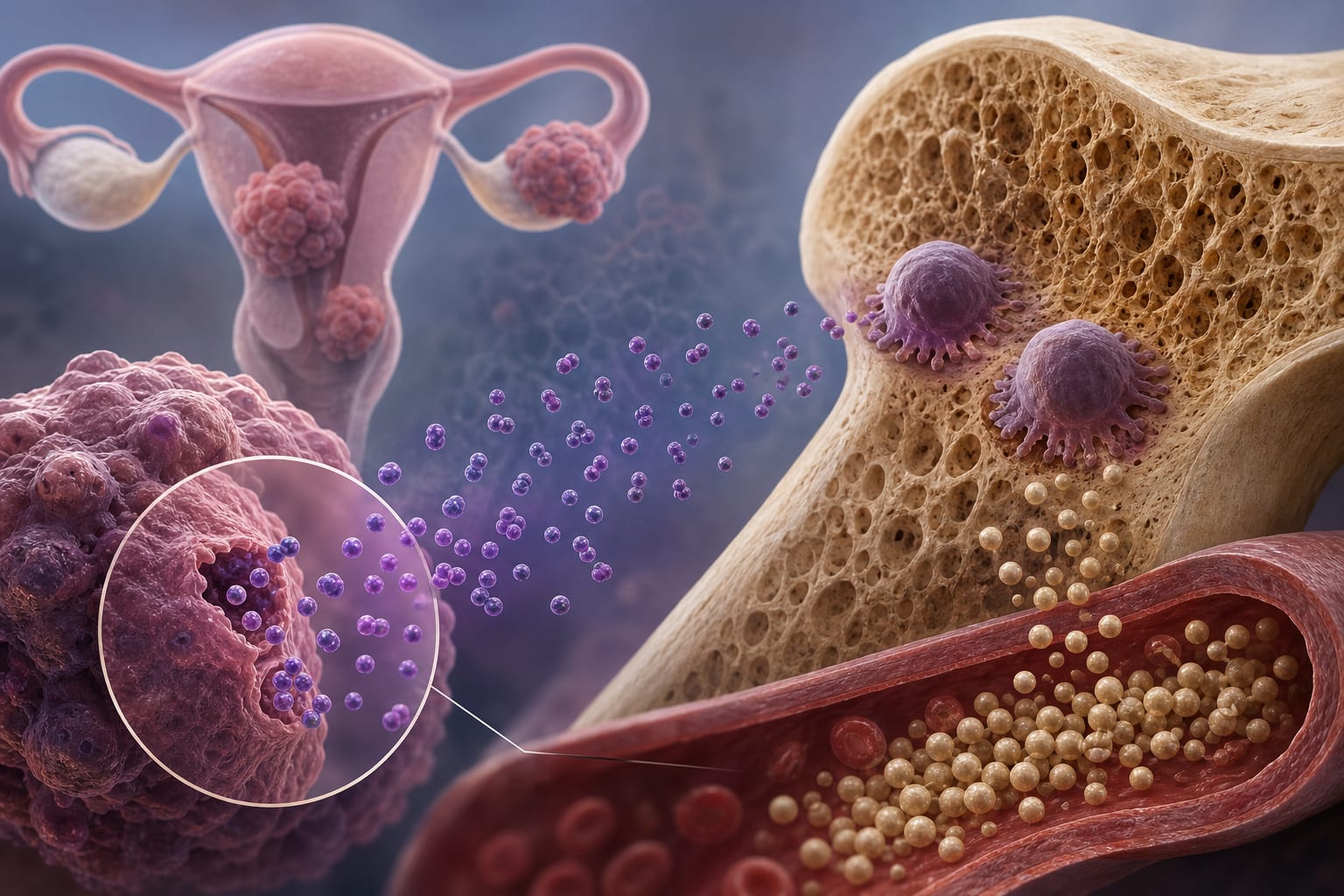
Clinical Report: A Scoping Review of PTHrP-Related Hypercalcemia in Gynecological Cancers
Overview
This scoping review provides a structured overview of PTHrP-associated hypercalcemia in gynecological malignancies, highlighting the rarity of such cases in the literature. It evaluates pre- and postoperative biochemical parameters and categorizes cases based on diagnostic confirmation levels.
Background
Hypercalcemia is a significant metabolic complication in malignancy, leading to increased morbidity and mortality. Parathyroid hormone-related peptide (PTHrP) is a key factor in hypercalcemia of malignancy (HCM), particularly in various cancers, including gynecological tumors. Despite its relevance, PTHrP involvement in gynecological cancers is considered rare, with limited evidence primarily from case reports.
Data Highlights
No numerical data or trial data were provided in the article.
Key Findings
PTHrP is involved in hypercalcemia of malignancy, particularly in various cancers.
HCM occurs in approximately 20-30% of cancer patients, with PTHrP-driven HHM being the most common mechanism.
PTHrP expression has been reported in gynecological tumors, although it is rare.
The literature on PTHrP-related hypercalcemia in gynecological cancers is heterogeneous and primarily consists of case reports.
This scoping review aims to systematically summarize existing evidence and evaluate biochemical parameters.
Clinical Implications
Healthcare professionals should be aware of the potential for PTHrP-related hypercalcemia in gynecological malignancies, despite its rarity. Accurate diagnosis and understanding of biochemical parameters are essential for managing this condition effectively.
Conclusion
The scoping review highlights the need for further structured evaluations of PTHrP-associated hypercalcemia in gynecological cancers to enhance clinical understanding and management.