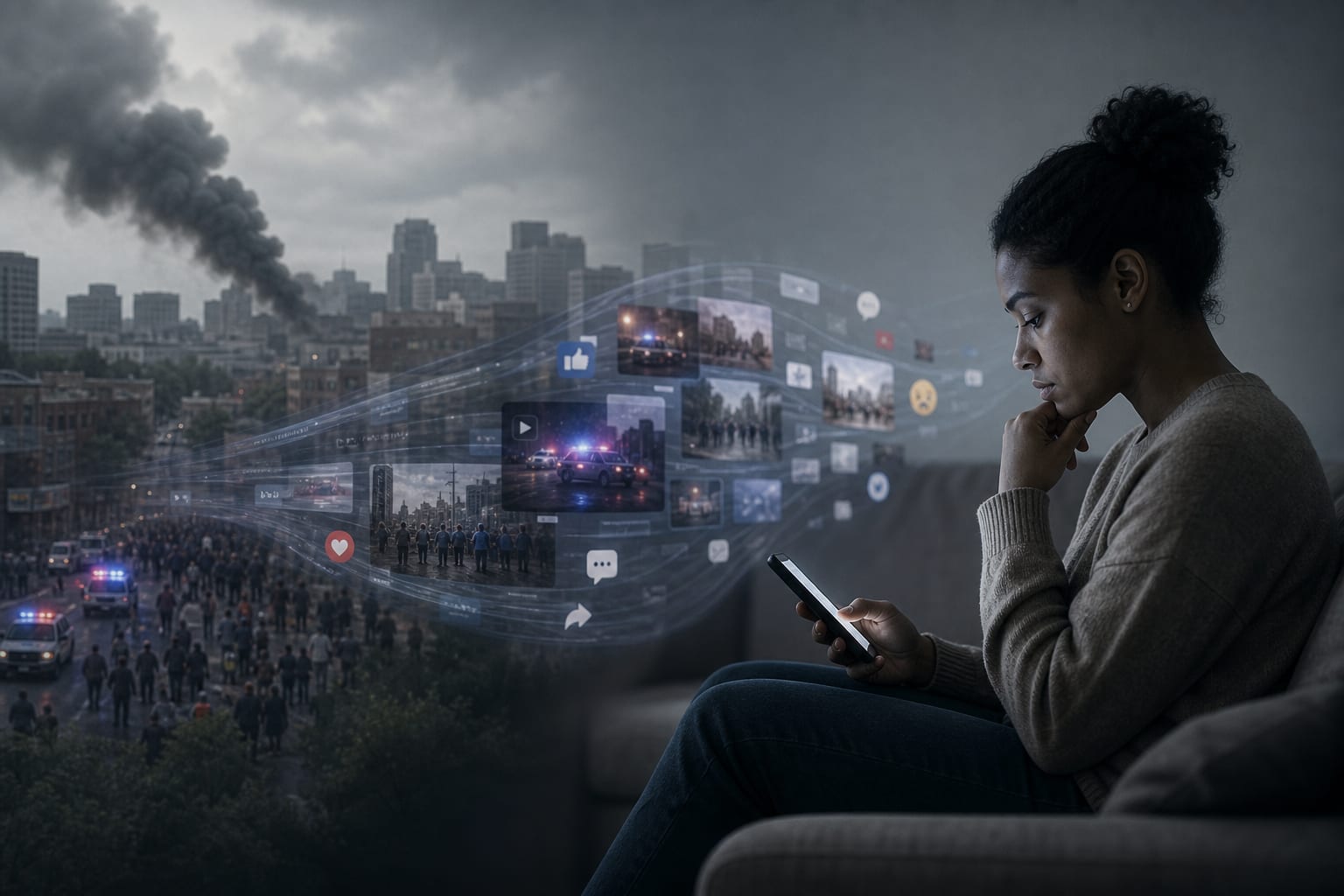
Impact of Media Exposure on Community Distress Following Incidents of Mass Violence
Overview
Revise to state that the study examines associations without concluding causation.
Background
Remove claims about the need for public health strategies; focus on media exposure.
Data Highlights
No numerical data or trial data presented in the article.
Key Findings
Approximately 15% of adults in MVI-affected communities report major depressive episodes.
24% of adults in these communities report PTSD within the past year.
Media consumption after MVIs is linked to increased stress reactions and fear among indirectly affected individuals.
Graphic media images are associated with higher acute stress and functional impairment compared to non-graphic images.
Individuals with a history of potentially traumatic events are more likely to seek out MVI-related media.
Clinical Implications
Healthcare professionals should be aware of the psychological impact of media exposure on communities following MVIs. Monitoring community distress and implementing preventive measures may help mitigate the long-term mental health effects associated with these events.
Conclusion
The study underscores the significant role of media exposure in influencing community distress following mass violence incidents. Understanding these dynamics is essential for effective public health responses.
Interviews with hospital leaders and employed physicians highlighted financial pressures, perceived care-integration benefits, and unresolved operational tensions following acquisition.