Network structure analysis of depression, anxiety, and stress symptoms among college students: identification of central and bridge symptoms - Report - MDSpire

Network structure analysis of depression, anxiety, and stress symptoms among college students: identification of central and bridge symptoms

  • By

  • Bochuan Zhao

  • Huiwen Zhu

  • Yuqi Su

  • Junji Chen

  • Haining Tu

  • May 26, 2026

  • 0 min

Share

Clinical Report: Analysis of Network Structures Relating to Depression, Anxiety, and Stress Symptoms

Overview

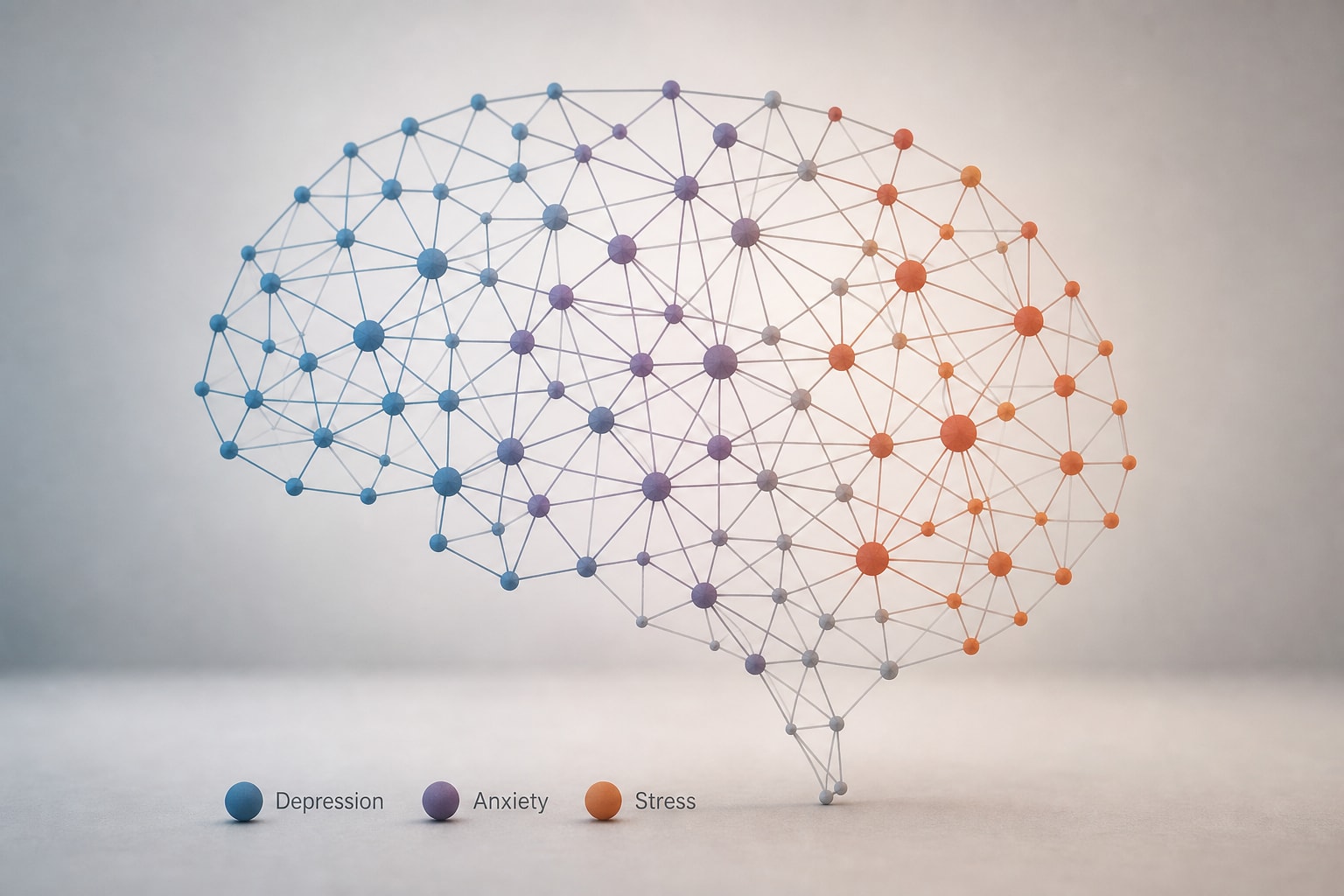
This study utilized network analysis to explore the interrelationships among depression, anxiety, and stress symptoms in Chinese college students. Key symptoms identified include feelings of panic, nervous tension, and difficulty relaxing.

Background

Mental health issues among college students are a growing concern, with significant rates of depression and anxiety reported. Understanding the interplay between these symptoms is crucial, especially given the high comorbidity rates.

Data Highlights

SymptomExpected Influence (EI)Bridge Expected Influence (Bridge EI Z)
A15 (Feeling of panic)2.061.70
S12 (Difficulty relaxing)1.42N/A
A20 (Feeling scared without reason)1.16N/A
S8 (Nervous tension)N/A2.12
D13 (Feeling downhearted and blue)N/A1.51

Key Findings

  • The symptom network showed extensive positive connections among the 21 symptom nodes.
  • Central symptoms identified include feelings of panic, difficulty relaxing, and feeling scared without reason.
  • Bridge symptoms connecting different dimensions include nervous tension, feelings of panic, and feeling downhearted and blue.
  • Both feelings of panic and nervous tension ranked among the top central and bridge symptoms.

Clinical Implications

The identification of central and bridge symptoms can guide targeted interventions for mental health issues among college students.

Conclusion

The study highlights the interconnected nature of depression, anxiety, and stress symptoms in college students.

Related Resources & Content

  1. Frontiers in Psychiatry, 2026 -- Network structure analysis of post-traumatic stress and depressive symptoms among college students: identification of central and bridge symptoms
  2. BMC Psychiatry, 2025 -- Psychological symptoms, comorbidities and symptom items associated with self-reported mental health needs in college students
  3. BMC Psychiatry, 2025 -- Unravelling associations of personality traits, emotion regulation strategies, coping styles, and psychopathology with suicide risk in university students: a network perspective
  4. BMC Psychiatry, 2025 -- Network analysis of interrelationships among physical activity, sleep disturbances, depression, and anxiety in college students
  5. U.S. Preventive Services Taskforce, 2023 -- Depression and Suicide Risk in Adults: Screening
  6. National College Health Assessment - ACHA, 2024
  7. WHO, 2023 -- Mental health of adolescents
  8. NICE, 2026 -- Depression in adults: treatment and management
  9. U.S. Preventive Services Taskforce - Screening for Depression and Suicide Risk
  10. American College Health Association - National College Health Assessment
  11. World Health Organization - Adolescent Mental Health
  12. Overview | Depression in adults: treatment and management | Guidance | NICE
  13. Nonpharmacologic and Pharmacologic Treatments of Adults in the Acute Phase of Major Depressive Disorder: A Living Clinical Guideline From the American College of Physicians - PubMed
  14. Efficacy of a Mobile App-Based Intervention for Young Adults With Anxiety Disorders: A Randomized Clinical Trial - PubMed
  15. JMIR Mental Health - Web-Based, Human-Guided, or Computer-Guided Transdiagnostic Cognitive Behavioral Therapy in University Students With Anxiety and Depression: Randomized Controlled Trial
  16. Application of DASS-21 in Chinese students: invariance testing and network analysis | BMC Public Health | Springer Nature Link
  17. A network model of depressive and anxiety symptoms: a statistical evaluation | Molecular Psychiatry

Original Source(s)

Related Content