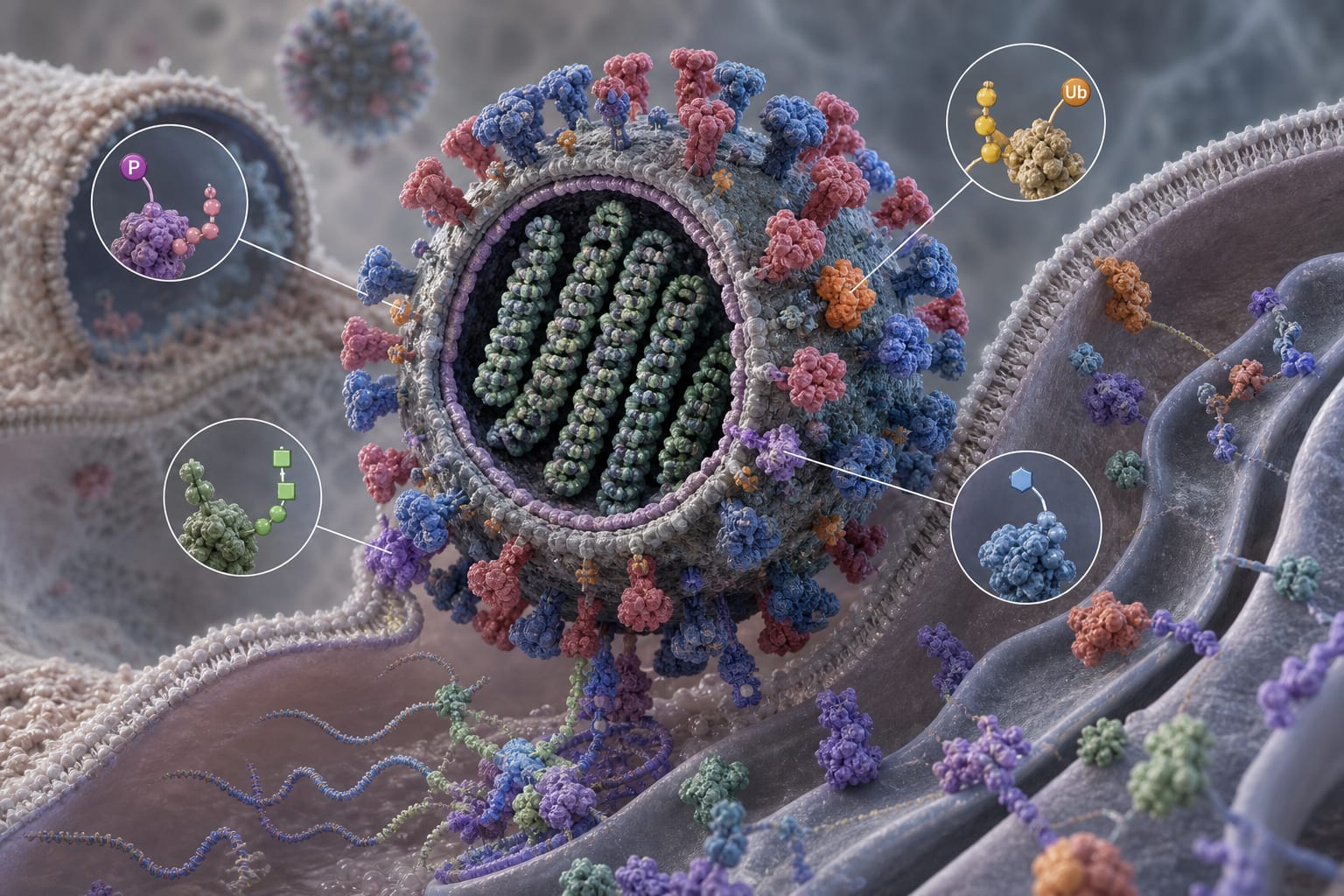
Regulatory Roles of Post-Translational Modification Networks in Influenza Virus Replication, Host Adaptation, and Immune Evasion
-
By
-
Gao, Yihang
-
Zhang, Bingya
-
June 4, 2026
Clinical Report: Regulatory Roles of Post-Translational Modification Networks in Influenza Virus
Overview
This review highlights the critical roles of post-translational modifications (PTMs) in influenza virus replication, host adaptation, and immune evasion. It emphasizes how PTM networks, including phosphorylation and ubiquitination, influence viral life cycles and suggest potential therapeutic targets.
Background
Influenza viruses pose significant global health threats due to their rapid evolution and ability to evade host immune responses. Understanding the molecular mechanisms, particularly the role of post-translational modifications, is essential for developing effective antiviral strategies. This knowledge can inform vaccine design and therapeutic interventions aimed at mitigating influenza's impact.
Data Highlights
No specific numerical data or trial data provided in the article.
Key Findings
- Post-translational modifications such as phosphorylation and ubiquitination fine-tune polymerase activity and ribonucleoprotein trafficking.
- SUMOylation and acetylation modulate polymerase function and host immune antagonism.
- Glycosylation remodeling of viral glycoproteins is linked to antigenic evolution and immune escape.
- RNA methylation and PTM-linked metabolic pathways reshape host environments to support viral replication.
- Many insights into PTM roles derive from cell-based or model organism studies, with gaps in understanding during human infection.
Clinical Implications
Healthcare professionals should consider the implications of PTMs in influenza virus biology when developing antiviral therapies and vaccines. Targeting PTM-modulating enzymes may offer new avenues for host-directed antiviral strategies.
Conclusion
The review underscores the importance of post-translational modification networks in influenza virus dynamics and highlights the need for further research to explore their potential as therapeutic targets.
Related Resources & Content
- Frontiers in Immunology, 2026 -- SARS-CoV-2-host and interactions: the dual roles of E3 ubiquitin ligases and ubiquitin-like modification mechanisms in viral infection
- Frontiers in Immunology, 2026 -- Opening the black box: insights into ubiquitin-mediated control of innate antiviral immunity and AI-enhanced therapeutics
- npj Digital Medicine, 2025 -- Multiomics Analysis Using Explainable AI Uncovers Common and Distinct Host Responses in COVID-19 and Influenza
- Frontiers in Immunology, 2026 -- Context-dependent functions of ALKBH5: a mechanistic framework linking cellular stress responses, immune regulation, viral infection, and therapeutic vulnerabilities
- MMWR, 2025 -- Prevention and Control of Seasonal Influenza with Vaccines: Recommendations of the Advisory Committee on Immunization Practices
- CDC -- Influenza Antiviral Medications: Summary for Clinicians
- New England Journal of Medicine -- Efficacy and Safety of an mRNA Seasonal Influenza Vaccine in Adults
- Prevention and Control of Seasonal Influenza with Vaccines: Recommendations of the Advisory Committee on Immunization Practices — United States, 2025–26 Influenza Season | MMWR
- Influenza Antiviral Medications: Summary for Clinicians | Influenza (Flu) | CDC
- Efficacy and Safety of an mRNA Seasonal Influenza Vaccine in Adults | New England Journal of Medicine
Based on findings from:
Post-translational modification networks as master regulators of influenza virus replication, host adaptation, and immune evasion
Gao, Yihang , Zhang, Bingya . Frontiers In Immunology, 2026.
https://www.frontiersin.org/journals/immunology/articles/10.3389/fimmu.2026.1816377/full
This content is an AI-generated, fully rewritten summary based on a published scholarly article. It does not reproduce the original text and is not a substitute for the original publication. Readers are encouraged to consult the source for full context, data, and methodology.