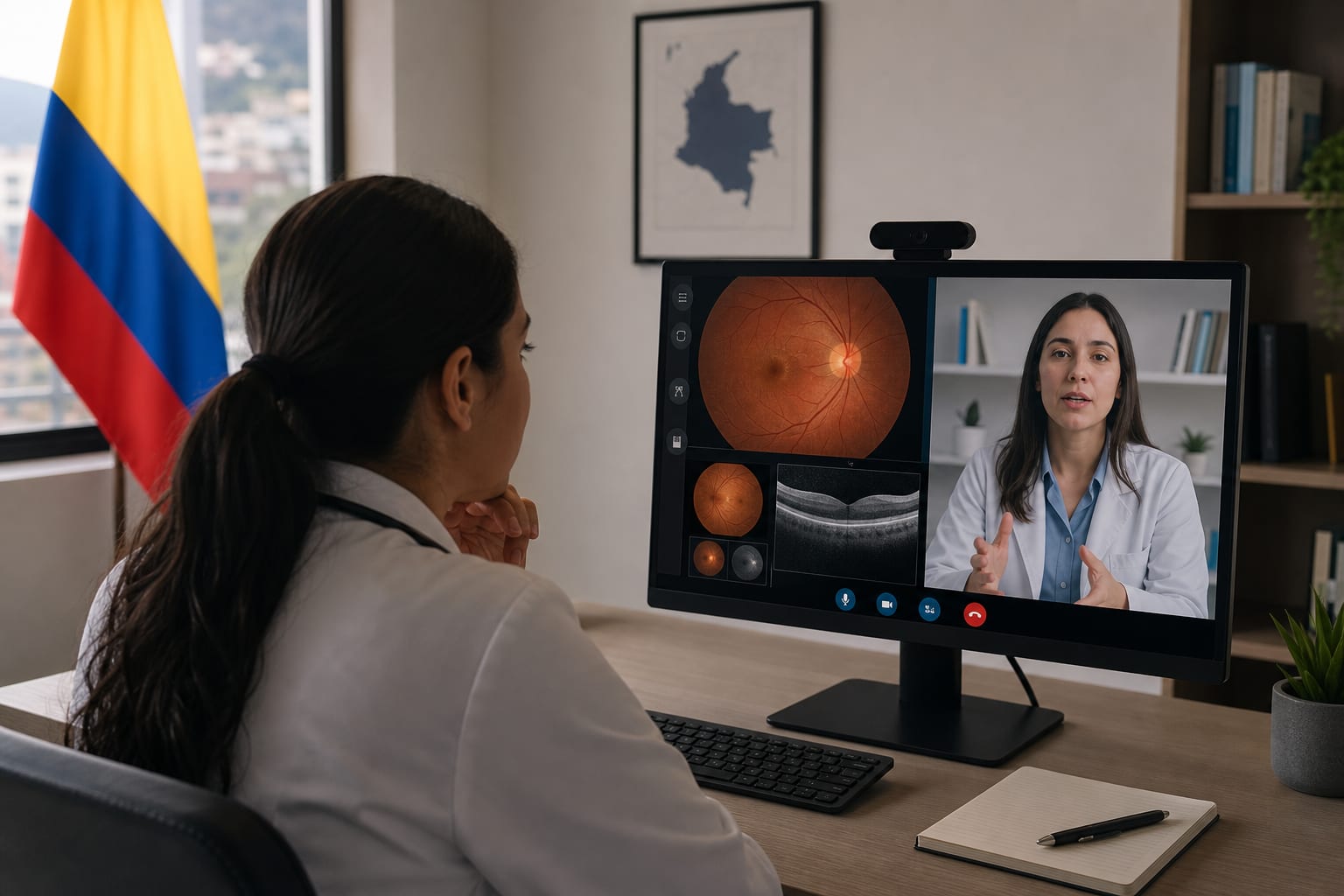
Clinical Report: Adoption of Teleophthalmology Among General Practitioners in Colombia
Overview
This study assesses the perceptions and barriers to teleophthalmology among Colombian general practitioners. Despite limited exposure, a majority expressed positive views on teleophthalmology, highlighting the need for improved training and infrastructure.
Background
Teleophthalmology has the potential to enhance access to eye care, particularly in underserved regions. However, its adoption is hindered by barriers such as inadequate training and infrastructure, which are critical to ensuring effective implementation. Understanding these challenges is essential for integrating teleophthalmology into routine practice, especially in the context of increasing reliance on telemedicine during the COVID-19 pandemic.
Data Highlights
Finding
Percentage
General practitioners with undergraduate telemedicine training
9.0%
Prior teleophthalmology experience
1.8%
Moderate confidence in ophthalmologic knowledge
45.6%
Positive perceptions of teleophthalmology
57.3%
Key Findings
62.2% of participants were women.
70.1% of participants were aged 21–30 years.
65.6% had 0–5 years of professional experience.
Greater undergraduate ophthalmology training was linked to higher confidence in ophthalmologic knowledge.
Moderate confidence was associated with positive perceptions of teleophthalmology.
Clinical Implications
Enhancing training in ophthalmology and telemedicine is crucial for improving the confidence of general practitioners in Colombia. Addressing concerns regarding privacy, workload, and job security will be essential for the successful integration of teleophthalmology into healthcare practices.
Conclusion
The favorable perceptions of teleophthalmology among Colombian general practitioners indicate a readiness for its adoption, provided that barriers are addressed through targeted training and infrastructure improvements.
by Loaiza-Guevara, Valentina , Martinez-Rivera, Juliana P, Restrepo, Natalia , Quintero-Patino, Laura , Pinto-Arias, Andrea , Martinez, Luis Miguel, Rincón-Hernández, Wendy M., Gaibor Pazmiño, Alice , Izquierdo-Condoy, Juan Sebastian