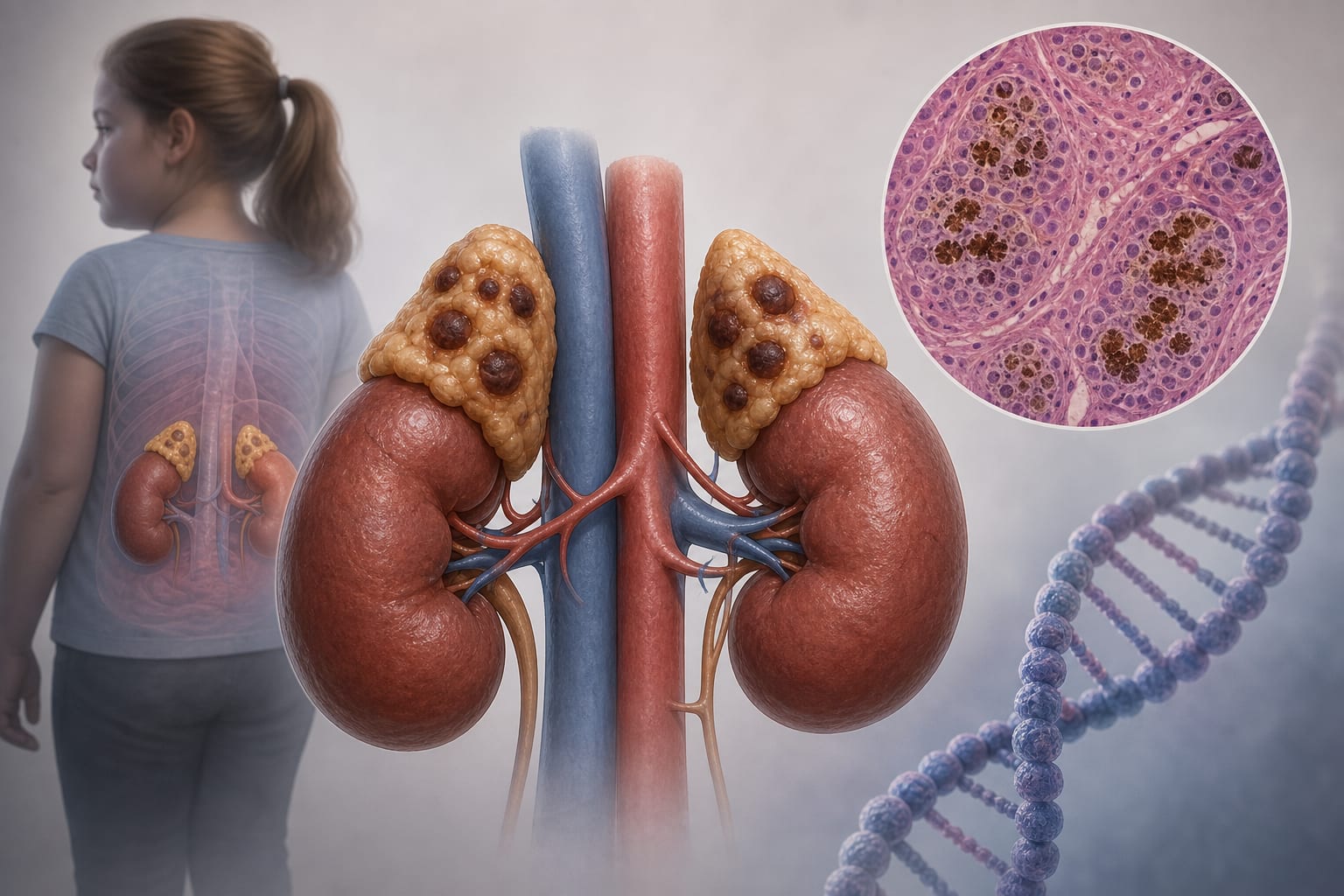
Evaluating Medical Interventions in the Management of Mild Autonomous Cortisol Secretion (MACS)
-
By
-
Ee Wen Loh
-
Miguel Debono
-
June 30, 2026
Clinical Report: Evaluating Medical Interventions in the Management of MACS
Background
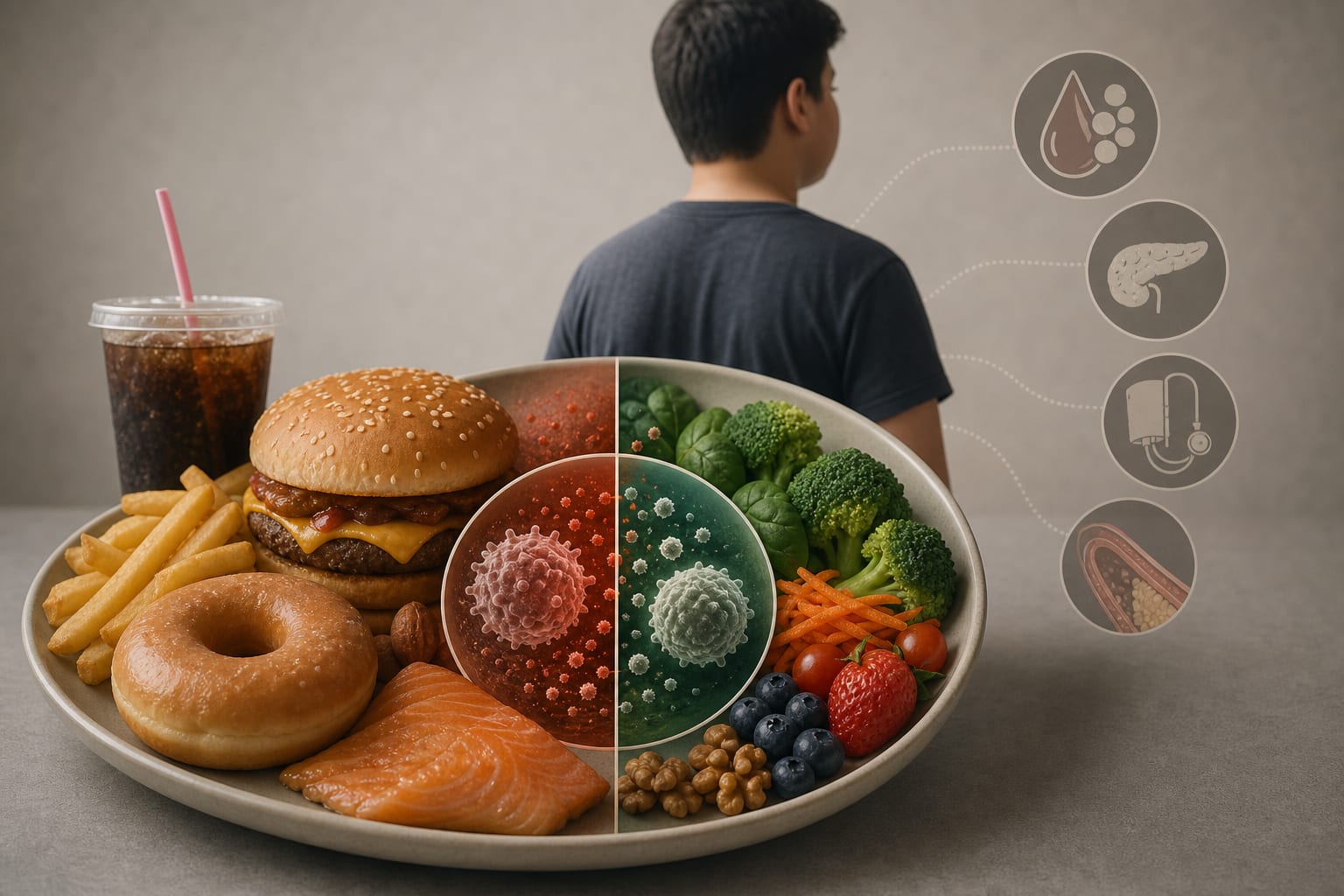
Mild autonomous cortisol secretion (MACS) is increasingly recognized due to the rising incidence of adrenal incidentalomas, with 20-50% of these patients exhibiting cortisol excess. MACS is associated with significant comorbidities, including diabetes, hypertension, and increased cardiovascular risk.
Data Highlights
No numerical data available.
Key Findings
- MACS is defined by post-dexamethasone serum cortisol >50nmol/L in the absence of overt Cushing’s syndrome.
- Adrenalectomy has shown metabolic improvement in patients with MACS, with 46% of surgical patients reducing antihypertensive treatment.
- Medical treatment with metyrapone effectively lowers nocturnal cortisol levels and improves metabolic risk parameters.
- Patients with MACS exhibit elevated IL-6 levels, contributing to cardiovascular risk.
- Current management strategies must consider individual patient factors.
Clinical Implications
Clinicians should evaluate the presence of cortisol-related comorbidities when considering treatment options for MACS.
Conclusion
The management of MACS requires a tailored approach, balancing surgical and medical options.
Related Resources & Content
- European Society of Endocrinology clinical practice guidelines, PubMed, 2023 -- Management of adrenal incidentalomas
- Mild autonomous cortisol secretion: pathophysiology, comorbidities and management approaches, Nature Reviews Endocrinology, 2023
- Surgery for the treatment of arterial hypertension in patients with unilateral adrenal incidentalomas and mild autonomous cortisol secretion (CHIRACIC), ScienceDirect, 2023
- Evaluating Cortisol Levels for Diagnosing Adrenal Insufficiency Post-Adrenalectomy in Patients with Mild Autonomous Cortisol Secretion, The Journal of Clinical Endocrinology & Metabolism, 2023
- Circadian Patterns of Cortisol Secretion and Steroid Metabolome Analysis in Individuals with Mild Autonomous Cortisol Secretion, The Journal of Clinical Endocrinology & Metabolism, 2023
- aace endocrine ai — Predictive Models May Aid MACS Diagnosis
- The Journal of Clinical Endocrinology & Metabolism — Surgical Adrenalectomy Lowers Vertebral Fracture Risk in Individuals With Mild Autonomous Cortisol Secretion
- Predictive Models May Aid MACS Diagnosis
- European Society of Endocrinology clinical practice guidelines on the management of adrenal incidentalomas, in collaboration with the European Network for the Study of Adrenal Tumors - PubMed
- Mild autonomous cortisol secretion: pathophysiology, comorbidities and management approaches | Nature Reviews Endocrinology
- Comorbidities in mild autonomous cortisol secretion and the effect of treatment: systematic review and meta-analysis | European Journal of Endocrinology | Oxford Academic
- Randomized trial studying metabolic outcomes and quality of life after adrenalectomy versus conservative management for mild autonomous cortisol secretion - PubMed
- Surgery for the treatment of arterial hypertension in patients with unilateral adrenal incidentalomas and mild autonomous cortisol secretion (CHIRACIC): a multicentre, open-label, superiority randomised controlled trial - ScienceDirect
- Evaluating the efficacy of surgical and conservative approaches in mild autonomous cortisol secretion: a meta-analysis - PMC
- Increased Risk of Vertebral Fractures in Patients With Mild Autonomous Cortisol Secretion | Endocrine Society
- https://academic.oup.com/jes/article/10/6/bvag090/8650808
- Effects of short-term metyrapone treatment on glycaemic control in patients with mild autonomous cortisol secretion: a pilot study | Endocrine | Springer Nature Link
Based on findings from:
Managing mild autonomous cortisol secretion (MACS): evaluating the role of medical treatment
Ee Wen Loh, Miguel Debono. Frontiers In Endocrinology, 2026.
https://www.frontiersin.org/journals/endocrinology/articles/10.3389/fendo.2026.1850728/full
This content is an AI-generated, fully rewritten summary based on a published scholarly article. It does not reproduce the original text and is not a substitute for the original publication. Readers are encouraged to consult the source for full context, data, and methodology.