Endoscopic submucosal dissection with deliberate muscularis propria exposure for curative resection of a large type 1 gastric neuroendocrine tumor: a case report - Report - MDSpire
Advertisement
Endoscopic submucosal dissection with deliberate muscularis propria exposure for curative resection of a large type 1 gastric neuroendocrine tumor: a case report
Clinical Report: Endoscopic Submucosal Dissection for Large Type 1 gNET
Background
Gastric neuroendocrine tumors (gNETs) are increasingly diagnosed, particularly type 1 gNETs associated with autoimmune gastritis. The management of larger type 1 gNETs remains controversial, with a need to balance curative intent against the invasiveness of procedures.
Data Highlights
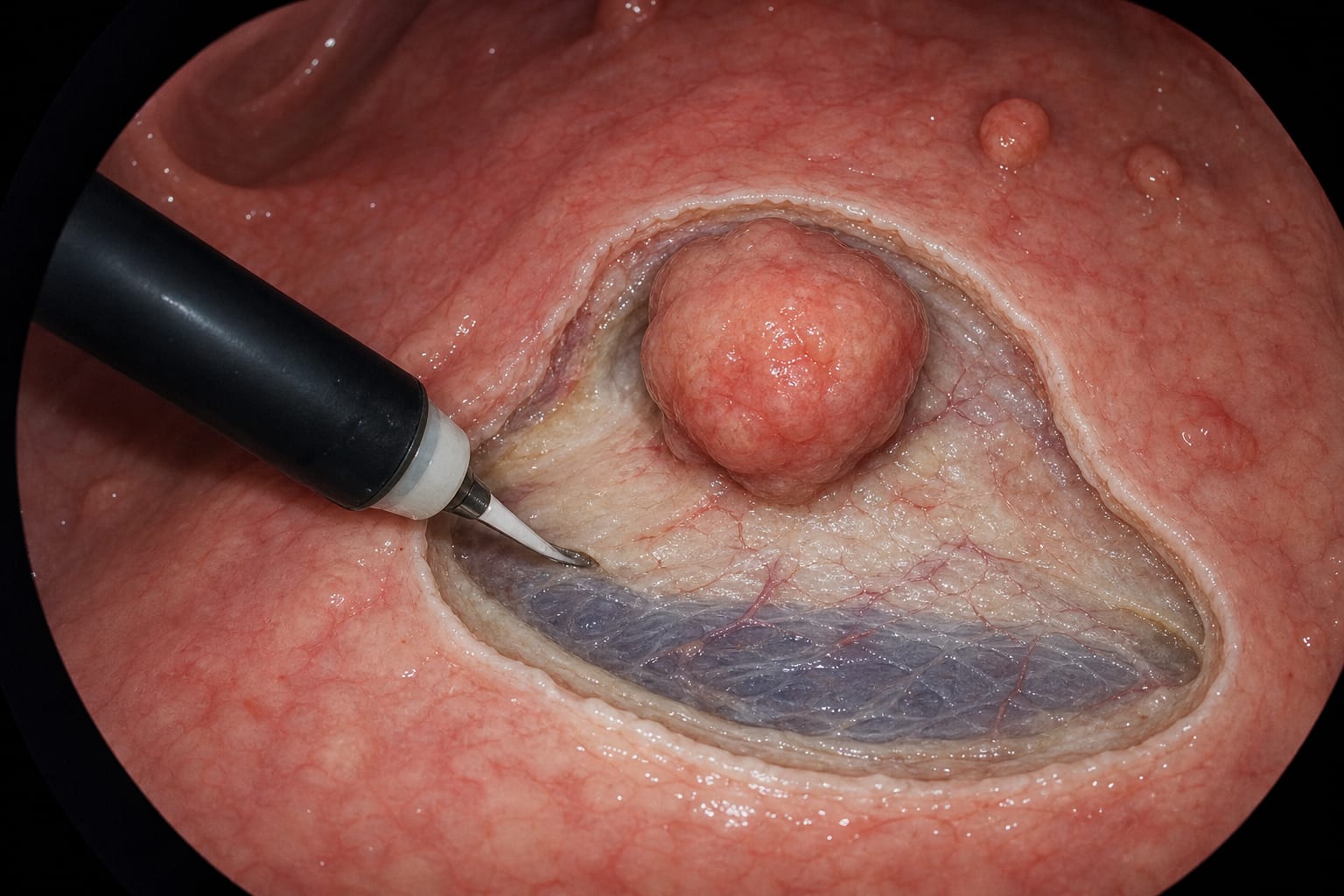
Case study of a 48-year-old female with a 2.5 cm type 1 gNET and elevated serum gastrin (3100 pg/mL). Comprehensive staging confirmed localized, non-metastatic disease. The junctional tumor was resected en bloc using ESD-MPE, with final pathology confirming negative margins.
Key Findings
The patient had a 2.5 cm G2 grade type 1 gNET with elevated serum gastrin levels.
Comprehensive staging included endoscopic ultrasound and 68Ga-DOTATATE PET/CT, ruling out metastasis.
The junctional tumor was successfully resected en bloc using ESD-MPE.
Final pathology confirmed both lesions as pT1b, G2 NETs with negative margins.
Clinical Implications
The successful application of ESD-MPE in this case suggests that with careful patient selection and staging, endoscopic techniques can offer effective treatment for larger type 1 gNETs. This approach may reduce the need for more invasive surgical interventions.
Conclusion
This case illustrates the potential of ESD-MPE as a viable minimally invasive option for the management of larger type 1 gNETs, emphasizing the importance of precise preoperative staging.