Global research landscape and trends of single-cell sequencing in sexually transmitted infections: a comprehensive bibliometric analysis from 2015 to 2025 - Report - MDSpire

Global research landscape and trends of single-cell sequencing in sexually transmitted infections: a comprehensive bibliometric analysis from 2015 to 2025

  • By

  • Cuixiu Wu

  • Yuanshuo Guo

  • Na Cui

  • Yidan Gao

  • Lijuan Jiang

  • Haoneng Tang

  • Qingchun Liang

  • Lingli Tang

  • July 13, 2026

Share

Clinical Report: A Comprehensive Bibliometric Analysis of Single-Cell Sequencing Research Trends in STIs

Background

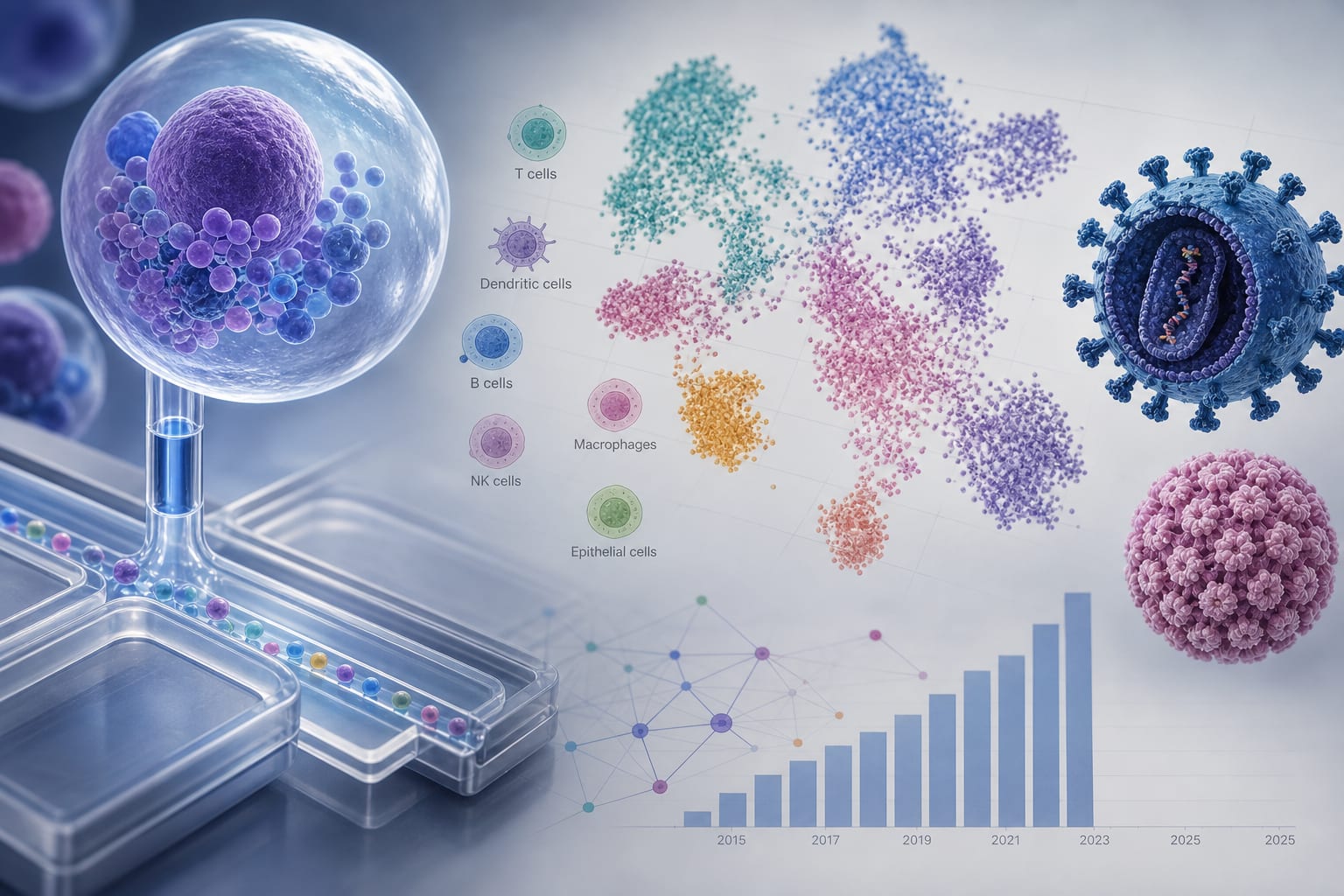
Sexually transmitted infections (STIs) are a significant global health concern, with millions of new cases each year. Advances in single-cell sequencing technology provide new insights into the immune responses and pathogenic mechanisms associated with STIs.

Data Highlights

A total of 148 relevant articles and reviews were included in this study.

Key Findings

  • The United States led in publication output, citation counts, and international collaboration.
  • Chiarella J, Ho YC, and Wang FS were identified as the most active authors in the field.
  • Stuart T was the most frequently co-cited scholar.
  • Emerging research clusters include studies on HPV-related cancers and HIV latency.
  • Keyword analysis revealed trends in spatial transcriptomics and immune mapping.

Clinical Implications

The findings from this bibliometric analysis highlight the importance of single-cell sequencing in understanding STIs.

Conclusion

This bibliometric analysis enhances the understanding of research trends in single-cell sequencing related to STIs.

Related Resources & Content

  1. Frontiers in Immunology, 2026 -- Global research trends and hotspots in human immunodeficiency virus-associated cervical cancer (1990–2025): a multi-database bibliometric analysis
  2. International Journal of Infectious Diseases, 2026 -- Declining antibiotic consumption and changing sexually transmitted infection dynamics in Japan: A national ecological time-series analysis, 2013–2024
  3. Frontiers in Reproductive Health, 2026 -- SARS-CoV-2 and reproductive system: a scientometric study
  4. Infection, 2024 -- Analyzing HIV-Indicator Conditions in Two Nationwide Longitudinal Cohorts of Individuals Living with HIV in Germany (1999–2023)
  5. Clinical Guidance for STIs | STI | CDC -- CDC
  6. Doxycycline to prevent bacterial sexually transmitted infections in the USA: final results from the DoxyPEP multicentre, open-label, randomised controlled trial and open-label extension - PubMed
  7. Single cell methods allow phenotypic and clonotypic analysis of Treponema pallidum-specific CD4 T cells 4723 | The Journal of Immunology | Oxford Academic
  8. Spatial analysis of HPV‐associated cervical intraepithelial neoplastic tissues demonstrate distinct immune signatures associated with cervical cancer progression - PMC
  9. Clinical Guidance for STIs | STI | CDC
  10. Doxycycline to prevent bacterial sexually transmitted infections in the USA: final results from the DoxyPEP multicentre, open-label, randomised controlled trial and open-label extension - PubMed
  11. Single cell methods allow phenotypic and clonotypic analysis of Treponema pallidum-specific CD4 T cells 4723 | The Journal of Immunology | Oxford Academic
  12. Spatial analysis of HPV‐associated cervical intraepithelial neoplastic tissues demonstrate distinct immune signatures associated with cervical cancer progression - PMC

Original Source(s)

Related Content