Efficacy of non-pharmacological interventions for cognitive impairment in patients with traumatic brain injury: a network meta-analysis - Report - MDSpire
Advertisement
Efficacy of non-pharmacological interventions for cognitive impairment in patients with traumatic brain injury: a network meta-analysis
Effectiveness of Non-Pharmacological Approaches for Cognitive Dysfunction in TBI
Overview
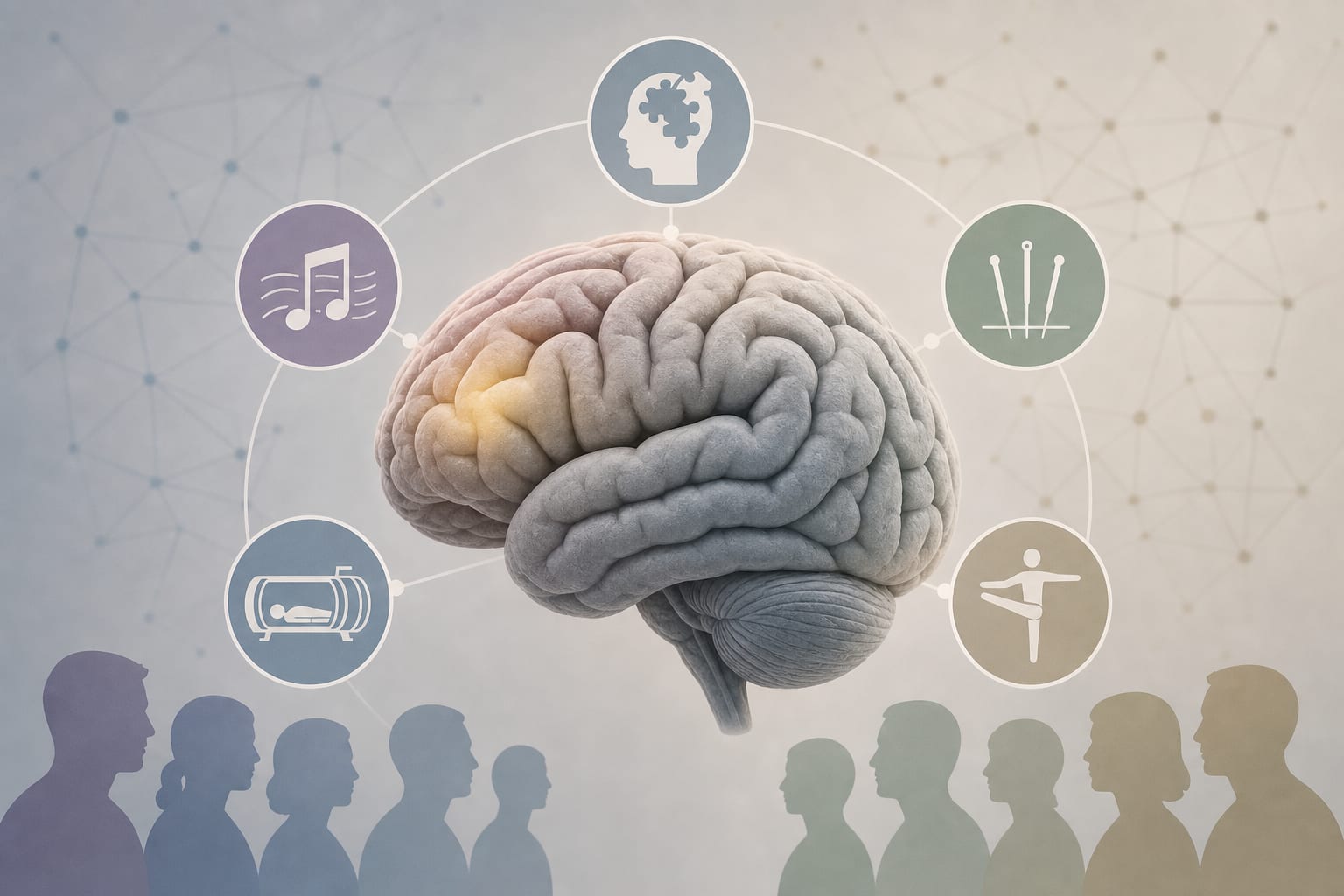
This study evaluates the effectiveness of various non-pharmacological interventions for cognitive dysfunction in traumatic brain injury (TBI) patients through a network meta-analysis. The findings indicate that music therapy showed a benefit in improving MMSE scores, comprehensive nursing intervention demonstrated an advantage in MoCA outcomes, and electroacupuncture combined with hyperbaric oxygen therapy showed a trend in improving MBI scores. Overall evidence certainty was assessed as low or very low.
Background
Cognitive impairment is a common and persistent consequence of TBI, affecting approximately 30% of patients one year post-injury. There are currently no specific pharmacological treatments for TBI-related cognitive impairment, leading to interest in non-pharmacological interventions as alternative treatments.
Data Highlights
Intervention
Effect on MMSE
Effect on MoCA
Effect on MBI
Music Therapy
Benefit
-
-
Comprehensive Nursing
-
Advantage
-
Electroacupuncture + Hyperbaric Oxygen
-
-
Trend
Key Findings
Nine RCTs with 528 participants were included in the analysis.
Music therapy showed a benefit in improving MMSE scores.
Comprehensive nursing intervention demonstrated an advantage in MoCA outcomes.
Electroacupuncture combined with hyperbaric oxygen therapy showed a trend in improving MBI scores.
Overall evidence certainty was assessed as low or very low.
Further large-scale, high-quality RCTs are needed to establish reliable comparative effectiveness.
Clinical Implications
The findings indicate that certain non-pharmacological interventions may improve cognitive outcomes in TBI patients, but the low certainty of evidence limits their clinical prioritization.
Conclusion
In summary, some non-pharmacological interventions showed benefits for cognitive recovery in TBI patients, but the current evidence is insufficient for definitive clinical guidance.