Experimental verification and PK/PD modeling of selective drug absorption via acupoint administration in rabbit model of rheumatoid arthritis - Report - MDSpire
Advertisement
Experimental verification and PK/PD modeling of selective drug absorption via acupoint administration in rabbit model of rheumatoid arthritis
Clinical Report: Validation of Selective Drug Delivery through Acupoint Administration
Overview
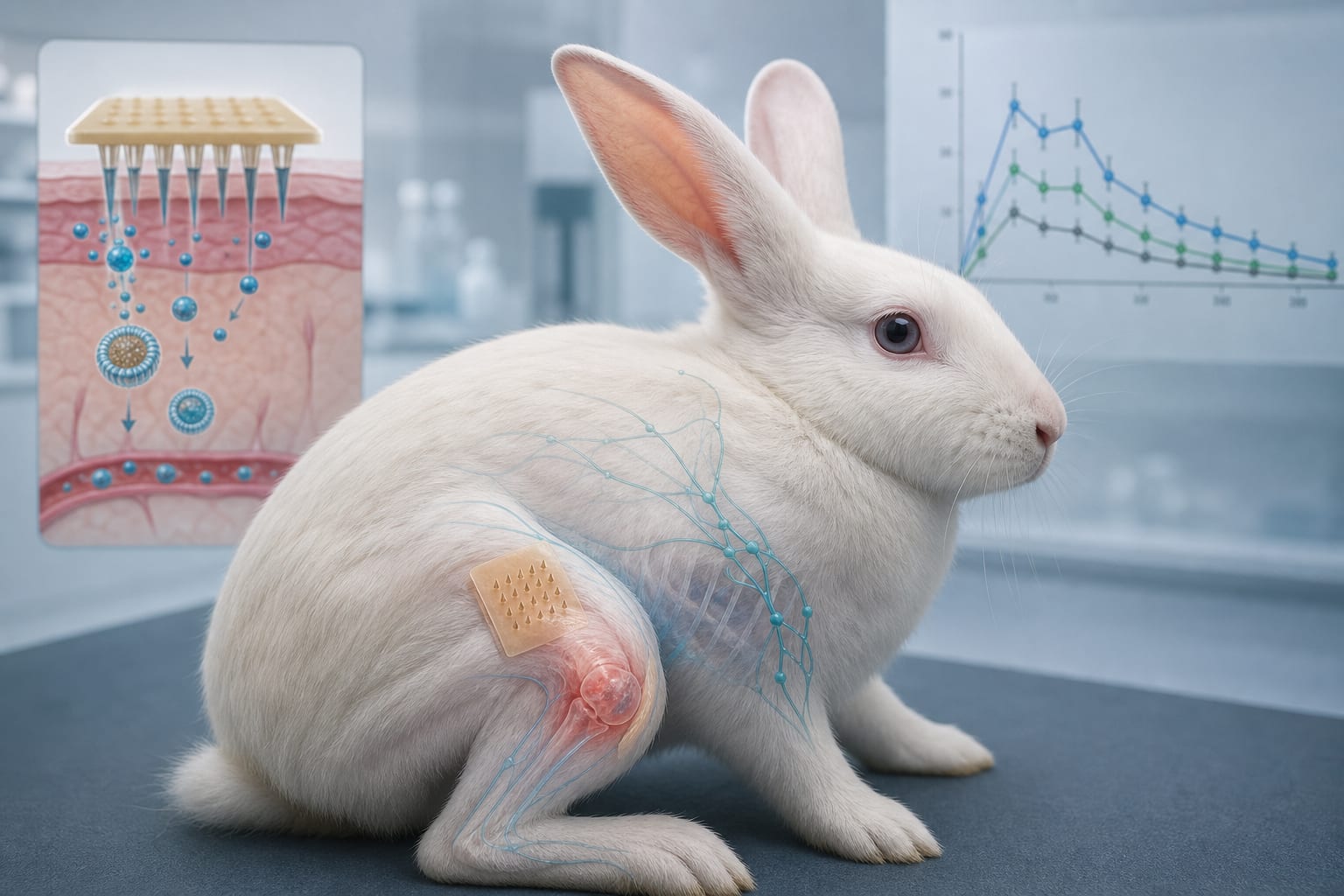
This study evaluates the pharmacokinetic and pharmacodynamic advantages of delivering miRNA55 via microneedles at specific acupoints in a rabbit model of rheumatoid arthritis.
Background
Rheumatoid arthritis (RA) is a chronic autoimmune disease that leads to significant joint inflammation and destruction. Traditional treatments often come with considerable side effects, prompting the exploration of alternative delivery methods such as acupoint-based drug administration.
Data Highlights
Group
miRNA55 Concentration
Inflammatory Markers
ST36
Highest
Lower expression of TNF-α, MMP-1, MMP-3
GB34
Moderate
Intermediate levels
Non-acupoint
Lowest
Higher levels
Key Findings
miRNA55 concentrations were highest in the ST36 group.
PK/PD modeling showed higher efficacy values for ST36 across IL-1β, TNF-α, and IL-6.
Western blot analysis confirmed lower expression of inflammatory proteins in the ST36 group.
Histopathological analysis revealed reduced synovial erosion and lymphokine infiltration in the ST36 group.
Clinical Implications
The findings suggest that targeted drug delivery via acupoints may enhance therapeutic effects in rheumatoid arthritis treatment. Clinicians may consider integrating acupoint-based strategies into existing RA management protocols.
Conclusion
This study provides evidence that transdermal administration of miRNA55 at specific acupoints can improve drug absorption in rheumatoid arthritis.
A Geneva registry study points surgeons toward residual pain over functional limitation as the outcome that tracks patient satisfaction one year after hip or knee replacement.