Case Report: E-cadherin and Vimentin expression in advanced-stage pancreatic ductal adenocarcinoma tissue and circulating tumor cells: preliminary results from a pilot study - Report - MDSpire
Advertisement
Case Report: E-cadherin and Vimentin expression in advanced-stage pancreatic ductal adenocarcinoma tissue and circulating tumor cells: preliminary results from a pilot study
Clinical Report: E-cadherin and Vimentin in Advanced Pancreatic Cancer
Overview
This pilot study investigates E-cadherin and Vimentin expression in advanced pancreatic ductal adenocarcinoma (PDAC) tissues and circulating tumor cells (CTCs). Findings indicate a significant difference in EMT marker expression between primary tumors and CTCs, highlighting the potential for these markers in prognostic assessment.
Background
Pancreatic ductal adenocarcinoma (PDAC) is associated with a poor prognosis, primarily due to late-stage diagnosis and rapid metastasis. The identification of reliable biomarkers is crucial for stratifying patients at high risk for aggressive disease. This study explores the role of E-cadherin and Vimentin as indicators of epithelial-to-mesenchymal transition (EMT) in PDAC, which may inform treatment strategies.
Data Highlights
{'format': 'Ensure the table is properly structured for readability.'}
Key Findings
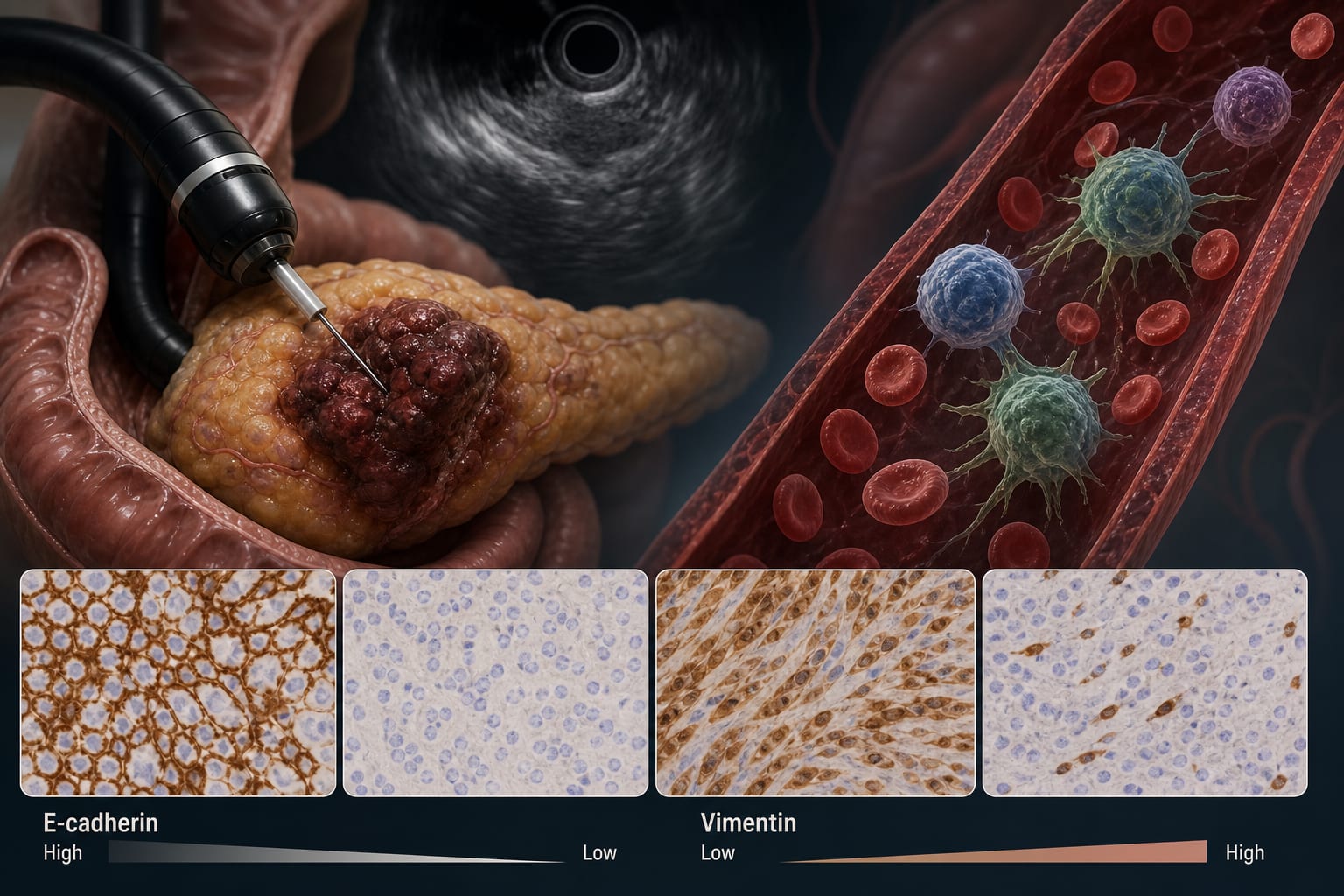
E-cadherin was absent in 3 of 11 PDAC biopsies, all G3 tumors.
72.7% of PDAC samples exhibited low-to-moderate E-cadherin positivity.
Vimentin expression was generally negative in biopsies, except for small clusters in G3 samples.
Vimentin was expressed in 81.8% of CTC samples, with nine cases showing moderate-to-high levels.
No E-cadherin transcripts were detected in CTC subpopulations.
Clinical Implications
The differential expression of E-cadherin and Vimentin between primary tumors and CTCs may serve as a valuable prognostic tool in PDAC. Clinicians should consider these markers when assessing disease aggressiveness and tailoring treatment plans.
Conclusion
This study underscores the importance of EMT markers in understanding PDAC progression and highlights the potential for using CTC analysis in clinical practice to improve patient stratification.