Associations between fear of cancer recurrence and post-traumatic growth in patients with primary liver cancer: a latent profile analysis and mediation analysis - Report - MDSpire
Advertisement
Associations between fear of cancer recurrence and post-traumatic growth in patients with primary liver cancer: a latent profile analysis and mediation analysis
Clinical Report: Fear of Cancer Recurrence and Post-Traumatic Growth in Liver Cancer
Overview
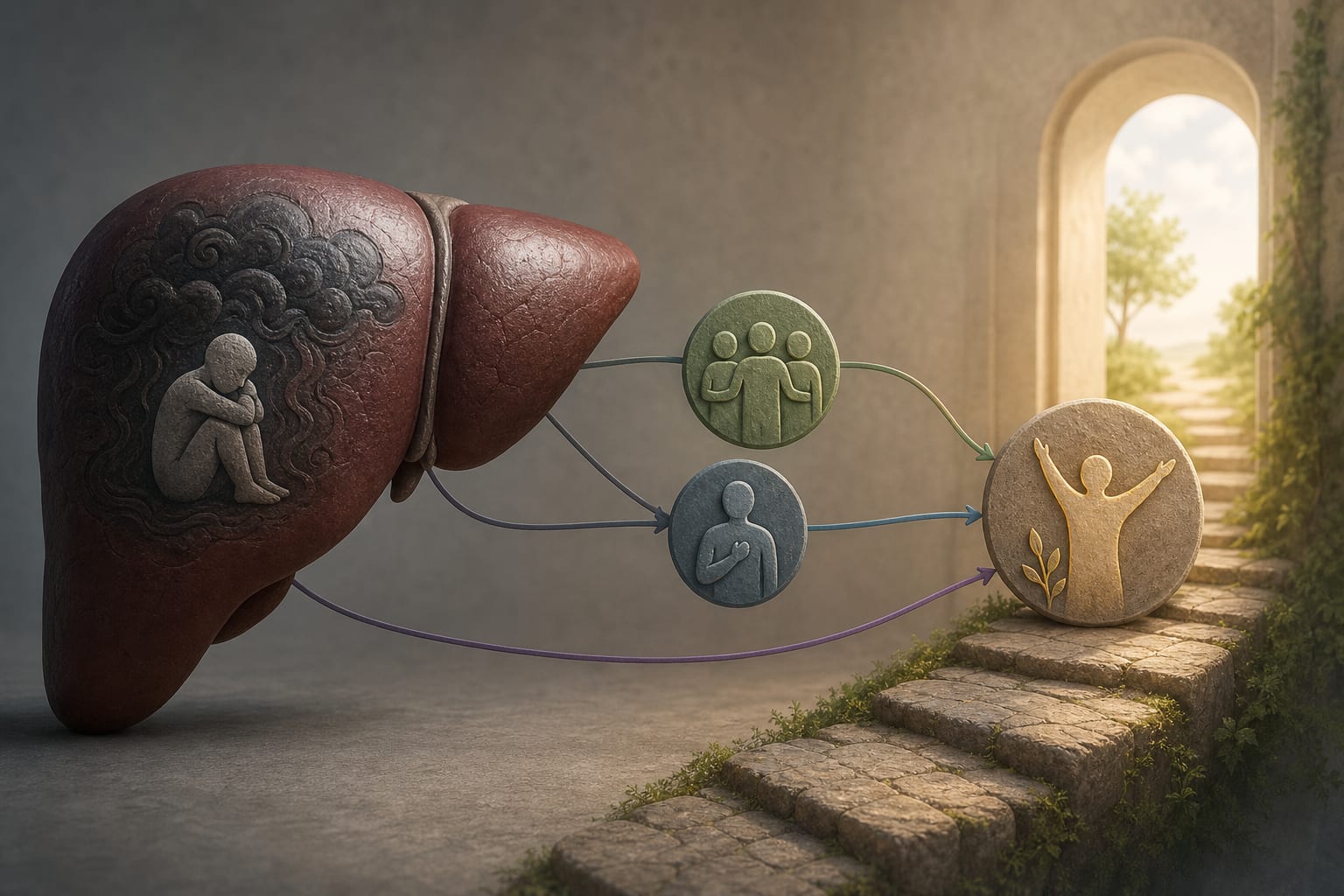
This study identifies three latent profiles of fear of cancer recurrence (FCR) in patients with primary liver cancer and examines the mediating roles of perceived social support and self-efficacy on post-traumatic growth (PTG). The findings highlight the need for tailored interventions based on FCR profiles to enhance psychological well-being.
Background
Primary liver cancer poses significant challenges due to its high recurrence rates and associated psychological distress, particularly fear of cancer recurrence (FCR). Approximately 60% of liver cancer patients experience clinically significant FCR, which can impede their ability to achieve post-traumatic growth (PTG). Understanding the heterogeneity of FCR is crucial for developing effective psychosocial interventions.
Data Highlights
FCR Profile
Percentage
Low fear–psychologically well-adapted
29.32%
High fear–social functioning concerns
35.50%
Moderate-to-high fear–treatment concerns
35.18%
Key Findings
Three latent profiles of FCR were identified among liver cancer patients.
Type of medical insurance, comorbidities, and occupational status predicted different FCR profiles.
Significant differences in perceived social support, self-efficacy, and PTG were observed across FCR profiles.
Mediation analysis indicated that perceived social support and self-efficacy play critical roles in the relationship between FCR and PTG.
High levels of FCR are associated with lower levels of PTG, highlighting the need for targeted interventions.
Clinical Implications
Clinicians should recognize the diverse profiles of fear of cancer recurrence in liver cancer patients and implement tailored interventions to address these differences. Enhancing social support and self-efficacy may promote post-traumatic growth and improve overall quality of life.
Conclusion
The study underscores the importance of understanding fear of cancer recurrence's heterogeneity in primary liver cancer patients. Targeted psychosocial interventions can mitigate the negative impacts of FCR and foster psychological growth.