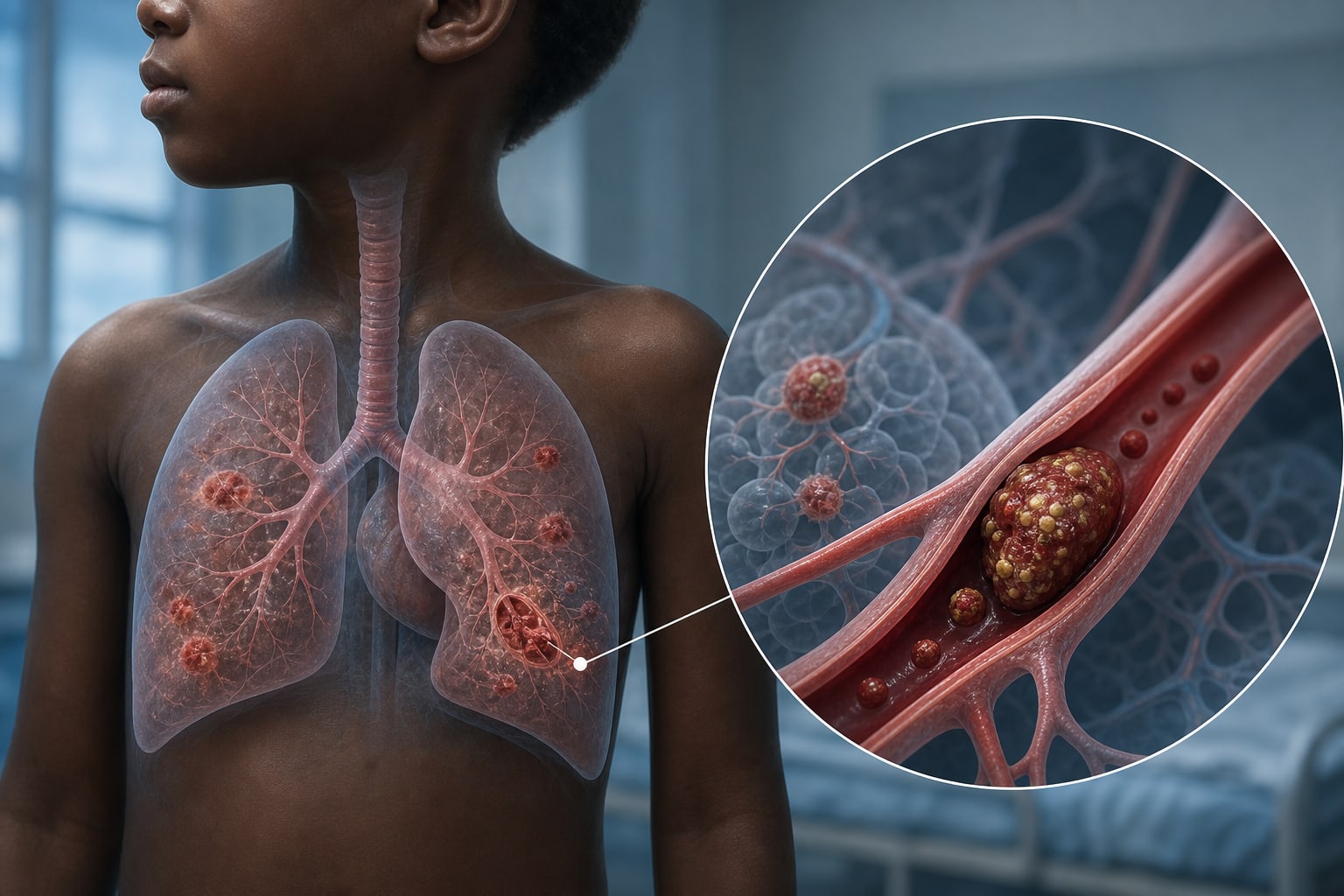
Clinical Report: Pulmonary Embolism Due to Sepsis in Pediatric Patients
Overview
This study presents a retrospective analysis of pediatric septic pulmonary embolism (SPE) in Somalia, highlighting its clinical characteristics, microbiology, and outcomes. The findings indicate a predominance of staphylococcal infections and favorable outcomes with timely intervention.
Background
Septic pulmonary embolism (SPE) is a rare but serious condition in children, often arising from infections in low-resource settings. The lack of awareness and diagnostic capacity in such environments can lead to misdiagnosis and delayed treatment. Understanding the clinical features and management of SPE is crucial for improving outcomes in affected pediatric populations.
Data Highlights
Characteristic
Value
Median Age
12 years
Male Patients
80%
ICU Admission Rate
33%
Anticoagulation Use
93%
Average Hospital Stay (ICU)
Longer (p = 0.031)
Key Findings
Fifteen children diagnosed with SPE were analyzed, with a median age of 12 years and 80% being male.
Common sources of infection included skin and soft-tissue infections, trauma-related sepsis, and septic thrombophlebitis.
Staphylococcus aureus was the predominant organism isolated in culture-positive cases.
Radiological findings typically included peripheral nodules, cavitation, and pleural disease.
ICU patients exhibited higher inflammatory markers and longer hospital stays compared to non-ICU patients.
No in-hospital deaths were reported, indicating favorable outcomes with appropriate management.
Clinical Implications
Early recognition and management of SPE in pediatric patients are essential, especially in resource-limited settings. Clinicians should maintain a high index of suspicion for SPE in children presenting with signs of severe infection, particularly those with skin and soft-tissue infections. Timely initiation of antimicrobial therapy and anticoagulation can significantly improve outcomes.
Conclusion
The study underscores the importance of awareness and early intervention for pediatric SPE in Somalia, revealing a need for improved diagnostic capabilities and treatment protocols in similar settings.
by Mohamed Nur Ali, Mustafa Gahnug, Ali Abdi Jama, Mahad Sadik Mukhtar, Mohamed Yaqub Hassan, Farah Ali Ahmed, Yasir Khalif Ali, Farah Abdullahi Ismail, Shuayb Moallim Ali Jama, Nur Adam Mohamed, İbrahim Abukar Abdi, Abdisalam Ismail Hassan, Ismail Gedi Ibrahim, Abdirahman Mohamed Jimale, Mohamed Sheikh Hassan, Said Abdirahman Ahmed