Clinical Report: Exploring Mucosal Immune Mechanisms in Ulcerative Colitis
Overview
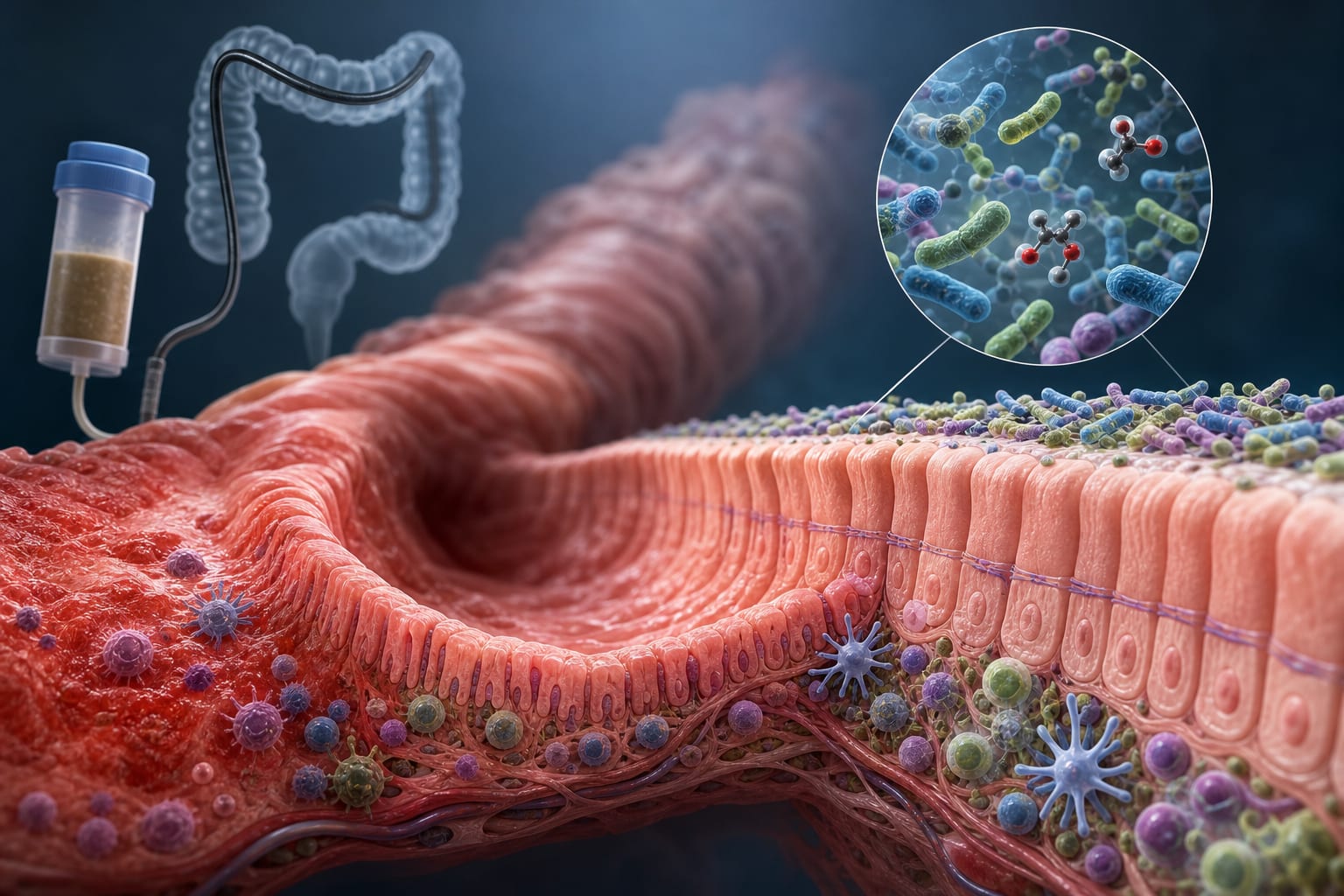
Fecal microbiota transplantation (FMT) is an investigational therapy for ulcerative colitis (UC) that aims to restore gut microbiota balance. While FMT has shown variable efficacy in inducing remission in selected patients, it is not yet established as a standard treatment.
Background
Ulcerative colitis is a chronic inflammatory disorder with rising incidence globally, particularly in newly industrialized regions. The gut microbiota is thought to play a role in UC pathogenesis, and restoring microbial balance through interventions like FMT is being explored as a therapeutic strategy. However, the clinical efficacy of FMT remains uncertain, necessitating further investigation.
Data Highlights
Current guidelines do not recommend conventional FMT as routine therapy for UC outside clinical trials due to the heterogeneity and low certainty of evidence.
Key Findings
FMT may reshape microbial community structure and enhance epithelial barrier integrity.
Clinical trials indicate FMT can induce remission in selected UC patients, especially with lower gastrointestinal administration.
Efficacy of FMT is limited in moderate-to-severe or biologic-refractory UC cases.
Current guidelines emphasize the investigational nature of FMT for UC.
Clinical Implications
Healthcare professionals should consider FMT as an investigational option for UC while recognizing its current limitations and the need for clinical trials.
Conclusion
FMT is an investigational approach for UC management, with ongoing research needed to clarify its role and optimize treatment protocols.