Safety of Bariatric Surgery in Patients ≥65 During COVID-19 Pandemic
Overview
This global multicentre study evaluated bariatric surgery safety in patients aged 65 and older during the COVID-19 pandemic. Findings showed significantly higher 30-day morbidity in older patients compared to younger ones, but no significant difference in 30-day mortality or postoperative symptomatic COVID-19 infection rates.
Background
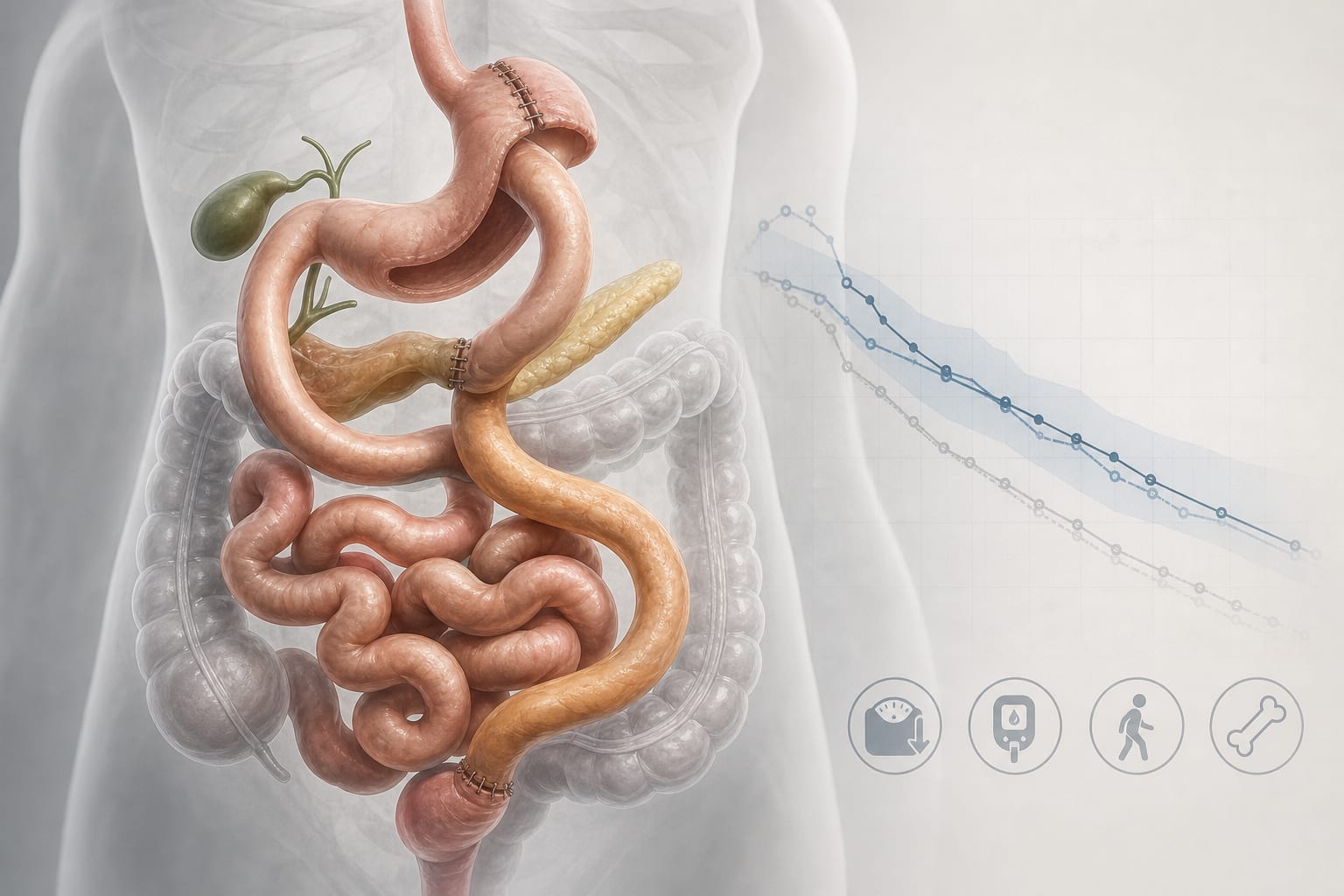
Bariatric surgery is the only evidence-based durable treatment for obesity and related comorbidities. Historically, advanced age was a relative contraindication for bariatric surgery, but advances in laparoscopic techniques and perioperative care have shifted this perspective. Older patients often have more comorbidities, which may influence surgical outcomes. The COVID-19 pandemic adds complexity due to increased risks associated with both age and obesity.
Data Highlights
Parameter
Group I (≥65 years)
Group II (<65 years)
p-value
Mean Age (years)
67.6 ± 2.5
39.8 ± 11.3
–
White Ethnicity (%)
84.6
74.3
0.004
At least one comorbidity (%)
94.6
68.3
<0.001
Diabetes Mellitus (%)
48.3
20.2
<0.001
Hypertension (%)
74.5
29.9
<0.001
Obstructive Sleep Apnoea (CPAP) (%)
25.5
13.1
<0.001
Hypercholesterolemia (%)
41.6
21.1
<0.001
Current Smokers (%)
7.4
14.8
<0.001
Most common procedure: LSG (%)
51.0
56.4
0.164
30-day morbidity (%)
11.4
6.6
0.022
30-day mortality (%)
0.7
0.1
0.17
30-day symptomatic COVID-19 infection (%)
0
0.5
1.000
Key Findings
Patients aged ≥65 had significantly higher 30-day postoperative morbidity (11.4%) compared to those <65 years (6.6%).
There was no statistically significant difference in 30-day mortality between older (0.7%) and younger patients (0.1%).
Postoperative symptomatic COVID-19 infection within 30 days was absent in older patients and occurred in 0.5% of younger patients, showing no significant difference.
Older patients had a significantly higher prevalence of comorbidities including diabetes, hypertension, obstructive sleep apnoea, and hypercholesterolemia.
The distribution of bariatric procedure types (LSG, RYGB, OAGB) was similar between age groups.
Increased morbidity in older patients may be attributed to the higher burden of comorbidities.
Clinical Implications
Clinicians should recognize that bariatric surgery in patients aged 65 and older during the COVID-19 pandemic carries a higher risk of postoperative morbidity but not increased mortality or COVID-19 infection rates. Careful preoperative assessment and optimization of comorbidities are essential to mitigate risks. Procedure choice need not differ solely based on age, but enhanced perioperative monitoring is advisable.
Conclusion
Bariatric surgery in patients aged 65 and older during the COVID-19 pandemic is associated with increased 30-day morbidity but not mortality or postoperative COVID-19 infection. These findings support the cautious continuation of bariatric surgery in older adults with appropriate perioperative care.
References
GENEVA Study Group 2021 -- Safety of Bariatric Surgery During COVID-19 Pandemic
Susmallian et al. 2019 -- Comorbidities in Older Bariatric Patients
Bhandari et al. 2020 -- Age-related Comorbidities in Bariatric Surgery
NSQIP Database Analysis 2018 -- Morbidity in Older Bariatric Patients
A retrospective database study found a low absolute incidence but higher relative hazard of ischemic optic neuropathy following semaglutide initiation.