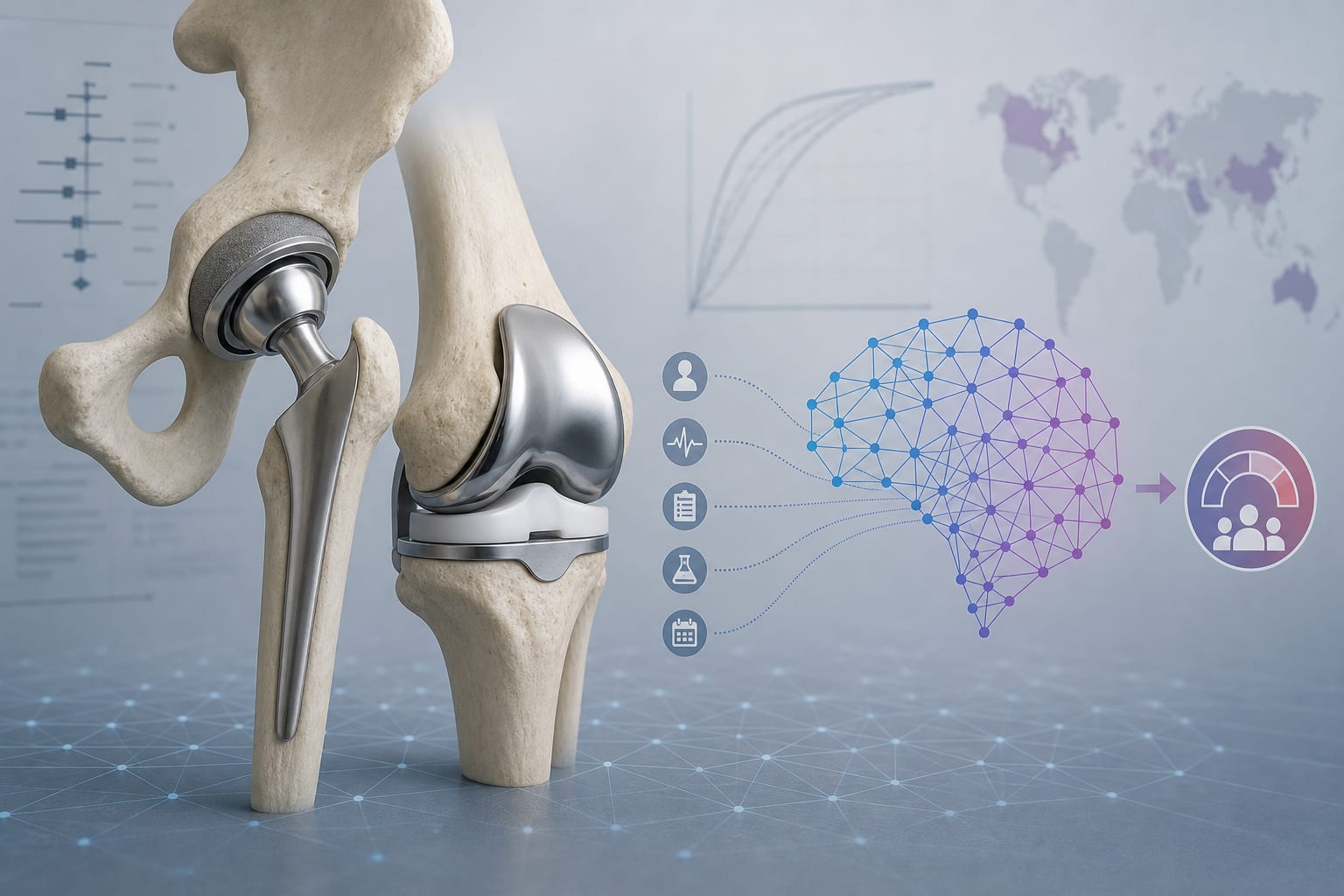
Systematic review and meta-analysis of machine learning-based prediction models for readmission risk after total hip and knee arthroplasty - Report - MDSpire
Advertisement
Systematic review and meta-analysis of machine learning-based prediction models for readmission risk after total hip and knee arthroplasty
Clinical Report: Comprehensive Review and Meta-Analysis of Machine Learning Models for Predicting Readmission Risk Following Total Hip and Knee Arthroplasty
Overview
This study systematically reviews and quantitatively synthesizes machine learning models for predicting readmission risk after total hip and knee arthroplasty (THA/TKA). The findings reveal a pooled C-statistic of 0.76, but highlight significant heterogeneity and high methodological bias across studies.
Background
Postoperative readmission is a critical metric for evaluating the efficacy of total hip and knee arthroplasty. Machine learning models have emerged as potential tools for predicting readmission risk, yet their performance and methodological robustness remain contentious.
Data Highlights
The pooled C-statistic for the included studies was 0.76 (95% CI: 0.71–0.81), indicating moderate predictive ability, but with extreme heterogeneity (I2 = 99.9%).
Key Findings
The pooled C-statistic for machine learning models predicting readmission after THA/TKA was 0.76.
THA-specific models yielded higher C-statistics than TKA-specific models.
Advanced machine learning algorithms did not consistently outperform traditional logistic regression.
High risk of bias was identified in the majority of studies due to analytical shortcomings.
The inability to pool calibration metrics represents a critical evidence gap.
Clinical Implications
The findings indicate that while machine learning models show promise for predicting readmission risk, their current heterogeneity and bias limit their clinical utility. Future research should focus on multi-institutional validation and adherence to reporting standards to enhance model reliability.
Conclusion
The evidence for machine learning-based readmission prediction after THA/TKA is characterized by significant variability and methodological concerns.