Clinical Report: A Machine Learning-Enhanced Nomogram for Assessing Osteosarcopenia Risk
Overview
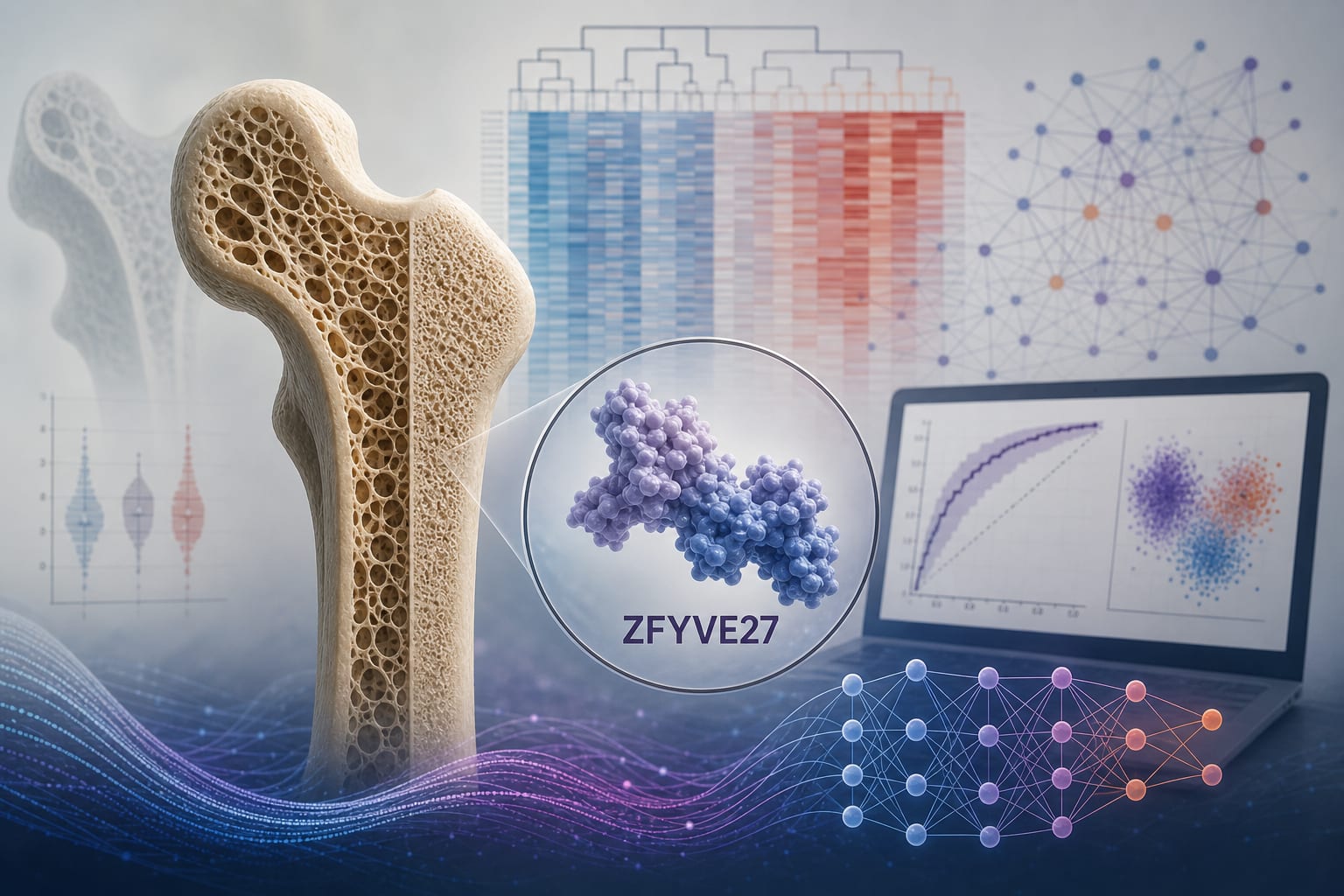
This study developed and validated a nomogram for predicting osteosarcopenia risk in patients with type 2 diabetes mellitus (T2DM) aged 40 years and older. The nomogram achieved AUCs of 0.864 in the test cohort and 0.904 in the validation cohort.
Background
Osteosarcopenia, characterized by concurrent bone loss and muscle wasting, is a concern for patients with T2DM, impacting their quality of life and increasing the risk of fractures and falls. The prevalence of osteosarcopenia is high among older adults with T2DM.
Data Highlights
Predictor
Odds Ratio (OR)
95% Confidence Interval (CI)
BMI
0.56
0.53–0.59
WHtR
1.47
1.28–1.69
Key Findings
The nomogram includes eight independent predictors: gender, age, BMI, WHtR, fracture history, diabetic foot ulcer, smoking status, and diabetic kidney disease.
The nomogram achieved AUCs of 0.864 in the test cohort and 0.904 in the validation cohort.
Calibration and decision curve analysis indicated favorable performance of the nomogram.
Clinical Implications
The nomogram provides a tool for assessing osteosarcopenia risk in T2DM patients aged 40 years and older.
Conclusion
The developed nomogram demonstrates predictive capabilities for osteosarcopenia risk in T2DM patients.
Researchers urge caution in interpreting joint replacement predictors, noting that surgery reflects access and decision-making as well as disease biology.