Comment on “Life’s essential 8 and specific cancer risk and mortality in men and women: a population-based cohort analysis of 332,417 United Kingdom participants” and the inclusion of sleep in cancer focused guidelines - Report - MDSpire
Conexiant’s news site is now MDSpire News. Learn more
Advertisement
Discussion on “Life’s Essential 8 and Cancer Risk and Mortality in Men and Women: A Cohort Study of 332,417 Participants from the United Kingdom” and the Role of Sleep in Cancer Guidelines
Clinical Report: Life’s Essential 8 and Cancer Risk and Mortality
Background
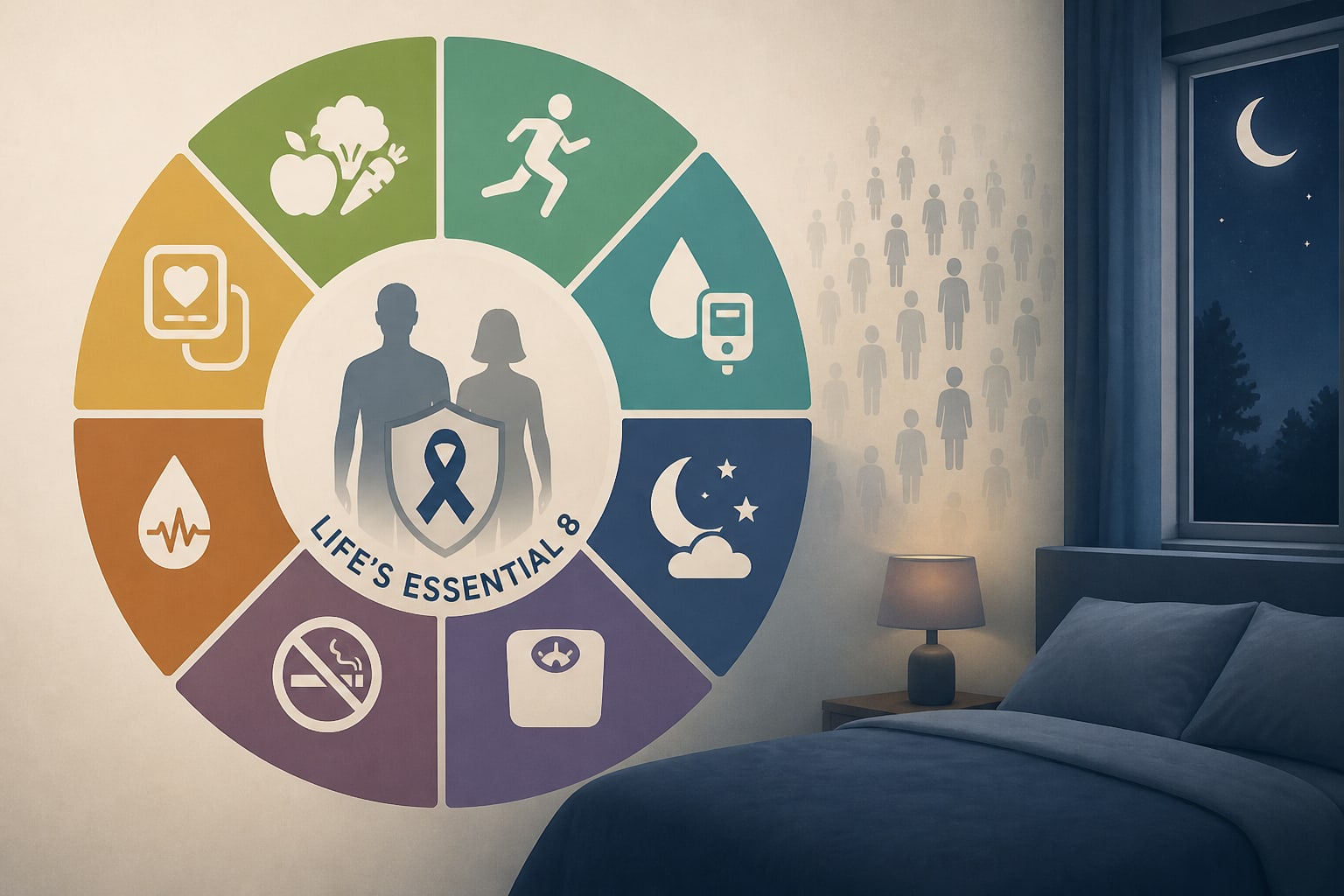
The American Heart Association's revision of cardiovascular guidelines to include 'healthy sleep' as part of Life’s Essential 8 (LE8) reflects an evolving understanding of health behaviors. Sleep duration has been linked to various health outcomes, including cancer risk.
Data Highlights
No numerical data available in the source material.
Key Findings
Every 10-point increment in the overall LE8 score was associated with a 3% reduction in cancer risk for men and a 4% reduction for women, according to Yang et al.
LE8 adherence may not fully capture the relationship between individual components, particularly sleep, and cancer risk.
Sleep duration is scored in an inverse-U shape within LE8, contrasting with evidence suggesting a J-shaped association with cancer risk.
Higher scores in diet, physical activity, smoking, and body mass index were linked to lower cancer risk.
Diabetes is associated with elevated risks for several cancers, but its relationship with prostate cancer is complex.
Current oncology guidelines primarily address sleep in survivorship and symptom management rather than as a preventive measure.
Clinical Implications
The findings suggest that sleep duration should be considered a modifiable lifestyle factor in cancer prevention strategies. Future cancer guidelines may need to incorporate sleep health more comprehensively to address its potential impact on cancer risk.
Conclusion
The association between LE8 adherence and cancer risk emphasizes the need for a nuanced understanding of lifestyle factors in cancer prevention. Further research is warranted to explore the role of sleep in cancer guidelines.