Immune drivers of venous thrombosis: orchestrating initiation, formation, and resolution within the hypoxic microenvironment - Report - MDSpire

Immune drivers of venous thrombosis: orchestrating initiation, formation, and resolution within the hypoxic microenvironment

  • By

  • Jiaojiao Yin

  • Enpeng Zhu

  • Xiaojing Zheng

  • Xiaoqin Ha

  • Bing Li

  • June 10, 2026

  • 0 min

Share

Clinical Report: Immune Mechanisms in Venous Thrombosis

Overview

This review discusses the role of hypoxia in venous thromboembolism (VTE), emphasizing its influence on immune responses throughout the thrombotic process.

Background

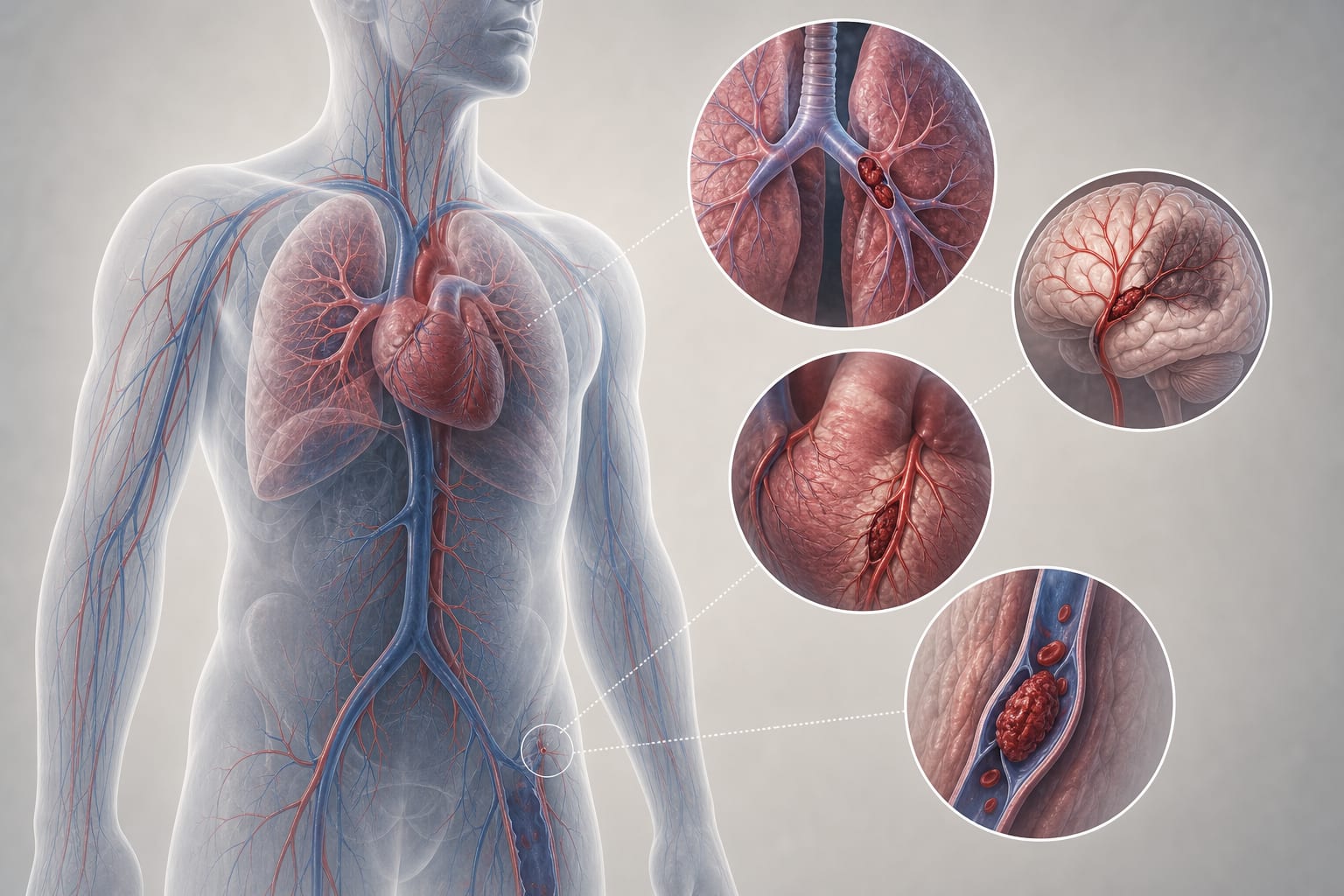
Venous thromboembolism (VTE) is a significant health concern, affecting up to 5% of the population and leading to serious complications such as postthrombotic syndrome. The pathogenesis of VTE involves not only coagulation disorders but also immune system interactions, termed thromboinflammation.

Data Highlights

No numerical data or trial data provided in the article.

Key Findings

  • Hypoxia is a critical regulator of immune cell responses in venous thrombosis.
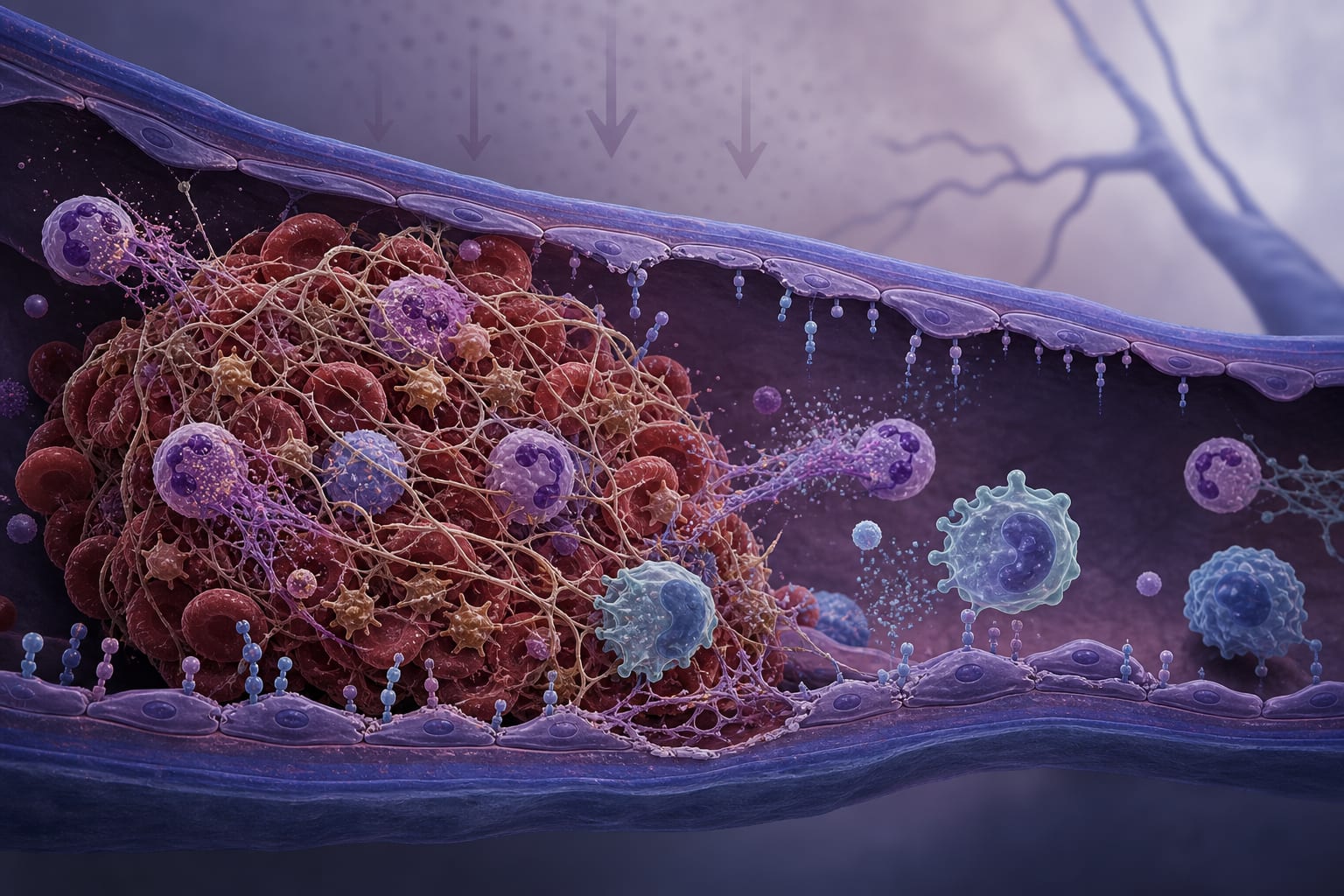
  • Hypoxia-induced endothelial cell activation leads to glycocalyx shedding and increased expression of adhesive molecules.
  • Neutrophil extracellular traps (NETs) formation is promoted by hypoxia.
  • During thrombus resolution, hypoxia-inducible factor (HIF)-1α signaling enhances angiogenesis.
  • Lactate accumulation from hypoxia influences macrophage polarization.

Clinical Implications

Recognizing the role of hypoxia in VTE can inform the development of immunomodulatory therapies aimed at mitigating thromboinflammation. Targeting the hypoxic-immune axis may provide new avenues for treatment and prevention of VTE.

Conclusion

The interplay between hypoxia and immune mechanisms is pivotal in the pathogenesis of venous thrombosis.

Related Resources & Content

  1. Frontiers in Medicine, 2026 -- Immune Mechanisms in Venous Thrombosis
  2. Bone Marrow Transplantation — The Role of Hemostasis and Complement Systems in Allogeneic Hematopoietic Stem Cell Transplantation: Clinical Implications of Their Interaction
  3. Intensive Care Medicine — The Role of Pulmonary Immuno-Thrombosis in the Development of ARDS in COVID-19
  4. The Journal of Infectious Diseases — The Role of Immunothrombosis in the Immune Response and Pathogenesis of Mycobacterium tuberculosis
  5. First AHA/ACC acute pulmonary embolism guideline: prompt diagnosis and treatment are key
  6. https://www.hematology.org/-/media/hematology/files/clinicians/guidelines/ash-guidelines-update-2025/vte-guideline-snapshot_prevention-and-treatment-in-patients-with-cancer.pdf
  7. Ultrasound-Facilitated, Catheter-Directed Fibrinolysis for Acute Pulmonary Embolism | New England Journal of Medicine
  8. Large-Bore Mechanical Thrombectomy or Catheter-Directed Thrombolysis For Management of Intermediate-High–Risk Pulmonary Embolism - American College of Cardiology
  9. Neutrophil extracellular traps in immunothrombosis | Nature Reviews Cardiology
  10. Platelet-driven monocyte activation promotes hypoxic thromboinflammation through the HIF-1α-NLRP3-EGR-1 axis - PubMed
  11. Complement overactivation: A potential mechanistic bridge between immunothrombosis and thromboinflammation in venous thromboembolism - ScienceDirect
  12. Frontiers | Immune Drivers of Venous Thrombosis: Orchestrating Initiation, Formation, and Resolution within the Hypoxic Microenvironment

Original Source(s)

Related Content