Influence of the pyruvate kinase activator mitapivat (AG-348) on RBC ATP content and export and RBC adhesivity in blood from healthy subjects and sickle cell disease patients - Report - MDSpire
Advertisement
Influence of the pyruvate kinase activator mitapivat (AG-348) on RBC ATP content and export and RBC adhesivity in blood from healthy subjects and sickle cell disease patients
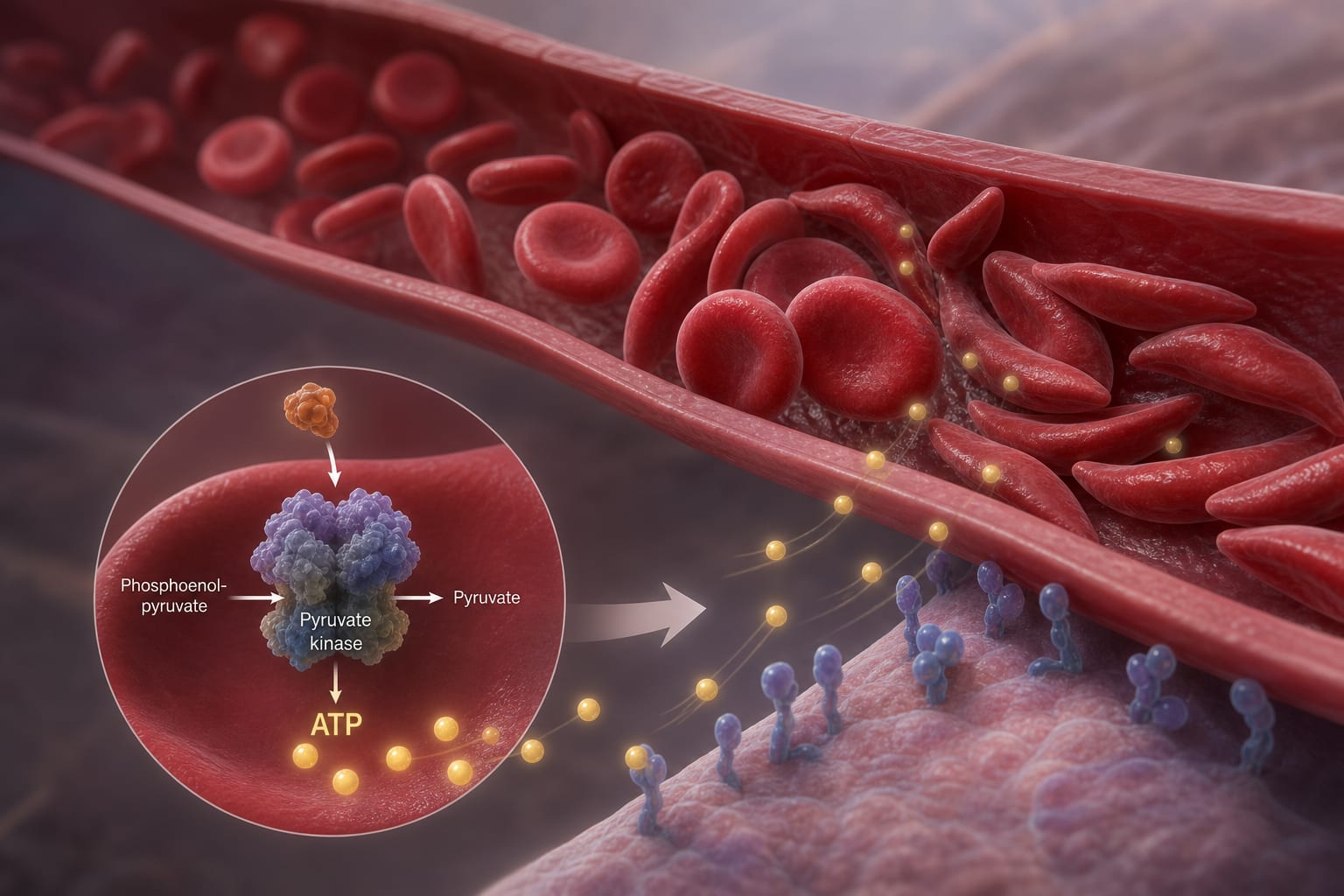
Effects of the pyruvate kinase activator mitapivat on ATP levels in SCD
Overview
This study investigates the effects of mitapivat on ATP levels and red blood cell adhesiveness in healthy individuals and patients with sickle cell disease (SCD). Mitapivat increased ATP levels in healthy red blood cells, but did not significantly affect ATP levels in SCD red blood cells under the same conditions.
Background
Sickle cell disease (SCD) is characterized by hemolytic anemia and vaso-occlusive crises, leading to significant morbidity and mortality. Red blood cells (RBCs) in SCD patients exhibit reduced ATP levels, impacting their functionality and contributing to disease complications. Understanding the role of ATP in RBCs is crucial for developing effective treatments for SCD.
Data Highlights
Condition
Intra-RBC ATP (nM)
Exported ATP (nM)
Healthy Normoxia
Not specified
80.3 ± 22.3
Healthy Hypoxia
Not specified
109.0 ± 30.2
SCD Normoxia
Not specified
79.7 ± 20.6
SCD Hypoxia
Not specified
77.1 ± 19.9
Key Findings
Mitapivat treatment increased intra-RBC ATP in healthy controls but not in SCD RBCs.
Exported ATP from healthy RBCs increased under hypoxic conditions.
Exported ATP from SCD RBCs increased in hypoxia compared to normoxia.
Mitapivat did not significantly change ATP export from SCD RBCs.
SS RBC adhesion to laminin decreased after exposure to mitapivat at physiologically relevant shear stresses.
Clinical Implications
The findings suggest that while mitapivat may enhance ATP levels in healthy RBCs, its efficacy in SCD RBCs remains limited. Clinicians should consider these differences when evaluating treatment options for SCD patients.
Conclusion
Mitapivat shows promise in increasing ATP levels in healthy RBCs but does not significantly affect SCD RBCs, highlighting the need for further research in this area.