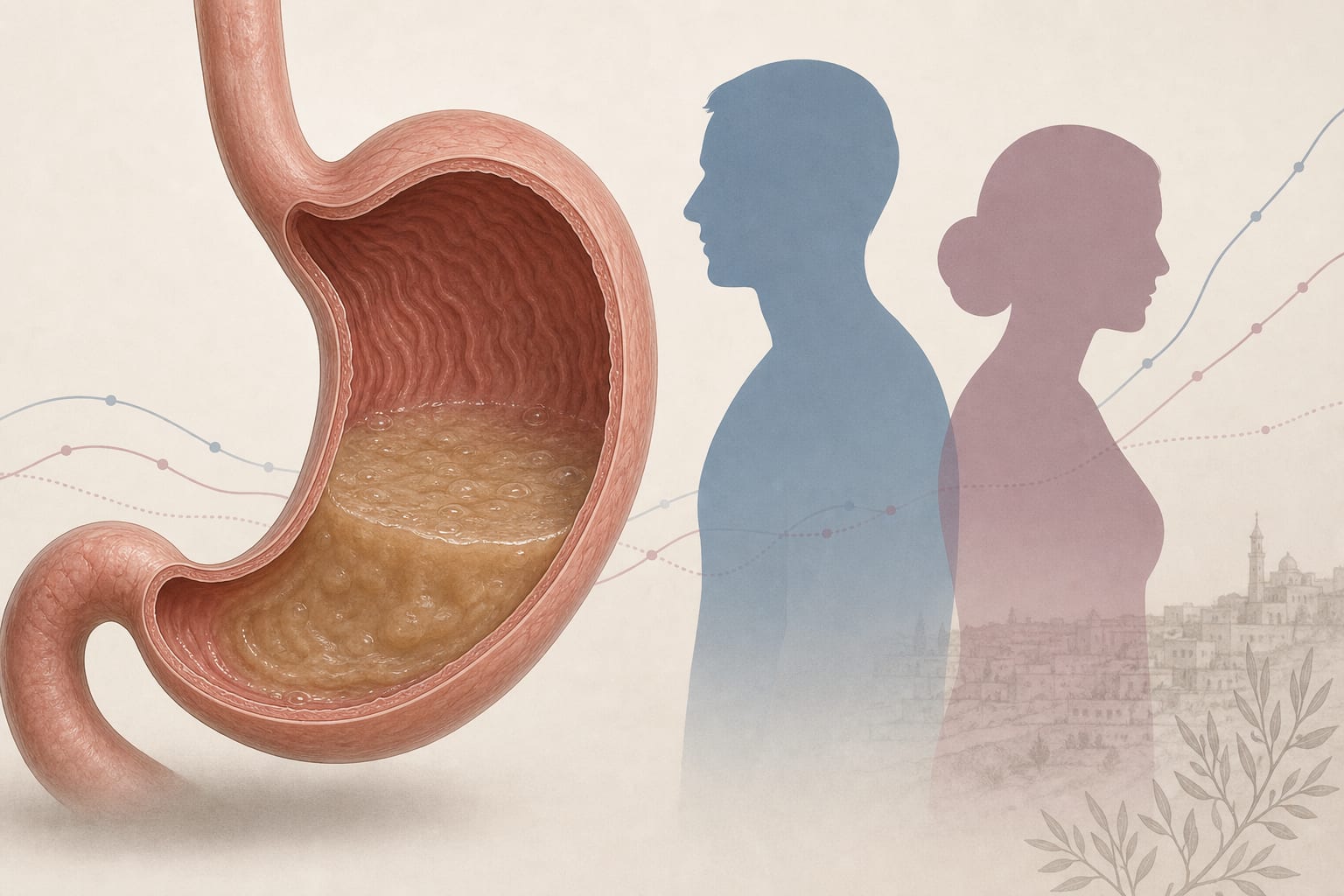
Clinical Report: Influence of Meal Frequency on GERD After Laparoscopic Sleeve Gastrectomy
Overview
This study investigates the relationship between meal frequency and gastroesophageal reflux disease (GERD) symptoms in patients one year post-laparoscopic sleeve gastrectomy (LSG).
Background
Obesity is a significant health concern in Saudi Arabia, with over 35% of the population affected, leading to increased risks of GERD. LSG is a common bariatric surgery that can improve weight loss but may also exacerbate GERD symptoms in some patients. Understanding the impact of meal frequency on GERD post-LSG is crucial for optimizing patient outcomes.
Data Highlights
Measurement
Preoperative BMI
Postoperative BMI
BMI
46.37 kg/m²
31.24 kg/m²
Key Findings
109 participants (62 women, 47 men) aged 17–66 years were included in the study.
Primary complaints included heartburn (77.1%) and epigastric pain (70.6%).
Typical meal patterns postoperatively were 1–2 meals (43%) and 3–4 meals (28.4%).
No significant association was found between meal frequency and reflux oesophagitis (p = 0.09, 0.24, 1.00).
All patients experienced weight loss post-surgery.
Clinical Implications
The study suggests that meal frequency may not significantly influence GERD symptoms in patients after LSG. Clinicians should consider individual patient experiences and symptoms when advising on meal frequency postoperatively.
Conclusion
The findings indicate that larger daily meals with fewer frequent meals do not have a statistically significant association with reflux oesophagitis in patients post-LSG.
by Abdullah Almunifi, Muqrin A. Almuqrin, Ali Q. Al Qahtani, Abdullah Albarrak, Shiela Sadili-Fajardo, Abdulaziz A. AlMulhem, Eyad Wohaibi, Mohammad A. Al Mofarreh