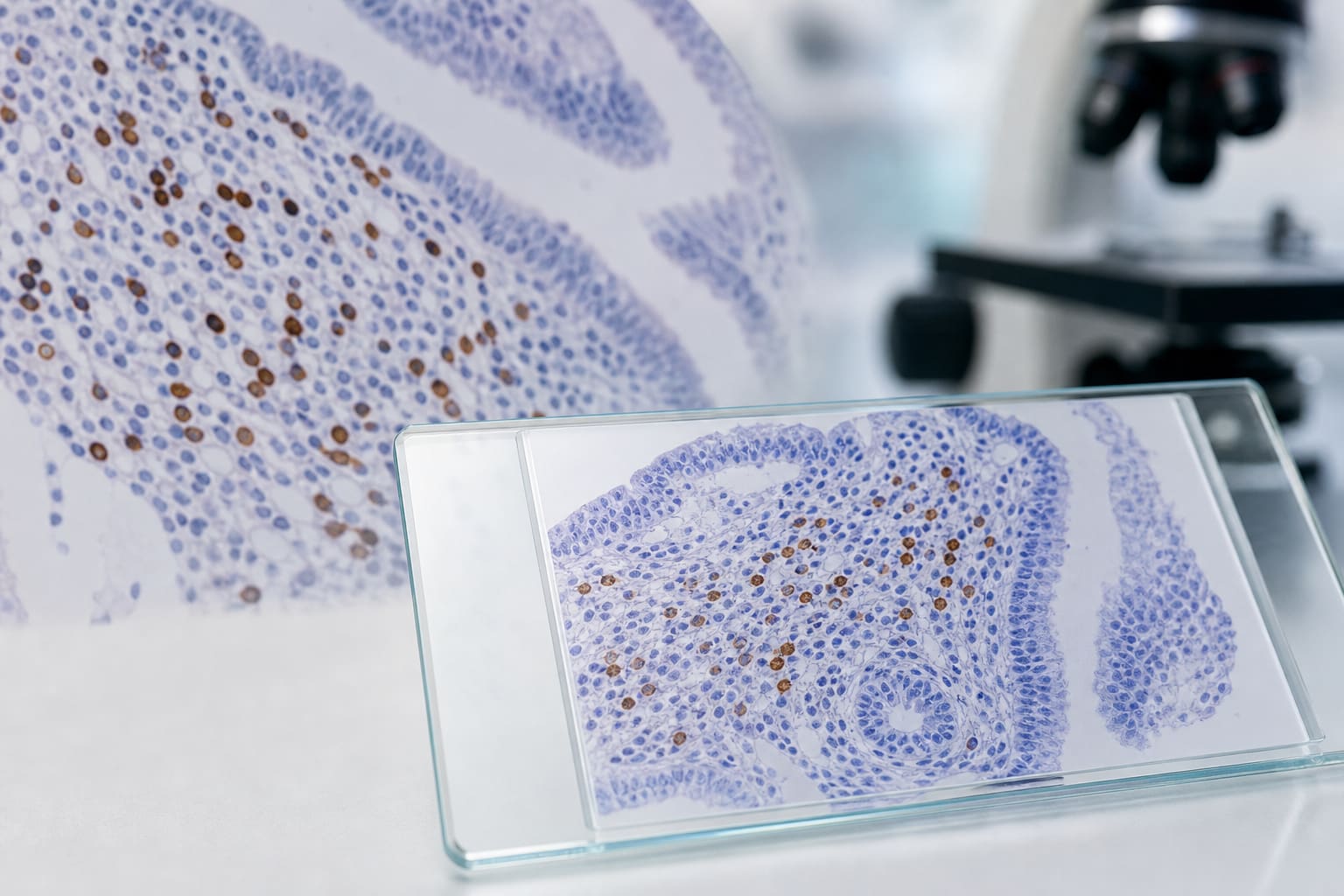
Clinical Report: Turning Routine Slides Into Molecular Maps
Overview
The development of AI platforms Path2Omics and Path2Space aims to enhance the accessibility of molecular insights from pathology slides, reducing the time and cost associated with traditional sequencing methods. These platforms provide inferred molecular data directly from routine pathology images.
Background
The integration of sequencing in cancer research and clinical care is essential but often hindered by high costs and lengthy turnaround times. AI tools that can infer molecular information from pathology slides could bridge this gap.
Data Highlights
No numerical data or trial data presented in the source material.
Key Findings
Path2Omics predicts bulk molecular information from pathology images, focusing on transcriptomics and methylation across 30 tumor types.
Path2Space aims to infer spatial biological information from digital pathology images, potentially enhancing treatment response predictions.
AI-derived insights could reduce the cost of molecular profiling significantly, making it more accessible for clinical use.
Spatial biology may provide detailed insights into tumor microenvironments, which could improve treatment matching for patients.
Current spatial omics technologies are costly and labor-intensive, highlighting the need for scalable solutions.
Clinical Implications
The introduction of AI platforms like Path2Omics and Path2Space may enable pathologists and oncologists to obtain critical molecular insights more efficiently.
Conclusion
The advancements represented by Path2Omics and Path2Space could enhance the speed and cost-effectiveness of molecular profiling in oncology.