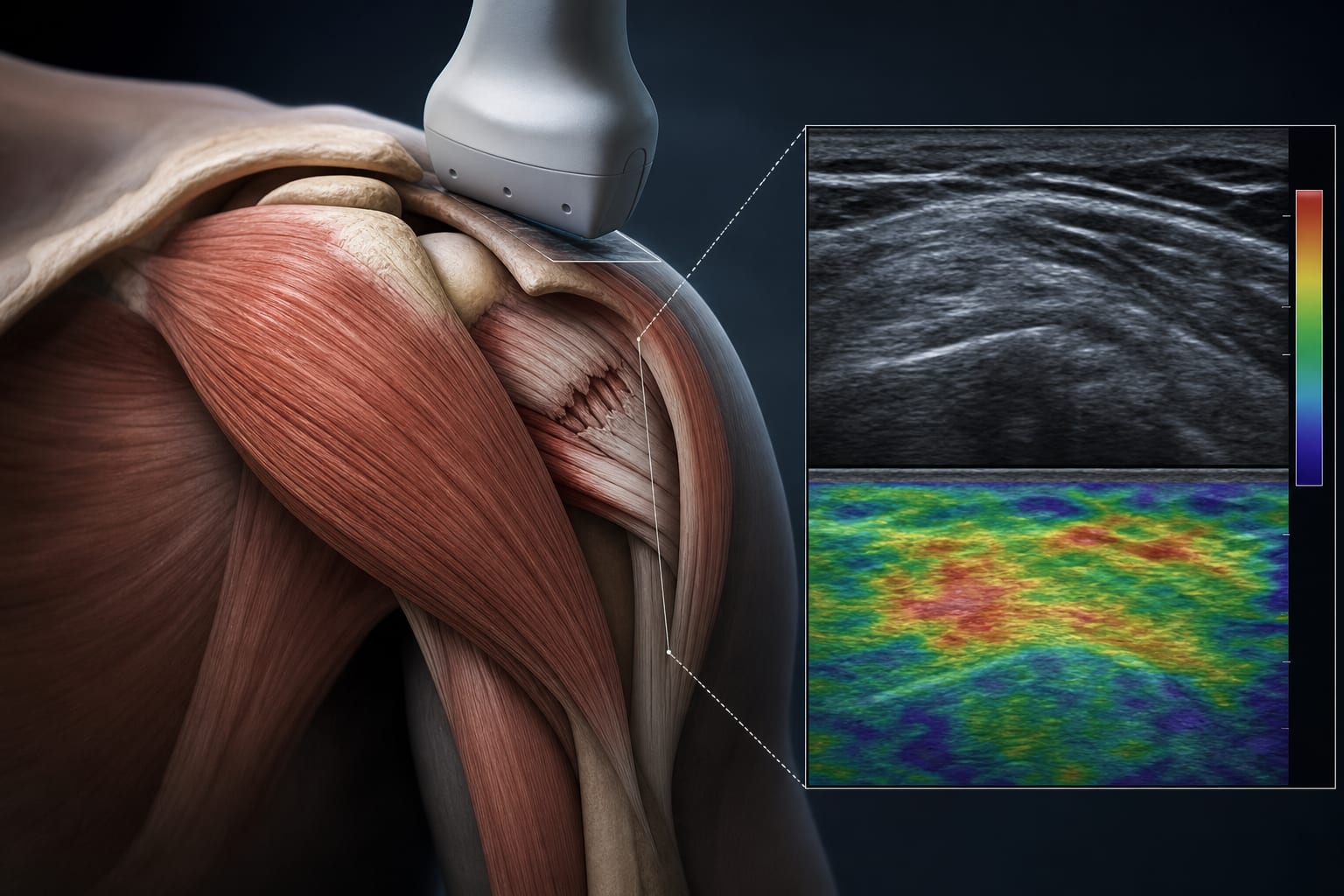
Compensatory activation of the deltoid and remaining rotator cuff muscles in patients with rotator cuff tears using real-time tissue elastography - Report - MDSpire
Advertisement
Compensatory activation of the deltoid and remaining rotator cuff muscles in patients with rotator cuff tears using real-time tissue elastography
Clinical Report: Real-Time Tissue Elastography Reveals Compensatory Activation of Deltoid and Rotator Cuff Muscles in Individuals with Rotator Cuff Tears
Overview
This study investigates the compensatory activation of deltoid and rotator cuff muscles in patients with rotator cuff tears using real-time tissue elastography.
Background
Rotator cuff tears are a common cause of shoulder dysfunction and pain, often requiring careful management decisions regarding surgical or nonoperative treatment. Understanding the muscle activation patterns in these patients is important.
Data Highlights
No numerical data or trial data provided in the source material.
Key Findings
Twenty-four patients with full-thickness rotator cuff tears were included in the study.
Two distinct patterns of deltoid muscle behavior were observed during shoulder elevation.
Deltoid activity increased linearly with shoulder elevation in some patients, while others showed constant high activity.
Ultrasound elastography was utilized to measure muscle stiffness and activity during elevation.
Clinical Implications
The findings suggest that assessing deltoid muscle behavior may provide insights into the functional status of remaining rotator cuff muscles. This information could be valuable in tailoring rehabilitation strategies for patients with rotator cuff tears.
Conclusion
The study highlights the importance of understanding muscle activation patterns in patients with rotator cuff tears, which may aid in optimizing treatment approaches.