Clinical Report: Evaluating Objective Pulse Wave Amplitude in Pediatric Myopia
Overview
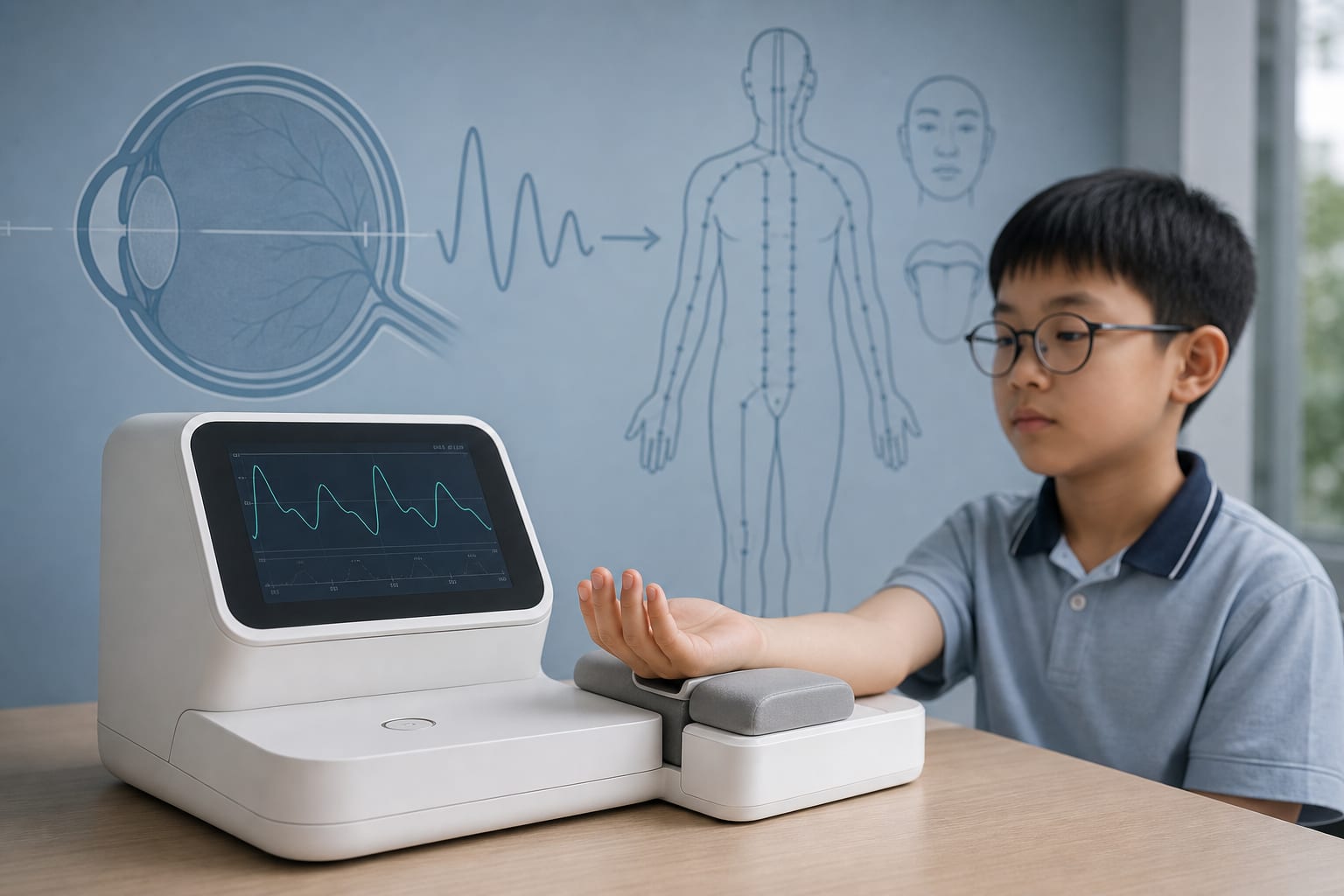
This study investigates the relationship between pediatric myopia and objective pulse wave amplitude, tongue, and facial diagnostic parameters using digital tools. Findings indicate that lower pulse wave amplitude is significantly associated with myopia in children aged 7-14 years.
Background
Pediatric myopia is a growing concern globally, with implications for long-term ocular health. Understanding systemic indicators related to myopia can enhance prevention and management strategies. This study integrates Traditional Chinese Medicine (TCM) perspectives with modern diagnostic tools to explore these relationships.
Data Highlights
Parameter
Value
Myopia Prevalence
53.15%
OR for h1 (Model 1)
0.834
OR for h1 (Model 2)
0.831
Key Findings
53.15% of children in the study were diagnosed with myopia.
Lower amplitude of the primary pulse wave (h1) is negatively correlated with myopia.
This correlation persists across different age groups (7-10 and 11-14 years).
Higher h1 amplitude is associated with increased spherical equivalent and reduced axial length in older children.
No significant correlations were found between myopia and tongue or facial diagnostic parameters.
Clinical Implications
The findings suggest that pulse wave amplitude could serve as a systemic indicator for assessing myopia risk in pediatric patients. Clinicians may consider integrating pulse diagnostics into routine evaluations for children at risk of myopia.
Conclusion
The study highlights the potential of pulse wave amplitude as a systemic correlate of pediatric myopia, emphasizing the need for further research in this area to enhance myopia management strategies.