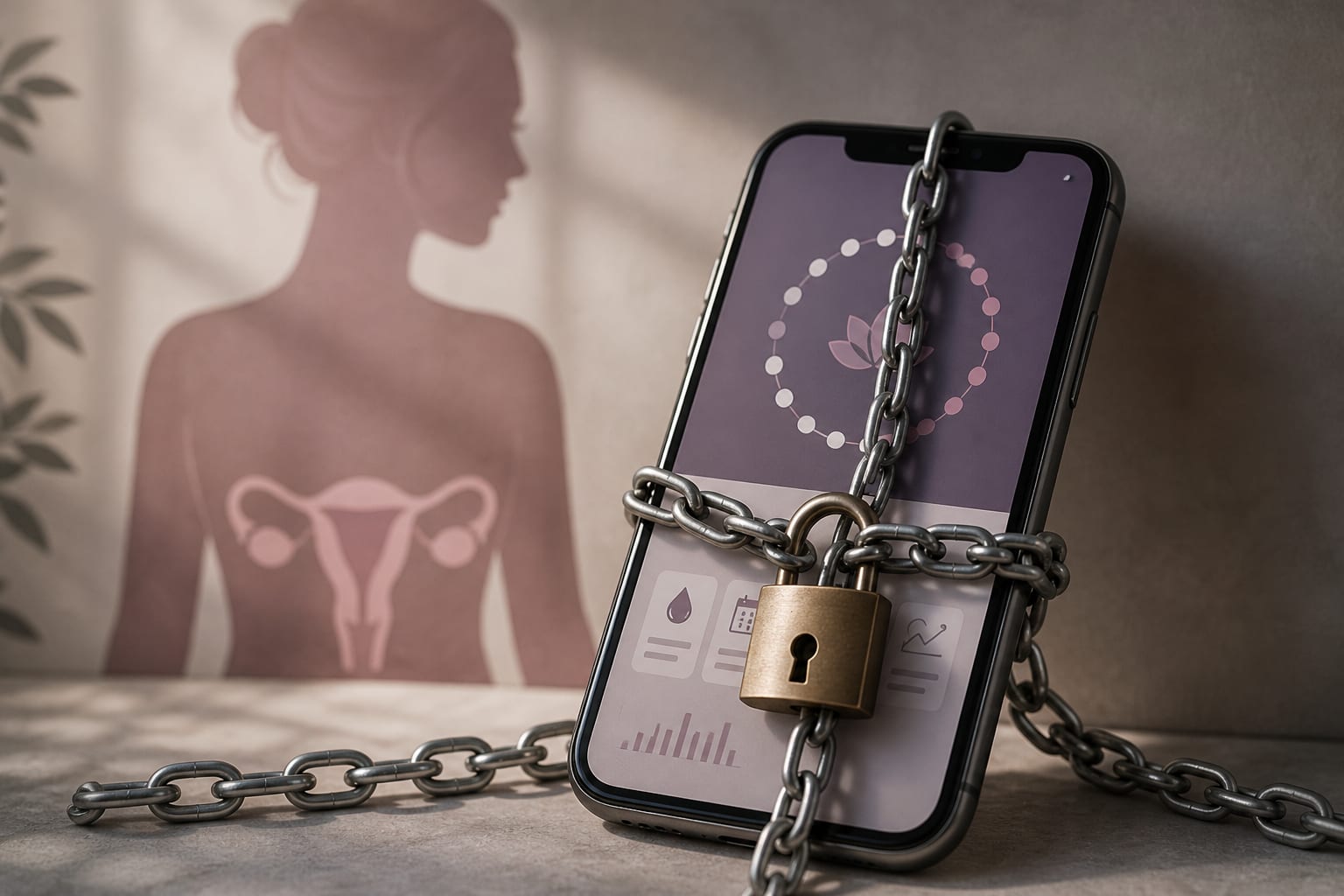
Strengthening Privacy Protections for Reproductive Health Data in FemTech Apps
-
By
-
Jenny Castillo Cato
-
November 13, 2026
Clinical Report: Strengthening Privacy Protections for Reproductive Health Data in FemTech Apps
Overview
FemTech apps can expand access to women’s health information and support research, but the article describes substantial risks from collection, tracking, and sharing of reproductive health data. It highlights gaps in HIPAA coverage for many consumer apps and the potential for sensitive information to be accessed or used beyond users’ original expectations, including in legal contexts where reproductive care is restricted.
Background
FemTech has grown over the past decade, increasing access to information and awareness of historically understudied conditions such as endometriosis. Protecting confidentiality is a fundamental ethical and legal obligation in health care, and HIPAA applies to covered health plans, clearinghouses, and providers. The article notes that data collected by apps whose developers are unaffiliated with these entities generally fall outside HIPAA’s scope. It also describes commercial data practices and evolving legal and political conditions as factors in concerns about reproductive health information.
Data Highlights
| Evidence cited | Finding |
|---|---|
| ORCHA report (2022) | 67% of evaluated period-tracking applications shared data for purposes associated with “legal obligations.” |
| Investigation of 23 widely used women’s mobile health applications | Location tracking was enabled in 61%; third-party data sharing occurred in 87%; personal health information was collected in 100%; behavioral tracking occurred in 100%. |
| U.S. Senate Committee investigators (2019) | Investigators examined the Office of Refugee Resettlement’s spreadsheet containing private reproductive health information for pregnant minors, including some aged 12 and 13. |
| Missouri HB 807 | The proposed bill would have created a central registry of expecting mothers considered at risk of seeking an abortion; it did not pass. |
Key Findings
- The article reports that reproductive health information collected by many consumer FemTech apps generally falls outside HIPAA when the app developer is not a covered health plan, clearinghouse, or provider.
- Commercial motivations described in the article include targeted advertising and development of commercial insights through collection, analysis, and sharing of user data.
- The 2019 Senate Committee investigation documented government handling of sensitive reproductive information about pregnant minors held by the Office of Refugee Resettlement.
- Missouri HB 807, although unsuccessful, proposed a registry of expecting mothers considered at risk of seeking an abortion, illustrating potential uses beyond the purpose for which data were supplied.
- ORCHA reported in 2022 that 67% of evaluated period-tracking apps shared data for purposes associated with “legal obligations”; the article notes that this designation is broad.
- An investigation of 23 women’s health apps found location tracking in 61%, third-party sharing in 87%, personal health information collection in 100%, and behavioral tracking in 100%.
Clinical Implications
The article identifies privacy, security, informed consent, corporate accountability, and legal compliance as concerns for users and policymakers. Its findings support careful attention to how reproductive health apps collect, track, and share data, particularly when location information may be combined with menstrual-cycle or fertility records.
Conclusion
FemTech apps may advance access to women’s health information while exposing users to privacy risks when sensitive data are collected or shared without adequate safeguards. The article calls for greater action by regulators and app developers to protect reproductive health data.
Related Resources & Content
- HHS, HIPAA Privacy Rule and Disclosures of Information Relating to Reproductive Health Care, 2024
- Frontiers in Reproductive Health, Regulating algorithmic tools in reproductive health: ethical and legal challenges, 2026
- Journal of Medical Internet Research, Bridging the Gender Gap in Health Care Innovation: The Evolution of FemTech, 2026
- Journal of Medical Internet Research, Advancements in Endometriosis Research and Women's Health Through the Phendo Initiative and FemTech Innovations, 2026
- Frontiers in Digital Health — Responsible data selection method for algorithmic personalization of health apps: a case study on promoting mental health
- HIPAA Privacy Rule and Disclosures of Information Relating to Reproductive Health Care
- Ethical Considerations With Telehealth in Obstetrics and Gynecology
- Digital menstrual tracking risks creating more harm than benefit
Based on findings from:
More Should Be Done to Protect Reproductive Health Data in FemTech Apps
Jenny Castillo Cato. Journal Of Medical Internet Research, 2026.
https://www.jmir.org/2026/1/e116574
This content is an AI-generated, fully rewritten summary based on a published scholarly article. It does not reproduce the original text and is not a substitute for the original publication. Readers are encouraged to consult the source for full context, data, and methodology.