Clinical Report: Utilizing CRISPR/Cas9 for Cancer Treatment
Overview
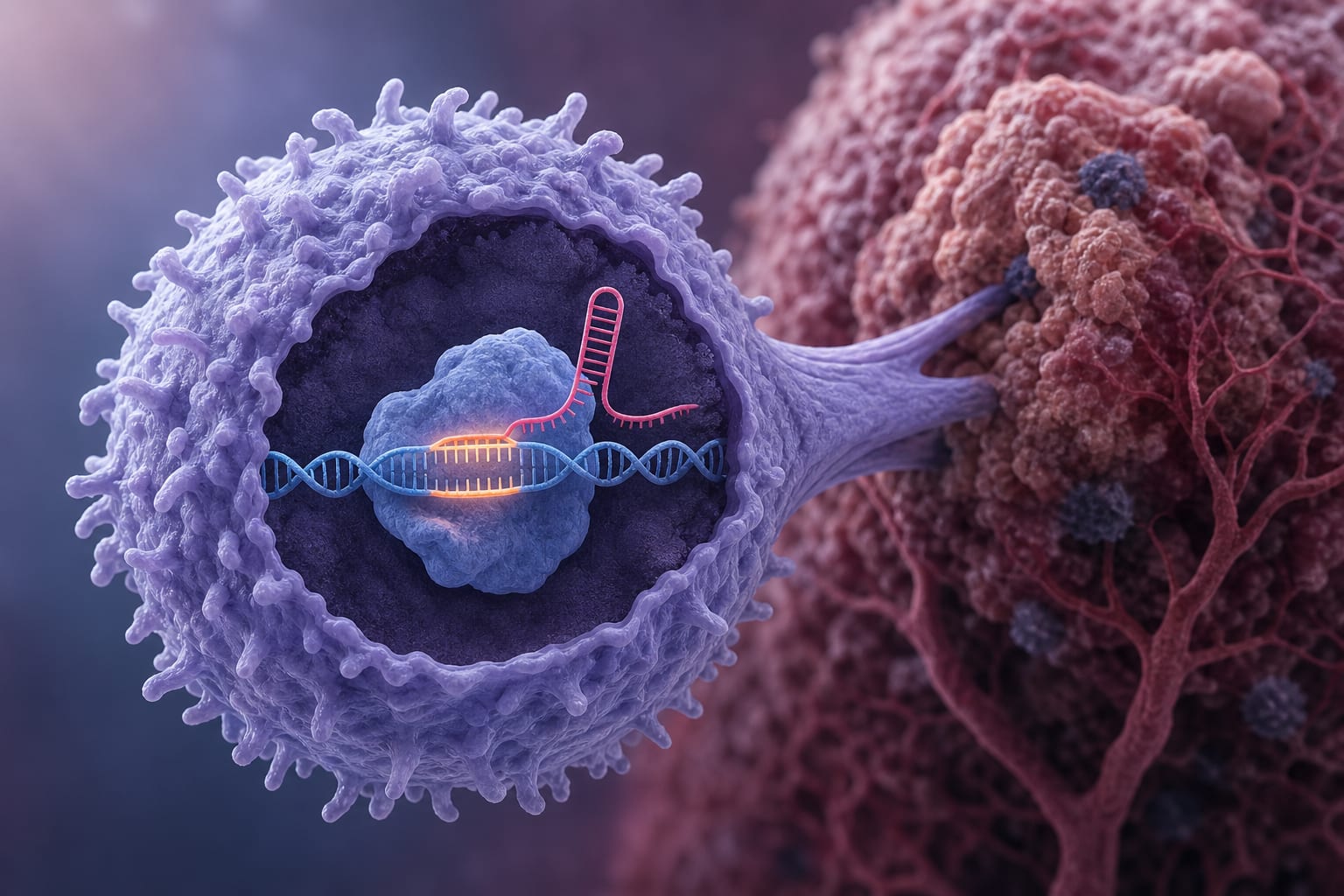
CRISPR/Cas9 genome editing has emerged as a transformative tool in cancer therapy, enabling precise manipulation of genetic modifications. Current applications focus on immune cell engineering, direct targeting of oncogenic mutations, and modulation of tumor-supportive pathways.
Background
Cancer remains a significant global health challenge, characterized by high incidence and mortality rates. Conventional therapies often lack specificity and can lead to systemic toxicity, highlighting the need for precision-based approaches. CRISPR/Cas9 offers a novel strategy to directly target genetic alterations driving tumorigenesis.
Data Highlights
Analysis of clinical trials indicates safety profiles and early signs of clinical activity for CRISPR-based interventions, particularly in engineered immune-cell therapies.
Key Findings
CRISPR/Cas9 enables targeted genomic modifications through the action of Cas9 endonuclease and guide RNA.
Current applications in oncology include immune cell engineering, targeting oncogenic mutations, and modulating tumor-supportive pathways.
CRISPR-edited CAR-T cell products targeting CD19 and BCMA have shown objective responses in relapsed or refractory hematological malignancies.
Challenges in translating CRISPR technology to solid tumors include delivery efficiency and tumor microenvironment issues.
Technological advancements like multiplex genome editing and base editing enhance the precision of CRISPR interventions.
Clinical Implications
Ongoing research and clinical trials will be crucial in addressing the challenges of delivery and off-target effects.
Conclusion
Future success of CRISPR/Cas9 in cancer therapy depends on balancing precision, safety, and scalability.